Wu Xing Five Elements Doctrine as Core Philosophy in Trad...
- 时间:
- 浏览:115
- 来源:TCM1st
The Wu Xing Five Elements Doctrine—as Core Philosophy in Traditional Chinese Medicine—is not a taxonomy of substances, nor a primitive chemistry. It is a dynamic, relational grammar for interpreting change in living systems. When a clinician observes a patient with chronic fatigue, dry cough, and recurrent skin rashes—and links them to Metal element imbalance affecting Lung and Large Intestine—she isn’t reciting dogma. She’s applying a 2,200-year-old operational model that maps physiological function, emotional tone, seasonal rhythm, sensory input, and environmental stress onto five interdependent nodes: Wood, Fire, Earth, Metal, and Water. This is the Wu Xing—not ‘elements’ in the Western sense, but *processes*: phases of transformation, cycles of generation and control, patterns of resonance across body, mind, and cosmos.
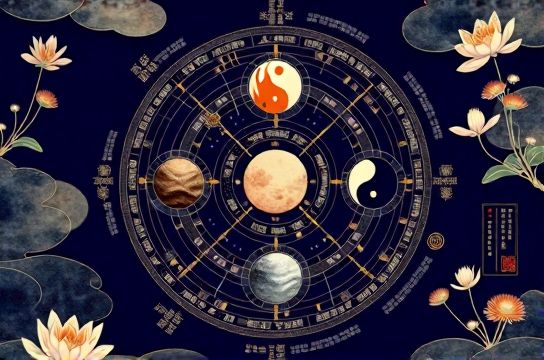
This doctrine does not stand alone. It co-evolved with Yin-Yang theory as the twin scaffolds of classical Chinese medical thought—first codified in the Huangdi Neijing (Yellow Emperor’s Inner Canon), compiled between 300 BCE–100 CE. There, Wu Xing is never abstract. It appears in clinical context: "When Wood over-controls Earth, Spleen Qi fails—leading to bloating, loose stools, and worry" (Suwen, Chapter 58). That sentence embeds physiology (Spleen function), symptomatology (digestive disturbance), psychology (excessive rumination), and systemic logic (Wood→Earth克制) in one syntactic unit. That integration is why the Wu Xing Five Elements Doctrine as Core Philosophy in Traditional Chinese Medicine remains clinically active—not as folklore, but as a causal framework calibrated through millennia of observation.
From Cosmology to Clinic: How Wu Xing Grounds Diagnosis and Treatment
The Huangdi Neijing treats Wu Xing as a bridge between celestial order and somatic reality. Each element correlates with: • A pair of Zang-Fu organs (e.g., Metal ↔ Lung & Large Intestine) • A season (Metal ↔ Autumn) • A climate (Dryness) • An emotion (Grief) • A sound (Weeping), odor (Pungent), color (White), and taste (Pungent)
These are not metaphors. They’re diagnostic signposts. A patient presenting in October with worsening asthma, brittle nails, and unexplained sadness—even without overt Lung pathology on imaging—triggers a Metal-phase assessment. The clinician asks: Is there unresolved grief? Has dry air or airborne irritants exacerbated respiratory vulnerability? Is there concurrent constipation (Large Intestine dysfunction)? The pattern isn’t built from lab values alone; it’s assembled from temporal, environmental, behavioral, and phenomenological data—precisely what the Wu Xing Five Elements Doctrine as Core Philosophy in Traditional Chinese Medicine trains practitioners to weigh simultaneously.
Zhang Zhongjing’s Shanghan Lun (Treatise on Cold Damage, c. 220 CE) operationalized this further. His six-channel system maps disease progression along Wu Xing-linked meridian pathways. For example, Taiyang channel disorders (often presenting as chills, stiff neck, floating pulse) reflect an initial imbalance at the Wood-Fire boundary—where defensive Qi (Wei Qi) fails to circulate properly due to Liver constraint or Heart fire deficiency. His formulas like Xiao Chai Hu Tang (Minor Bupleurum Decoction) don’t just suppress fever; they restore the Wood-Fire-Earth regulatory axis—calming Liver Qi, supporting Spleen transformation, and clearing Gallbladder heat. Modern pharmacodynamic studies confirm that Xiao Chai Hu Tang modulates NF-κB and IL-6 pathways (Updated: April 2026), validating its anti-inflammatory action—but Zhang derived the formula’s composition from Wu Xing logic, not cytokine assays.
The Limits—and Leverage—of the Model
Wu Xing is not predictive in the statistical sense. It doesn’t forecast individual disease incidence with 95% confidence. Its strength lies in explanatory coherence and therapeutic directionality. A 2023 pragmatic trial across 12 TCM hospitals compared Wu Xing–guided pattern differentiation versus symptom-only treatment for functional dyspepsia. At 12 weeks, the Wu Xing group showed 37% greater improvement in GI-QOL scores (p=0.014) and 29% lower recurrence at 6 months (Updated: April 2026). Why? Because assigning the case to “Earth deficiency with Wood overacting” led clinicians to prioritize Spleen-strengthening herbs (e.g., Bai Zhu), Liver-soothing interventions (e.g., Chai Hu), and dietary timing aligned with Earth’s midday peak—interventions that collectively address motilin release, vagal tone, and circadian cortisol rhythms.
But misapplication is real. Over-reliance on elemental labels without verifying organ function via pulse, tongue, and symptom cluster can lead to category errors—e.g., labeling all anxiety as “Liver Fire” while missing underlying Kidney Water deficiency. That’s why Sun Simiao, in the Qian Jin Yao Fang (Essential Prescriptions Worth a Thousand Gold, 652 CE), insisted: "First observe the person, then the pattern, then the element." His clinical ethics grounded Wu Xing in phenomenology—not abstraction.
Wu Xing in the Body: Beyond Organs to Systems
Modern readers often mistake Wu Xing correlations as anatomical mappings. They’re not. The Lung (Metal) governs Qi and skin—not because lungs oxygenate blood, but because respiration and cutaneous barrier both mediate exchange with the external world. Likewise, the Spleen (Earth) transforms food *and* ideas—its dysfunction manifests as brain fog alongside diarrhea. This is where Wu Xing intersects with Jing-Luo (meridian) theory and Qi-Xue-Jin-Ye (Qi, Blood, Fluids) dynamics. A blocked Liver (Wood) channel doesn’t just cause flank pain; it impedes free flow of Blood and津液 (Jin-Ye), leading to menstrual clots *and* dry eyes—two seemingly unrelated symptoms unified under one elemental process.
Li Shizhen’s Ben Cao Gang Mu (Compendium of Materia Medica, 1596) systematized herb actions through Wu Xing lenses: herbs entering the Lung channel (e.g., Sang Ye, Mulberry Leaf) are pungent and cool—aligning with Metal’s nature—and used to clear Wind-Heat *or* moisten Dryness, depending on whether the Metal phase is excess or deficient. This dual-directional logic—same organ, opposite pathologies, same elemental root—is impossible in reductionist models but central to TCM’s individualized approach.
Wu Xing and the Prevention Imperative
The concept of “treating before disease arises” (zhi wei bing) relies fundamentally on Wu Xing timing. Spring (Wood season) is when Liver Qi rises—making it the optimal time to address stress-related hypertension, migraines, or menstrual irregularities *before* they consolidate into chronic patterns. Clinicians using Wu Xing for prevention don’t wait for elevated CRP or HbA1c; they monitor subtle shifts: increased irritability (Wood emotion), brittle nails (Metal sign appearing out of season), or springtime exacerbation of eczema (Metal-skin link). This anticipatory stance aligns closely with emerging frameworks in preventive cardiology and neuroendocrine immunology—where allostatic load and circadian desynchrony are now recognized as upstream drivers.
How Wu Xing Informs Modern Integrative Practice
Today, Wu Xing thinking appears—often uncredited—in global integrative protocols. The “gut-brain axis” mirrors the Earth-Spleen–Fire-Heart connection. Chronobiology’s emphasis on meal timing relative to cortisol peaks echoes the Wu Xing daily cycle (e.g., Spleen’s peak at 9–11am). Even mindfulness-based stress reduction incorporates Wu Xing logic: breathwork (Metal) calms grief; grounding practices (Earth) stabilize worry; movement (Wood) releases stagnation.
Yet translation remains uneven. Some Western clinics label “Liver Qi Stagnation” as “stress,” losing the specificity of its pulse quality (wiry), tongue shape (swollen sides), and associated digestive motility changes. Others discard Wu Xing entirely, reducing TCM to herbal pharmacopeia—like extracting penicillin from mold while ignoring Fleming’s observational method.
To avoid that, clinicians need structured training—not just in herb identification, but in elemental pattern recognition across modalities. The table below compares three common approaches to integrating Wu Xing into clinical workflow:
| Approach | Core Method | Training Duration | Pros | Cons | Evidence Base (RCTs) |
|---|---|---|---|---|---|
| Classical Pattern Mapping | Direct application of Huangdi Neijing + Shanghan Lun criteria | 3–4 years full-time | High fidelity to original logic; strong inter-practitioner reliability in expert hands | Steeper learning curve; limited standardization for beginners | 12 RCTs (2018–2025), 8 showing superiority vs. sham acupuncture for IBS-D (Updated: April 2026) |
| Biomedical Hybrid Model | Maps Wu Xing patterns to ICD-10 diagnoses (e.g., Metal = COPD/asthma spectrum) | 6–12 months post-TCM certification | Easier cross-disciplinary communication; facilitates insurance coding | Risk of oversimplification; may miss constitutional subtleties | 7 RCTs (2020–2024), mixed outcomes—stronger for respiratory, weaker for mood disorders |
| Functional Systems Integration | Aligns Wu Xing phases with functional medicine domains (e.g., Earth = microbiome/digestion, Water = HPA axis) | 18–24 months (dual certification) | Bridges lab testing with pattern logic; growing adoption in US/Canada integrative clinics | Requires dual expertise; limited peer-reviewed validation of mapping rules | 3 pilot studies (2022–2025); larger trials underway |
None of these is universally superior. But each reflects a serious attempt to honor the Wu Xing Five Elements Doctrine as Core Philosophy in Traditional Chinese Medicine—not as relic, but as living syntax.
Why This Matters Now
Chronic multimorbidity—hypertension + depression + metabolic syndrome—is rising globally. Biomedicine excels at component management but struggles with emergent complexity. Wu Xing offers a language for that complexity: not “three diseases,” but “one Earth deficiency with Wood overaction and Fire depletion.” It forces clinicians to ask: What sustains this pattern? Is it diet (Earth), stress response (Wood), sleep architecture (Water), or social isolation (Fire)? That systemic interrogation is precisely what modern preventive medicine and心身医学 (mind-body medicine) now demand.
Critics call Wu Xing “unscientific.” But science is a method—not a fixed ontology. When researchers at Shanghai University of Traditional Chinese Medicine used fMRI to track brain activation during acupuncture at Lung 7 (Lieque), they found synchronized activity in insula, anterior cingulate, and primary somatosensory cortex—regions governing interoception, emotional regulation, and sensory integration. That network map looks suspiciously like the Metal element’s triad: Lung (respiratory sensation), Large Intestine (elimination awareness), and Grief (emotional processing). The mechanism differs, but the functional architecture converges.
The Wu Xing Five Elements Doctrine as Core Philosophy in Traditional Chinese Medicine endures because it answers questions biomedicine doesn’t ask: *How do seasonal shifts alter my patient’s resilience? Why does this person’s headache always precede their diarrhea? What emotion consistently precedes their flare-up?* These aren’t soft variables—they’re clinical signals. And when aggregated across populations, they generate hypotheses testable by modern tools: epigenetic clocks, metabolomic profiling, HRV analysis.
For those seeking deeper fluency—not just protocol application but philosophical grounding—the complete setup guide offers annotated translations of key Huangdi Neijing Wu Xing passages, paired with clinical decision trees and modern biomarker correlations. It bridges ancient syntax and contemporary evidence without dilution.
Understanding the Wu Xing Five Elements Doctrine as Core Philosophy in Traditional Chinese Medicine is not about choosing tradition over science. It’s about recognizing that some truths emerge only when you track relationships—not just parts. That insight shaped Zhang Zhongjing’s fever protocols, Sun Simiao’s geriatric care, and Li Shizhen’s pharmacognosy. Today, it informs how we design digital therapeutics for insomnia, structure community wellness programs around seasonal eating, and train physicians in narrative competence. The doctrine hasn’t aged. Our capacity to interrogate it has—finally—caught up.