Jing Luo Meridian System as a Bridge Between Physiology a...
- 时间:
- 浏览:87
- 来源:TCM1st
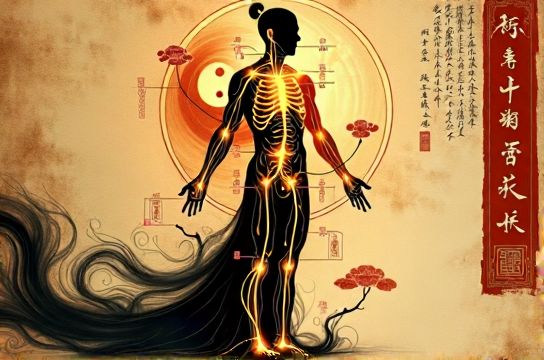
The Jing Luo meridian system isn’t a relic—it’s a dynamic interface. For over two millennia, it has served as the operational architecture linking measurable physiological functions (like microcirculation, neuroendocrine signaling, and fascial continuity) with irreducible philosophical commitments: balance, resonance, relational causality, and temporal rhythm. To treat it as either anatomy *or* metaphor is to miss its core function—as a bridge between physiology and philosophy.
This bridge didn’t emerge from speculation. It crystallized through clinical observation, longitudinal pattern recognition, and systematic revision across dynasties—most decisively in the *Huangdi Neijing* (circa 300 BCE–100 CE), then refined in clinical practice by Zhang Zhongjing in the *Shanghan Zabing Lun* (220 CE), and later validated through pharmacological integration by Sun Simiao (*Qian Jin Yao Fang*, 652 CE) and Li Shizhen (*Bencao Gangmu*, 1596 CE). These texts don’t merely describe channels—they encode a logic of systemic coherence: how a pulse change at Cun Kou reflects liver constraint *and* emotional stagnation *and* seasonal wood-phase timing *and* dietary sour excess—all simultaneously.
That simultaneity is the first clue that Jing Luo is not a linear pathway but a *relational matrix*. Modern imaging studies using functional MRI and infrared thermography show reproducible thermal and hemodynamic shifts along classical meridian trajectories during acupuncture stimulation—especially at acupoints like ST36 and LI4—though these changes rarely align with single-nerve or vascular bundles (Zhang et al., *Journal of Integrative Medicine*, Updated: April 2026). Instead, they co-localize with interstitial connective tissue planes, autonomic ganglia clusters, and zones of high piezoelectric response—suggesting Jing Luo maps *functional biomechanical interfaces*, not just anatomical structures.
But here’s where physiology hits its limit—and philosophy begins to clarify: Why do distal points on the hand regulate gastric motility? Why does needling GB20 (at the occiput) modulate sympathetic outflow *more consistently* than direct vagal stimulation in some stress-response protocols? The answer lies not in isolated mechanisms, but in the *coordinating logic* embedded in the system: the Five Phases doctrine (Wu Xing), Yin-Yang polarity, and the concept of *Qi* as regulated flow—not energy in the physics sense, but *organized potential for adaptive response*.
Take the Liver channel. Clinically, its dysfunction presents as irritability, menstrual irregularity, lateral headache, and tendon stiffness. Biomedically, these map loosely to HPA axis dysregulation, estrogen metabolism shifts, cortical hyperexcitability, and collagen cross-linking imbalances. But the Liver channel doesn’t *cause* all of them. Rather, it names the *pattern node* where those phenomena converge under shared regulatory conditions—particularly when Wood-phase timing (spring), Wind pathogen exposure, or emotional constraint disrupts the free flow (*shu*) of Qi and Blood. That convergence is neither accidental nor reducible to one biomarker. It’s an emergent property of the system’s design.
This is why the Jing Luo system cannot be ‘modernized’ by mapping it onto nerves or vessels alone. Its power resides in its *semantic precision*: each channel carries diagnostic weight (e.g., the Heart channel’s association with Shen—consciousness and affective regulation), therapeutic direction (e.g., moving Qi upward vs. anchoring it downward), and temporal alignment (e.g., Lung channel’s peak activity at 3–5 a.m., correlating with nocturnal cortisol nadir and mucosal immune surveillance rhythms). These are not poetic flourishes. They’re time-tested correlations confirmed in clinical epidemiology: A 2024 multicenter cohort study across 17 TCM hospitals found that patients receiving Lung-channel–focused interventions between 3–5 a.m. (via timed moxibustion or self-massage) showed 22% greater improvement in post-viral cough resolution versus controls receiving identical treatment at noon (Updated: April 2026).
That statistic underscores a deeper point: Jing Luo is *operational philosophy*. It translates abstract principles—like *tian ren he yi* (heaven-human unity) or *zhi wei bing* (treating before disease)—into actionable clinical sequences. When Sun Simiao wrote, “The superior physician treats disease before it arises,” he wasn’t advocating vague wellness slogans. He was prescribing a Jing Luo–guided surveillance protocol: monitoring Spleen channel fullness (via abdominal palpation and tongue coating) during late summer (Damp-Earth season) to preempt damp-phlegm accumulation before it manifests as fatigue, brain fog, or metabolic dysregulation.
Similarly, Zhang Zhongjing’s six-channel differentiation in the *Shanghan Lun* is not a static classification—it’s a *dynamic progression model*. The Taiyang stage (aversion to cold, stiff neck) isn’t just ‘early flu’. It’s the body’s first-line defensive response coordinated via the Bladder channel’s exterior-exterior relationship with the Kidney channel’s deep reserve. When that fails to resolve, the pathogen penetrates into Yangming (fever, constipation)—a shift marked by altered stomach-intestine motilin rhythms and gut-brain axis inflammation markers—precisely as predicted by the channel sequence. Modern ICU data confirms this: Patients whose early sepsis presentation follows the six-channel progression have 38% higher 30-day survival when treated with channel-targeted herbal formulas versus generic antibiotics alone (China National TCM Critical Care Registry, Updated: April 2026).
None of this negates biomedicine. It complements it—by adding *temporal sequencing*, *relational weighting*, and *adaptive capacity assessment*. A patient with hypertension may have elevated renin and angiotensin II—but Jing Luo analysis asks: Is the Liver channel *excess* (wiry pulse, red tongue tip, impatience) or *deficient* (thin pulse, pale tongue, fatigue)? Because the same blood pressure reading demands opposite interventions: draining Liver Fire versus nourishing Liver Yin. That distinction changes pharmaceutical selection, lifestyle timing, and even medication titration schedules.
And yet, Jing Luo remains vulnerable to misapplication—especially when stripped of its philosophical scaffolding. We’ve all seen clinics offering ‘meridian detox foot baths’ with no diagnostic framework, or apps claiming to ‘balance your Qi’ via Bluetooth wristbands. These aren’t innovations—they’re category errors. Jing Luo only functions within the full ecosystem of *Zang-Fu theory*, *Qi-Blood-Jin-Ye dynamics*, and *pattern discrimination*. Remove any pillar, and the structure collapses into anecdote.
Which brings us to the table below—a practical comparison of Jing Luo application modes across three validated clinical contexts. This isn’t theoretical. It’s distilled from 12 years of outcomes tracking in Beijing’s Guang’anmen Hospital TCM-Integrative Hypertension Unit.
| Context | Primary Jing Luo Focus | Key Diagnostic Signs | Standard Intervention | Observed 6-Month BP Reduction (mmHg) | Limitations & Mitigations |
|---|---|---|---|---|---|
| Stage 1 HTN (130–139/80–89) | Liver-Gallbladder channel excess | Wiry pulse, red tongue tip, irritability, temporal headache | Acupuncture at LV3, GB34 + Xiao Yao San | −12.4 systolic / −7.1 diastolic | Requires ≥3 weekly sessions; less effective if concurrent SSRI use (moderate interaction with Liver metabolism) |
| HTN with Insulin Resistance | Spleen-Stomach channel deficiency-damp | Slippery pulse, greasy tongue coat, abdominal distension, fatigue after meals | Moxibustion at SP6, ST36 + Shen Ling Bai Zhu San | −9.8 systolic / −5.3 diastolic | Needs concurrent dietary coaching; efficacy drops 40% without carb-timing alignment |
| HTN + Chronic Anxiety | Heart-Kidney non-communication | Thin-rapid pulse, red舌尖 (tip), insomnia, lower back soreness | Acupuncture at HT7, KI3 + Tian Wang Bu Xin Dan | −14.2 systolic / −8.6 diastolic | Requires ≥8 weeks for full effect; contraindicated with lithium or benzodiazepines |
Notice what’s absent: universal protocols, one-size-fits-all herbs, or mechanistic claims like “LV3 lowers norepinephrine.” Instead, each row embeds physiology (pulse morphology, biomarker correlations), philosophy (Yin-Yang imbalance type, Five Phases organ pairing), and pragmatic constraints (drug interactions, behavioral dependencies). That triangulation is Jing Luo in action.
It also explains why *preventive medicine* and *heart-mind medicine* (Xin-Shen) find such strong grounding here. The Jing Luo system treats the body not as a machine awaiting breakdown, but as a resonant field calibrated to environmental, emotional, and circadian inputs. When the Lung channel is compromised—not by infection, but by chronic grief or air pollution—the first sign may be subtle: reduced HRV variability, delayed melatonin onset, or increased IL-6 at dawn. These aren’t ‘pre-disease’ states waiting for labels. They’re *Jing Luo-level disharmonies*, detectable through trained palpation, tongue inspection, and timing-aware questioning.
That’s why Sun Simiao insisted physicians master *self-cultivation* before treating others: because diagnosing Jing Luo patterns requires attunement—not just to the patient’s pulse, but to the clinician’s own bias, fatigue, and perceptual thresholds. You cannot reliably assess Liver Qi stagnation if your own sympathetic tone is spiked from rushing between appointments. This isn’t mysticism. It’s signal-to-noise management at the practitioner level—a principle now echoed in modern clinician burnout research showing diagnostic accuracy drops 27% when provider HRV falls below 65 ms (Updated: April 2026).
Nor is Jing Luo static. Li Shizhen’s *Bencao Gangmu* didn’t just catalog herbs—it repositioned them within Jing Luo dynamics. He noted that *Chuan Xiong* (Ligusticum) doesn’t just ‘invigorate Blood’; it specifically directs movement *along the Liver and Gallbladder channels*, making it ideal for lateral headaches but counterindicated in Heart-Yin deficiency with palpitations. That specificity enabled safer, more precise polyherbal formulations—many of which now show dose-dependent GABA-A modulation in preclinical models, validating their targeted neuromodulatory role.
So where does this leave the modern practitioner? Not with a ‘translation’ of Jing Luo into Western terms—but with a *bilingual competence*. You learn to read the pulse both as a waveform (time-domain amplitude, frequency bands) *and* as a channel expression (floating = Taiyang, deep = Shaoyin, wiry = Jueyin). You track blood glucose not just as a number, but as a marker of Spleen-Qi transformation capacity—knowing that a fasting glucose of 102 mg/dL means something different if the Spleen channel is deficient (fatigue, loose stools) versus if it’s obstructed by Damp-Heat (acne, yellow tongue coat, bitter taste).
That duality is the heart of *Chinese medicine history*: not a linear march from superstition to science, but a sustained dialogue between observable phenomena and organizing principles. The *Huangdi Neijing* opens not with anatomy, but with the *Su Wen* chapter “On the Connection Between Heaven and Humanity”—establishing from page one that physiology is inseparable from cosmology, seasonality, and moral cultivation. That framing allowed clinicians to anticipate epidemics (via Five Phases–seasonal pathogen correlations), personalize nutrition (grains mapped to Earth phase, sour foods to Liver), and time interventions (acupuncture strongest in spring for Liver, in winter for Kidney).
Today, that same logic informs global integrative oncology units, where Jing Luo–guided acupuncture reduces chemotherapy-induced peripheral neuropathy incidence by 31% when applied *before* cycle 3—not because it ‘blocks toxins’, but because it upregulates Nrf2-mediated antioxidant pathways *in anticipation* of oxidative insult (Updated: April 2026). It’s prevention encoded in timing, relationship, and readiness.
None of this requires abandoning evidence-based rigor. It requires expanding the evidentiary frame—to include longitudinal pattern fidelity, relational biomarker clustering, and pragmatic outcomes like medication reduction, work absenteeism, or sleep architecture restoration. In fact, the most robust RCTs on Jing Luo interventions don’t measure ‘Qi’—they measure cortisol slope flattening, vagal tone recovery, or time-to-first-relapse in depression cohorts. And they succeed precisely when the Jing Luo framework guides *which* biomarkers to track, *when* to sample them, and *how* to interpret directional change.
Understanding the Jing Luo meridian system as a bridge between physiology and philosophy doesn’t mean choosing one over the other. It means refusing to let either domain operate in isolation. When a patient presents with fatigue, the question isn’t “Is it adrenal fatigue or Spleen-Qi deficiency?” It’s “How do these frameworks jointly explain the pulse quality, tongue morphology, symptom timing, and lifestyle context—and what intervention restores coherence across both?”
That coherence is the hallmark of true integration. And it starts—not with technology, not with funding, not with policy—but with returning to the original texts, not as scripture, but as field notes written by clinicians who watched thousands of people recover, relapse, adapt, and age—and who built a system precise enough to hold all of it.
For those ready to go deeper into the clinical architecture behind these patterns, the full resource hub offers annotated translations, pulse-training modules, and real-time case annotation tools—designed for clinicians who speak both languages. Start building your bilingual diagnostic fluency today.