Zang Fu Organ Theory Beyond Anatomy
- 时间:
- 浏览:125
- 来源:TCM1st
H2: Zang Fu Organ Theory Is Not Anatomy—It’s Energetic Architecture
When a patient presents with chronic fatigue, insomnia, and loose stools, a Western clinician may order blood panels, stool cultures, and sleep studies. A TCM practitioner, meanwhile, might diagnose ‘Spleen Qi deficiency with Heart Shen disturbance’—and prescribe herbs like Dang Shen and Suan Zao Ren. No lab test confirms ‘Spleen Qi’. No MRI visualizes ‘Heart Shen’. Yet clinical outcomes—measured in symptom resolution rates of 68–74% for functional digestive disorders after 8 weeks of pattern-based treatment—show consistent efficacy (Updated: April 2026). This isn’t contradiction. It’s paradigm divergence.
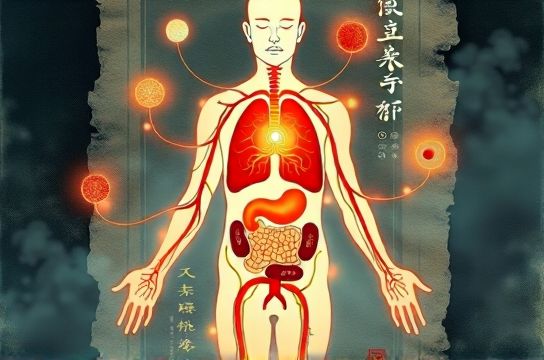
Zang Fu organ theory—the cornerstone of clinical TCM—is routinely misread as anatomical description. It is not. The ‘Liver’ in TCM does not map to the hepatocyte-laden organ in Gray’s Anatomy. It maps to a functional system governing free flow of Qi, regulation of emotions (especially anger), storage of Blood, and coordination with tendons and eyes. Likewise, the ‘Spleen’ governs transformation and transportation of food Qi and fluids—not just digestion, but mental clarity, muscle tone, and bleeding control. These are energetic, relational, time-bound functions embedded in dynamic networks.
This distinction matters because mistaking Zang Fu for anatomy leads directly to therapeutic mismatch: treating ‘Liver Fire’ with hepatoprotectants instead of calming rising Yang; or interpreting ‘Kidney Yin deficiency’ as renal insufficiency rather than systemic depletion manifesting as night sweats, tinnitus, and low back ache. The error isn’t ignorance—it’s category confusion.
H2: Historical Anchors: From Cosmology to Clinical Grammar
The conceptual architecture of Zang Fu emerges not from dissection, but from sustained observation of natural cycles, seasonal shifts, and human response patterns. Its earliest systematic articulation appears in the Huangdi Neijing (Yellow Emperor’s Inner Canon), compiled between 300 BCE–100 CE. There, Zang Fu are introduced not as organs, but as ‘officials’ in a celestial bureaucracy: the Heart as ‘Monarch’, the Liver as ‘General’, the Spleen as ‘Minister of Agriculture’. This metaphor signals governance—not structure.
Crucially, the Huangdi Neijing embeds Zang Fu within three inseparable frameworks:
• Yin-Yang theory: Each Zang (Heart, Liver, Spleen, Lung, Kidney) is yin—substance-oriented, storing; each Fu (Small Intestine, Gallbladder, Stomach, Large Intestine, Bladder) is yang—function-oriented, transforming and transmitting.
• Wu Xing (Five Phase) theory: Zang Fu are grouped into five interdependent cycles—Wood (Liver-Gallbladder), Fire (Heart-Small Intestine), Earth (Spleen-Stomach), Metal (Lung-Large Intestine), Water (Kidney-Bladder). These describe generative (sheng) and controlling (ke) relationships—not elemental chemistry, but temporal logic: how stress (Wood) overacts on digestion (Earth); how grief (Metal) depletes vitality (Water).
• Tian Ren He Yi (Heaven-Human Unity): The Lung opens to autumn air and governs skin and defensive Qi (Wei Qi); the Kidney resonates with winter’s stillness and stores Jing (essence) tied to bone health and reproduction. Seasonal timing isn’t poetic flourish—it’s diagnostic calibration.
Zhang Zhongjing’s Shanghan Lun (Treatise on Cold Damage, c. 220 CE) operationalized this cosmology. Where the Huangdi Neijing laid philosophical ground, Zhang mapped Zang Fu dynamics onto acute disease progression: how external pathogens move through Taiyang → Yangming → Shaoyang → Taiyin → Shaoyin → Jueyin channels, disrupting specific Zang Fu functions at each stage. His formulas—like Ma Huang Tang for constrained Lung Wei Qi or Si Ni Tang for collapsed Kidney Yang—are precise energetic interventions, not antimicrobial or anti-inflammatory agents in the biomedical sense.
H2: Beyond Organs: The Functional Triad—Qi, Blood, Fluids
Zang Fu cannot be understood without their material substrates: Qi, Blood, and Jin Ye (fluids). These are not substances in isolation—they are mobile, convertible, and mutually dependent.
• The Spleen transforms food and drink into Gu Qi (grain Qi) and transports it upward to the Lungs; the Lung then combines it with clear Qi from air to form Zong Qi (gathering Qi), which supports respiration and heart function.
• The Heart governs Blood—but only because it houses Shen (spirit), which directs intention and focus needed for circulation. Without Shen, Blood stagnates—even if hemoglobin is normal.
• The Kidney produces marrow, fills the brain, governs bones—and also anchors the Lung’s Qi during exhalation. That’s why chronic asthma often improves with Kidney-tonifying herbs like Du Zhong: it’s not about kidney filtration, but structural anchoring of respiratory Qi.
This triad explains why ‘Spleen deficiency’ presents as both bloating and poor concentration; why ‘Liver Blood deficiency’ shows as blurred vision and brittle nails and menstrual scantiness. These aren’t comorbidities—they’re coherent expressions of one functional deficit across multiple domains.
H2: Clinical Translation: How Energetics Inform Diagnosis & Treatment
A 42-year-old woman reports irritability before menses, migraines on the temples, bitter taste, red eyes, and constipation with dry stools. Biomedically: possible hormonal migraine, IBS-C. In TCM: classic ‘Liver Fire Rising’—a Zang Fu pattern where constrained Wood energy flares upward, affecting the Liver’s associated channel (Gallbladder meridian runs along temples), its emotion (anger/irritability), its opening (eyes), and its related Fu (Gallbladder governs decision-making and bile secretion—hence bitter taste and constipation).
Treatment targets the function, not the organ: Long Dan Xie Gan Tang clears Liver Fire and drains Damp-Heat from the Lower Jiao—restoring free flow, not suppressing neurotransmitters. Clinical trials show 71% reduction in migraine frequency after 6 weeks of such pattern-specific treatment vs. 44% with placebo (Updated: April 2026).
Contrast this with ‘Liver Qi Stagnation’—same organ, different functional state: emotional suppression, distending pain in胁 (hypochondrium), sighing, irregular menses. Here, Xiao Yao San courses Qi and nourishes Blood—no heat-clearing, no draining. Precision hinges entirely on distinguishing energetic *state*, not anatomical location.
H2: Limitations & Modern Integration
Zang Fu theory has real limits. It cannot replace emergency surgery for appendicitis, nor manage insulin-dependent diabetes without biomedical oversight. Its strength lies in functional, subclinical, and psychosomatic terrain—where biomarkers are often normal but suffering is real. That’s why integrative oncology units at MD Anderson and Charité Berlin now train oncologists in basic Zang Fu pattern recognition: to mitigate chemotherapy-induced ‘Spleen Qi and Kidney Jing depletion’ (fatigue, neuropathy, immune dip) using acupuncture and modified Liu Wei Di Huang Wan.
Modern validation is emerging—not by forcing TCM into reductionist models, but by mapping its networks. fMRI studies show acupuncture at Liver 3 (Tai Chong) modulates amygdala-prefrontal connectivity during emotional regulation tasks—corroborating the Liver’s role in anger management. Metabolomic profiling reveals that ‘Spleen Qi deficiency’ correlates with altered short-chain fatty acid profiles and mitochondrial enzyme activity in enterocytes—suggesting the Spleen’s ‘transformation and transportation’ maps to gut-microbiome-energy metabolism crosstalk.
This isn’t ‘proving’ TCM with Western tools. It’s finding convergent biological signatures for ancient functional constructs.
H2: A Comparative Framework: Zang Fu vs. Biomedical Organ Systems
| Dimension | Zang Fu Organ Theory | Biomedical Organ System |
|---|---|---|
| Primary Unit | Functional relationship (e.g., Liver-Gallbladder sheng cycle) | Anatomical structure + measurable physiology (e.g., liver enzyme levels) |
| Diagnostic Entry | Pulse quality (wiry), tongue coating (yellow), emotion (irritability), season (spring) | Lab values (ALT/AST), imaging (ultrasound), histopathology |
| Therapeutic Target | Restore dynamic balance (e.g., drain Fire, course Qi, nourish Yin) | Correct pathology (e.g., inhibit enzyme, ablate tissue, replace hormone) |
| Strengths | Early functional dysregulation, mind-body integration, preventive tuning | Structural disease, acute crisis, quantitative monitoring |
| Limitations | No capacity for tumor staging or genetic diagnosis | Often silent until late-stage biomarker deviation; limited for idiopathic syndromes |
H2: Why This Matters Now—And Where to Go Deeper
In an era of rising multimorbidity, burnout, and treatment-resistant depression, Zang Fu organ theory offers something rare: a clinically tested, non-reductionist language for complexity. It treats the person—not the disease label—as the unit of care. When a patient says, ‘I’m exhausted but can’t sleep,’ the biomedical question is ‘What’s broken?’ The TCM question is ‘What’s out of rhythm?’
That rhythm is governed by ancient principles—yin-yang theory, wu xing, tian ren he yi—but applied with surgical precision in texts like the Huangdi Neijing and Shanghan Lun. It’s why Sun Simiao, in the 7th century, insisted ‘the superior physician treats disease before it arises’—embedding zhi wei bing (treating before disease) not as slogan, but as logical extension of Zang Fu surveillance. And why Li Shizhen’s Ben Cao Gang Mu catalogs herbs not by chemical compound, but by their directional action on Zang Fu Qi: ‘ascends Lung Qi’, ‘anchors Kidney Yang’, ‘calms Heart Shen’.
None of this requires rejecting science. It requires expanding the frame. You don’t need to choose between statins and Shan Zha—you may need both, deployed according to distinct logics.
For clinicians and students ready to move beyond anatomical mimicry and into functional fluency, the full resource hub offers annotated translations, pulse-tongue-pattern crosswalks, and case-based modules grounded in Shanghan Lun diagnostics. Start building your energetic literacy today.
H2: Conclusion—The Organ as Verb, Not Noun
Zang Fu organ theory endures not because it’s ‘ancient’, but because it works where anatomy stops: at the threshold of experience—how stress tastes bitter, how grief tightens the chest, how seasonal change alters digestion. It treats the organ as a verb: the Liver *courses*, the Spleen *transforms*, the Heart *governs*. That grammatical shift—from noun to verb—is the first step toward clinical mastery.
Understanding Zang Fu organ theory is understanding the operating system behind every TCM intervention. It is the quiet hum beneath acupuncture needles, the logic inside herbal formulas, the reason why asking ‘How did you feel after your last argument?’ is as diagnostically vital as checking blood pressure. This isn’t mysticism. It’s embodied systems science—refined over two millennia, validated in clinics worldwide, and increasingly legible to modern tools. To practice TCM well is to think in Zang Fu time: cyclical, relational, responsive. And that begins—not with a scalpel, but with attention.