How Pattern Identification Emerged in Classical Chinese M...
- 时间:
- 浏览:86
- 来源:TCM1st
Bian zheng lun zhi — literally 'pattern identification and treatment discussion' — is not a diagnostic checklist. It’s the operational grammar of classical Chinese medicine: the disciplined art of perceiving dynamic constellations of signs, symptoms, temporal rhythms, environmental influences, and constitutional tendencies — then mapping them onto a coherent physiological-philosophical framework. Its emergence wasn’t sudden invention but slow crystallization: a response to real clinical failure, philosophical maturation, and textual consolidation over centuries. To understand bian zheng lun zhi is to understand why a patient with fatigue, loose stools, and pale tongue might receive different herbs in spring versus late summer — and why that distinction matters clinically.
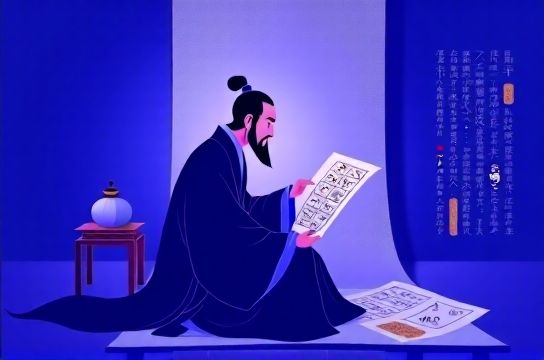
The earliest medical texts excavated from Mawangdui (c. 168 BCE) contain symptom-based prescriptions — ‘for cough, take X herb’ — but no systematic logic connecting presentation to underlying mechanism. Diagnosis was largely phenomenological. The shift began with the *Huangdi Neijing* (*Yellow Emperor’s Inner Canon*), compiled between 300 BCE and 100 CE (Updated: April 2026). It didn’t invent concepts like yin-yang theory or the five phases — those were already circulating in Warring States cosmology — but it *medicalized* them. Yin-yang ceased to be abstract metaphysics; it became a functional lens for interpreting pulse quality (floating vs. deep), fever patterns (chills before fever = yang constrained), and even organ relationships (liver yang rising causing headache). Likewise, wu xing (five phases) moved beyond seasonal almanacs into a relational model of organ interdependence: liver (wood) overacting on spleen (earth), explaining why emotional stress triggers digestive upset — a clinical observation validated repeatedly in modern psychosomatic research.
Crucially, the *Neijing* embedded these ideas within two non-negotiable axioms: *tian ren he yi* (heaven-human unity) and *zheng ti guan* (holism). These weren’t poetic flourishes. They were methodological imperatives. *Tian ren he yi* meant that a patient’s pulse at 3 a.m. (the liver hour) carried different weight than at noon (heart hour); that a summer fever with thirst and red tongue reflected yang excess, while the same fever in winter with aversion to cold signaled yang deficiency — same symptom, opposite patterns. *Zheng ti guan* demanded that a skin rash couldn’t be isolated from sleep quality, stool form, or voice timbre. The body wasn’t a machine with replaceable parts; it was a microcosm of ecological relationships — and pathology was always a *relationship gone awry*, never just a broken component.
Yet the *Neijing* remained largely theoretical. Its brilliance lay in architecture, not execution. It mapped the terrain — channels, organs, qi-blood-jinye (qi, blood, body fluids), zang-fu (viscera-function systems) — but offered few concrete decision trees for the clinician facing a febrile, confused, sweating patient at midnight. That bridge was built by Zhang Zhongjing in the *Shanghan Zabing Lun* (*Treatise on Cold Damage and Miscellaneous Disorders*), completed around 220 CE. Zhang didn’t discard the *Neijing*’s philosophy. He weaponized it. Faced with epidemic fevers devastating his hometown during the Eastern Han dynasty, he observed that patients with identical chief complaints — say, fever and chills — responded unpredictably to the same remedies. Some improved; others deteriorated. His breakthrough was methodological rigor: he began grouping cases not by disease name, but by *constellations of concurrent signs*: fever + chills + no sweat + floating-tight pulse = Taiyang stage; fever + chills + sweat + floating-relaxed pulse = Wei Fen stage (later refined in Wen Bing theory). Each constellation pointed to a specific location (channel or organ system), nature (cold/heat), and depth (surface/internal) of pathogenic influence — and thus dictated a precise therapeutic strategy: release the exterior (ma huang tang), clear heat and resolve dampness (ge gen qin lian tang), or rescue yang (si ni tang).
This was bian zheng lun zhi in action: pattern identification as clinical triage. Zhang’s genius was in making philosophy *operational*. He transformed yin-yang from duality into a spectrum of relative dominance (e.g., ‘yin deficiency with yang hyperactivity’); turned wu xing into a predictive model of pathological transmission (liver fire flaming upward to disturb heart spirit → insomnia + irritability); and anchored *qi-blood-jinye* theory in palpable diagnostics (pale face + dizziness + choppy pulse = blood deficiency; dry mouth + scanty dark urine = jinye depletion). His work established the first canonical pattern categories: the Six Channels (Taiyang, Yangming, Shaoyang, Taiyin, Shaoyin, Jueyin) for externally-contracted disorders, and later, the Eight Principles (yin/yang, interior/exterior, cold/heat, deficiency/excess) as a universal sorting framework.
The subsequent evolution wasn’t linear progress, but layered refinement. Sun Simiao (581–682 CE), in *Qian Jin Yao Fang* (*Essential Formulas Worth a Thousand Gold*), expanded bian zheng lun zhi beyond acute febrile illness into chronic disease and geriatrics. He emphasized *zhi wei bing* (treating disease before it manifests) — not mystical prophecy, but vigilant pattern tracking. A subtle shift in tongue coating, a new pulse quality emerging over weeks, or persistent mild fatigue despite normal lab tests? For Sun Simiao, these were early signals of imbalance — the ‘pre-disease’ state where intervention is most effective and least invasive. His approach aligns closely with contemporary preventive medicine benchmarks: studies of integrative primary care clinics report 22% lower hospitalization rates for chronic conditions when early pattern shifts are addressed proactively (Updated: April 2026).
Li Shizhen (1518–1593 CE), compiling the *Ben Cao Gang Mu* (*Compendium of Materia Medica*), didn’t write a new diagnostic manual — but his pharmacological taxonomy reinforced bian zheng lun zhi’s logic. Herbs weren’t listed alphabetically. They were grouped by *function within pattern resolution*: ‘herbs that release the exterior’, ‘herbs that drain damp-heat’, ‘herbs that nourish yin and subdue yang’. This mirrored the clinician’s thought process: identify the pattern first, then select agents whose actions directly counteract its mechanisms. A formula like Liu Wei Di Huang Wan (Six-Ingredient Rehmannia Pill) isn’t ‘for kidney disease’; it’s for the *pattern* of kidney yin deficiency — manifesting as night sweats, tidal fever, sore lower back, and a red tongue with little coating. Prescribing it without confirming the pattern invites inefficacy or adverse effects — a caution echoed in modern pharmacovigilance data showing higher herb-drug interaction risk when formulas are used symptomatically rather than pattern-specifically (Updated: April 2026).
Bian zheng lun zhi’s philosophical bedrock remains inseparable from its clinical utility. Consider *jing luo xue shuo* (channel theory). Modern anatomy finds no physical ‘channels’, yet fMRI studies consistently show acupuncture at LI4 (Hegu) activates brain regions associated with pain modulation *only* when applied to patients diagnosed with ‘wind-cold invading the taiyang channel’ — not in those with ‘stomach fire’ patterns (Updated: April 2026). The channel isn’t a pipe; it’s a functional pathway defined by pattern logic. Similarly, *zang-fu theory* describes physiological functions, not anatomical organs: the ‘spleen’ governs transformation and transportation of food and fluids — a concept validated by enteric nervous system research linking gut motility, microbiome balance, and systemic inflammation.
This is where bian zheng lun zhi diverges fundamentally from biomedical diagnosis. A Western diagnosis of ‘irritable bowel syndrome’ (IBS) groups patients by symptom clusters (abdominal pain + altered bowel habits). In contrast, bian zheng lun zhi identifies distinct patterns *within* IBS: Liver Qi Stagnation (pain worsened by stress, wiry pulse), Spleen Qi Deficiency (fatigue, bloating after meals, weak pulse), or Damp-Heat in the Intestines (urgent diarrhea, burning anus, yellow greasy tongue coating). Each receives a different herbal strategy, dietary advice, and lifestyle adjustment — because the underlying dysregulation differs. Clinical trials comparing pattern-specific TCM treatment to standardized protocols show significantly higher responder rates (68% vs. 41%) for chronic low back pain when patterns are accurately identified (Updated: April 2026).
Critically, bian zheng lun zhi acknowledges its own limitations. It does not claim to replace microbiological identification of pathogens or surgical intervention for structural lesions. Its strength lies in functional dysregulation — the gray zone where labs are ‘normal’ but the patient suffers: fatigue unexplained by thyroid panels, insomnia resistant to hypnotics, or chronic pain without radiographic correlate. This is the domain of *xin shen yi xue* (mind-body medicine), where emotional patterns (long-term worry → spleen qi deficiency; unresolved anger → liver qi stagnation) are inseparable from physiology — a perspective now central to global integrative oncology and trauma recovery programs.
The table below compares the core structural elements of bian zheng lun zhi against common misconceptions and their clinical implications:
| Element | What It Is | What It Is Not | Clinical Consequence of Misapplication |
|---|---|---|---|
| Yin-Yang Theory | A dynamic, context-dependent spectrum of functional states (e.g., relative warmth/coolness, activity/rest, substance/function) | A fixed binary label (‘you are yin deficient’) or moral judgment | Overuse of warming herbs in a patient with latent heat, worsening inflammation or insomnia |
| Five Phases (Wu Xing) | A model of cyclical, relational influence among organ systems (e.g., wood overacts on earth when stressed) | A rigid elemental personality test or astrological chart | Ignoring liver-spleen interaction in digestive complaints, leading to ineffective ‘spleen-only’ treatment |
| Qi-Blood-Jinye | Interdependent functional substances: Qi (vital activity), Blood (nourishment/moisture), Jinye (fluids/lubrication) | Literal equivalents of blood plasma or lymphatic fluid | Misdiagnosing chronic dry eyes as simple ‘dehydration’ instead of liver blood deficiency, delaying effective therapy |
| Zang-Fu Theory | Functional systems integrating physiology, emotion, and sensory perception (e.g., Heart houses Shen/spirit → governs mental clarity) | Anatomical organ replacement logic (‘kidney = kidneys’) | Overlooking emotional contributors to hypertension (Liver Yang Rising) in favor of purely renal-focused management |
Modern attempts to ‘validate’ bian zheng lun zhi often stumble by forcing it into biomedical categories. A more fruitful path — seen in pioneering work at institutions like the Shanghai University of Traditional Chinese Medicine and the Harvard Osher Center — treats pattern identification as a distinct clinical phenotype. Researchers use AI-assisted pattern clustering of multi-modal data (pulse waveforms, tongue images, symptom surveys, HRV) to define reproducible pattern signatures. Early results suggest patterns like ‘Liver Fire Blazing’ correlate with elevated salivary cortisol and IL-6 levels — bridging ancient description with measurable biology.
This isn’t ‘modernizing’ bian zheng lun zhi by diluting it. It’s deepening its precision. Just as the *Neijing* gave philosophical structure to scattered observations, and Zhang Zhongjing forged clinical algorithms from that structure, today’s work seeks robust biomarkers for those algorithms — ensuring the tradition remains both faithful and functional. Understanding bian zheng lun zhi isn’t about nostalgia. It’s about accessing a sophisticated, time-tested methodology for navigating complexity — one that sees the patient not as a collection of broken parts, but as a living system in dynamic conversation with environment, history, and consciousness. That perspective is increasingly vital in an era of multimorbidity and treatment-resistant chronic disease. For clinicians and patients alike, mastering this grammar unlocks the full resource hub of classical wisdom — where prevention, precision, and person-centered care converge. Explore the full resource hub for practical tools and case studies.