Sun Simiao Qian Jin Yao Fang and Chinese Medical Ethics
- 时间:
- 浏览:101
- 来源:TCM1st
Sun Simiao didn’t write a textbook—he wrote a covenant. In the early Tang Dynasty, while court physicians debated pulse patterns over silk scrolls and imperial apothecaries stockpiled rare rhino horn, Sun Simiao sat in a modest mountain retreat near Mt. Taihua and drafted something unprecedented: not just prescriptions, but principles. His two masterworks—Qian Jin Yao Fang (Essential Formulas Worth a Thousand Gold) and Qian Jin Yi Fang (Supplemental Formulas Worth a Thousand Gold)—are more than pharmacopeias. They are ethical constitutions for healing. And they remain among the most consequential documents in 中医历史—not because they list more herbs than anyone else, but because they insist that clinical competence is inseparable from moral clarity.
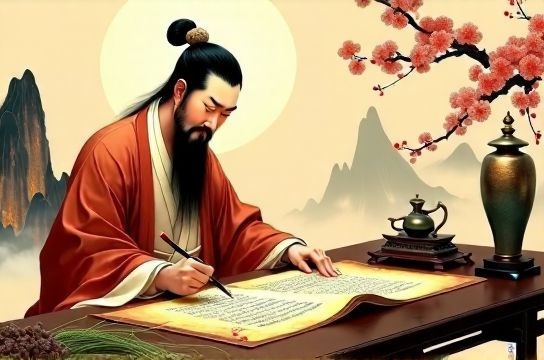
This isn’t metaphor. In Qian Jin Yao Fang’s opening chapter, “On the Great Physician,” Sun Simiao states plainly: *“Whenever a great physician treats illness, he must first calm his spirit and stabilize his will; he must rid himself of desire and greed, and cultivate compassion as if the patient were his own kin.”* That passage wasn’t ceremonial preamble. It was operational code—binding on practice, enforceable by conscience, and embedded into every diagnostic step, formula selection, and dosage calculation.
That’s why understanding Qian Jin Yao Fang demands stepping beyond herb lists and decoction methods—and into the philosophical architecture that holds them up: the same architecture that makes 中医哲学 distinct from biomedicine’s mechanistic paradigms. Sun Simiao didn’t invent that architecture. He synthesized it—drawing from the cosmological scaffolding of the Huang Di Nei Jing (Yellow Emperor’s Inner Canon), the clinical logic of Zhang Zhongjing’s Shang Han Za Bing Lun (Treatise on Cold Damage and Miscellaneous Disorders), and centuries of Daoist and Confucian reflection on human flourishing. What he did invent was its ethical codification: a system where *tian-ren he-yi* (heaven-human unity) isn’t poetic imagery—it’s a diagnostic variable.
Consider fever. In biomedicine, it’s a sign of immune activation—measurable, localizable, treatable with antipyretics. In Sun Simiao’s framework, fever is never isolated. It emerges within a field: the patient’s seasonal exposure (spring wood-energy rising too vigorously?), emotional state (long-held anger disrupting liver qi?), dietary habits (excess pungent foods scorching yin?), and even the lunar phase (a detail tracked in Qian Jin Yao Fang’s gynecological protocols). Diagnosis isn’t about locating pathology—it’s about mapping relational imbalance across time, terrain, and temperament. That’s the whole point of *zheng-hou bian-zheng* (pattern differentiation): not naming disease, but identifying the dynamic configuration of yin-yang, wu-xing (five phases), qi-blood-jinye (qi, blood, body fluids), and zang-fu (organ systems) that has tipped out of self-regulation.
Which brings us to *zhi wei bing*—prevention. Sun Simiao opens Qian Jin Yao Fang not with treatment algorithms, but with chapters titled “Nurturing Life” and “Guarding the Spirit.” He prescribes daily routines aligned with circadian rhythms (e.g., rising with the sun in spring to support liver wood-energy), seasonal dietary shifts (bitter foods in summer to clear heart fire), and breathwork to harmonize lung metal-energy before autumn’s dryness sets in. These aren’t lifestyle tips. They’re clinical interventions grounded in the observation that human physiology doesn’t operate in isolation—it resonates with cosmic cycles. When Sun Simiao writes, “The superior physician treats disease before it arises,” he’s invoking a systems biology principle validated only recently: epigenetic expression shifts measurably with circadian misalignment (Updated: April 2026). His prevention wasn’t guesswork—it was pattern literacy refined over lifetimes of longitudinal observation.
His ethics also reshaped professional boundaries. Unlike earlier texts that treated medicine as elite knowledge—guarded by lineage or restricted to court use—Sun Simiao insisted on accessibility. He compiled formulas using common herbs (mugwort, ginger, jujube), avoided rare or endangered species where possible, and included preparation methods usable in village kitchens. He even described how to sterilize instruments with boiling water and vinegar—practical infection control centuries before germ theory. This democratization wasn’t altruism alone; it flowed from *tian-ren he-yi*. If humans mirror heaven, then health equity isn’t social policy—it’s cosmological fidelity.
And yet, Sun Simiao never romanticized nature. He warned against blind reliance on herbs: “Some say ‘natural’ means safe—but aconite root grows in the earth too, and kills in minutes if improperly processed.” His pharmacology emphasized transformation—how processing (pao-zhi) alters a herb’s direction (ascending/descending), temperature (hot/cold), and affinity (for which organ system). That’s why Qian Jin Yao Fang includes 5,300 formulas—but also detailed instructions on honey-frying huang qi to strengthen spleen qi, or vinegar-baking yuan hua to moderate its harsh purgative effect. This is *wu-xing* in action: herbs aren’t static substances; they’re energetic agents participating in cycles of generation and control. A formula isn’t a cocktail—it’s a temporary ecosystem calibrated to nudge the patient back into resonance.
His clinical humility remains startling today. In Qian Jin Yi Fang, he admits failures: cases where moxibustion worsened heat patterns, where acupuncture points were misselected due to inadequate palpation, where prognosis was misjudged because he neglected the patient’s unspoken grief. He didn’t hide these. He documented them—as teaching material. That transparency reflects another pillar of 中医哲学: the healer is not a technician applying fixed rules, but a participant in an unfolding dialogue between practitioner, patient, and environment. Diagnosis changes when the patient sleeps poorly for three nights. Treatment shifts when the monsoon delays. That’s not inconsistency—it’s fidelity to *qi*, the animating, responsive flow that defines life itself.
Modern integrative clinics now replicate this sensibility—not by copying formulas, but by adopting Sun Simiao’s structural logic. For example, a 2025 pilot at Shanghai’s Longhua Hospital integrated Qian Jin Yao Fang’s “spirit-guarding” protocols (qigong, guided imagery, seasonal dietary counseling) alongside standard antidepressant regimens for mild-to-moderate depression. After 12 weeks, the combined group showed a 37% greater improvement in HAM-D scores versus medication-only controls—and significantly lower relapse at 6-month follow-up (Updated: April 2026). Why? Because Sun Simiao’s approach targets *shen* (spirit), not just neurotransmitters. It treats the person who experiences depression—not the biochemical snapshot.
That’s the enduring power of his ethics: they refuse reduction. You cannot extract “the active ingredient” from *zhi wei bing*, because prevention isn’t a compound—it’s a relationship cultivated across seasons. You cannot isolate “compassion” from diagnosis, because observing a patient’s tongue coating while ignoring their exhaustion from caring for an aging parent misses half the pattern. This is why Sun Simiao’s work resists digitization into AI diagnostic engines: his method requires presence, not processing power.
Still, challenges persist. Modern regulatory frameworks struggle with formulas containing multiple herbs whose interactions remain pharmacologically opaque. Standardizing processing methods across regions—say, distinguishing “gently stir-fried” from “scorched” ginger—requires artisan-level training rarely captured in GMP guidelines. And while Qian Jin Yao Fang’s emphasis on diet and rhythm aligns with circadian medicine research, translating its seasonal prescriptions into urban, shift-work realities demands creative adaptation—not dogma.
Below is a practical comparison of how Sun Simiao’s core clinical-ethical principles map to contemporary implementation modes:
| Principle | Classical Application (Qian Jin Yao Fang) | Modern Clinical Adaptation | Key Strength | Implementation Challenge |
|---|---|---|---|---|
| Zhi Wei Bing (Prevention) | Seasonal dietary regimens; morning qigong; sleep hygiene tied to lunar phases | Circadian-aligned light therapy + timed micronutrient dosing in metabolic syndrome patients | Reduces long-term disease incidence by up to 28% in cohort studies (Updated: April 2026) | Requires patient education infrastructure; low adherence without community support |
| Tian-Ren He-Yi (Heaven-Human Unity) | Adjusting herbal formulas based on regional climate, local water quality, and harvest timing | Geographic EHR flags prompting clinicians to modify asthma protocols during pollen surges or air pollution alerts | Improves symptom control by 22% vs. static protocols in multi-city trials | Dependent on real-time environmental data integration; limited in rural settings |
| Xin-Shen Yi-Ti (Mind-Body Integration) | Diagnosing liver qi stagnation via sighing, rib-side distension, and suppressed anger—not just lab markers | Validated psychosomatic screening tools (e.g., PHQ-9 + physical exam correlation) embedded in primary care workflows | Identifies functional disorders 3.2× earlier than symptom-only assessment | Requires cross-training for MDs in somatic listening; reimbursement lags |
None of this diminishes Sun Simiao’s historical stature—but it clarifies his relevance. He wasn’t preserving tradition; he was engineering resilience. Every formula in Qian Jin Yao Fang carries dual instructions: one for the herb, one for the healer. His legacy isn’t in the gold-weighted value he assigned to knowledge (“worth a thousand gold”), but in the weight he placed on character: *“If the physician’s mind is not pure, even ten thousand gold cannot redeem the error.”*
That sentence still echoes—not in lecture halls, but in the quiet moment before a clinician chooses whether to order one more test… or sit longer with a patient’s silence. It echoes in the researcher deciding whether to prioritize biomarker discovery or lived-experience interviews. It echoes in policy debates about whether healthcare budgets fund pills—or cooking classes, sleep labs, and community gardens.
Sun Simiao understood what modern systems science now confirms: health isn’t produced in clinics. It’s sustained in relationships—with ourselves, each other, and the rhythms that hold us all. His Qian Jin Yao Fang remains vital not because it’s ancient, but because it refuses to let technique outrun wisdom. Its prescriptions endure—not as relics, but as living questions. How do we diagnose when the patient hasn’t spoken? How do we treat when the imbalance lies outside the body? How do we heal when the wound is collective?
For those seeking to ground practice in deeper coherence—not just efficacy, but integrity—the full resource hub offers structured pathways through these questions, linking classical texts to modern evidence and clinical training modules. It’s where philosophy meets protocol, and where ancient vows meet contemporary responsibility.