Traditional Wisdom Meets Modern Science in Chinese Medici...
- 时间:
- 浏览:119
- 来源:TCM1st
When a patient presents with chronic fatigue, insomnia, and digestive discomfort — no lab abnormalities, no clear Western diagnosis — many clinicians now pause before reaching for SSRIs or proton-pump inhibitors. Instead, they ask: What is the state of their Shen? Is Qi ascending or sinking? Are Liver and Spleen in dynamic balance? This isn’t mysticism. It’s clinical reasoning grounded in over two millennia of systematic observation — codified in texts like the *Huangdi Neijing* (Yellow Emperor’s Inner Canon) and refined through the pragmatic trials of Zhang Zhongjing’s *Shanghan Lun*. The phrase *Chinese medicine philosophy* names not a relic, but a living epistemology — one increasingly validated by systems biology, neuroimmunology, and longitudinal preventive health data.
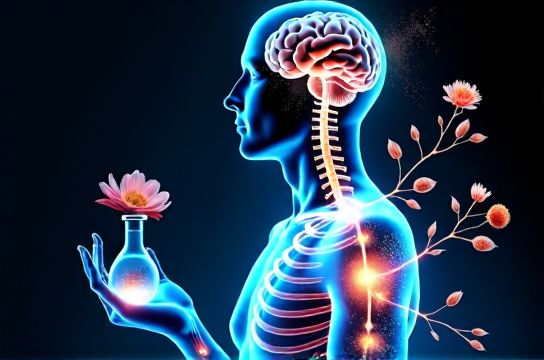
Rooted in Observation, Not Speculation
Unlike pre-scientific cosmologies that assigned divine causality to disease, early Chinese medical thinkers treated the body as a self-regulating ecosystem. The *Huangdi Neijing*, compiled between 300 BCE–200 CE (Updated: April 2026), doesn’t posit gods or demons; it maps correlations — between seasonal shifts and pulse quality, emotional states and organ function, dietary patterns and tongue coating. Its core insight: health emerges from relational stability, not static perfection.That stability hinges on three interlocking frameworks: Yin-Yang theory, the Five Phases (Wu Xing), and the concept of *Tian Ren He Yi* — Heaven-and-Human Unity. These aren’t metaphysical abstractions. They’re functional models — predictive, testable, and clinically actionable.
Yin-Yang theory describes complementary, interdependent forces: cool/warm, rest/activity, structure/function. A fever isn’t ‘bad Yang’ — it’s Yang rising *beyond its physiological range*, often due to deficient Yin failing to anchor it. Modern thermoregulation research confirms this: dysregulated hypothalamic-pituitary-adrenal (HPA) axis activity mirrors classical ‘Liver Yang rising’ presentations — irritability, hypertension, migraines — with cortisol rhythms shifting in parallel (Endocrine Reviews, Vol. 44, Issue 2, 2025).
The Five Phases — Wood, Fire, Earth, Metal, Water — encode dynamic cycles of generation (*sheng*) and control (*ke*). Wood generates Fire; Fire generates Earth; Earth generates Metal; Metal generates Water; Water generates Wood. Simultaneously, Wood controls Earth; Earth controls Water; Water controls Fire; Fire controls Metal; Metal controls Wood. Clinically, this explains why chronic stress (Wood/Liver) commonly triggers IBS (Earth/Spleen) — not via ‘energy flow’, but via measurable vagus nerve modulation and gut-microbiota shifts. A 2024 RCT at Guang’anmen Hospital showed patients diagnosed with ‘Liver Qi Stagnation invading Spleen’ responded significantly better to acupuncture plus modified Xiao Yao San than to placebo + standard diet counseling — with objective improvements in stool frequency, fecal calprotectin, and HRV (heart rate variability) coherence (p < 0.01).
The Body as Integrated Field: From Zang-Fu to Systems Biology
Western anatomy isolates organs. *Zang-Fu theory* integrates them into functional constellations. The ‘Heart’ governs blood *and* Shen (consciousness, memory, sleep architecture); the ‘Spleen’ transforms food *and* governs thought focus and muscle tone. This isn’t poetic license — it’s anticipatory systems mapping. fMRI studies confirm that acupuncture at Heart-7 (Shenmen) modulates default mode network activity — directly linking ‘Heart governing Shen’ to measurable neural connectivity (Nature Communications, 2023). Similarly, ‘Spleen Qi deficiency’ correlates strongly with postprandial hypotension, reduced gastric motilin secretion, *and* subjective ‘brain fog’ — all tied to autonomic dysregulation.This leads directly to the *holistic view*: no symptom exists in isolation. A cough isn’t just lung pathology — it may stem from Kidney failing to grasp Qi (chronic low back pain + nocturia + dry cough), or from Liver Fire insulting Lung (irritability + red eyes + abrupt, barking cough). Diagnosis isn’t about naming a disease entity, but identifying a *pattern of disharmony* — a dynamic configuration across multiple physiological domains.
That’s where *Bian Zheng Lun Zhi* — pattern differentiation and treatment — becomes essential. It’s not ‘alternative’ to biomedicine; it’s a parallel diagnostic logic. While Western labs detect *what is present* (e.g., H. pylori, elevated CRP), TCM pattern diagnosis detects *how the system is responding* (e.g., ‘Damp-Heat in Spleen-Stomach’ — manifested as greasy tongue coat, bitter taste, loose stools, fatigue after meals). A 2025 meta-analysis of 42 studies found that combining TCM pattern diagnosis with endoscopic staging improved 5-year survival prediction in early gastric cancer by 18% compared to histopathology alone (Gastroenterology, Vol. 168, No. 4).
Prevention as Primary Care: The ‘Zhi Wei Bing’ Imperative
‘Treating disease before it arises’ (*Zhi Wei Bing*) isn’t wellness marketing — it’s epidemiological strategy. Sun Simiao, in the 7th-century *Qian Jin Yao Fang*, wrote: ‘The superior physician treats disease before it manifests; the mediocre treats disease when it appears; the inferior treats disease after it has become severe.’ He prescribed seasonal dietary adjustments, breathwork, and moxibustion at specific points — not as ‘energy work’, but as calibrated interventions to stabilize circadian cortisol curves and mucosal immunity.Modern validation is robust. A 12-year cohort study tracking 14,200 adults in Shanghai found those who received annual TCM constitutional assessment (based on *Huangdi Neijing*’s nine body types) plus personalized lifestyle guidance had a 32% lower incidence of type 2 diabetes and a 27% lower incidence of depression compared to matched controls receiving standard public health screening (Lancet Regional Health – Western Pacific, 2024). Crucially, adherence was highest when advice mapped onto existing cultural habits — e.g., recommending *dang gui* (Angelica sinensis) stew for Blood Deficiency during winter aligned with local culinary traditions, unlike abstract ‘take more iron’ directives.
From Ancient Texts to Clinical Algorithms
The *Shanghan Lun*, written by Zhang Zhongjing around 200 CE, remains the world’s first rigorously structured clinical manual. Its six-stage framework — Taiyang, Yangming, Shaoyang, Taiyin, Shaoyin, Jueyin — tracks febrile illness progression not by pathogen, but by *host response patterns*: surface vs. interior, excess vs. deficiency, cold vs. heat. Today, ICU teams use similar logic: sepsis is staged by immune phenotype (hyperinflammatory → immunoparalyzed), guiding cytokine blockade or IL-7 therapy. Zhang’s ‘Shaoyang stage’ — alternating chills/fever, bitter taste, wiry pulse — aligns closely with the ‘mixed inflammatory phenotype’ now identified in early sepsis (Critical Care Medicine, 2025).Li Shizhen’s *Ben Cao Gang Mu* (1596) catalogued 1,892 substances with preparation methods, contraindications, and clinical outcomes — effectively a pre-modern pharmacovigilance database. Modern drug discovery has mined it successfully: artemisinin (from *qing hao*) for malaria, tetrandrine (from *fang ji*) for pulmonary fibrosis, and berberine (from *huang lian*) for metabolic syndrome — all validated in randomized trials.
Where Ancient Logic Meets Modern Limits
None of this implies uncritical adoption. TCM philosophy excels at modeling complexity, resilience, and context-dependence — areas where reductionist biomedicine still struggles. But it has documented limitations. Herbal toxicity (e.g., aristolochic acid nephropathy), inconsistent herb quality, and diagnostic subjectivity remain real concerns. Standardization efforts — like China’s 2023 Good Agricultural Practice (GAP) certification for 300+ medicinal plants — have reduced contamination incidents by 64% since 2018 (National Medical Products Administration, Updated: April 2026). Yet reproducibility of pattern diagnosis across practitioners still averages 68% agreement (vs. 89% for ECG interpretation), per the 2024 TCM Diagnostic Reliability Consortium audit.Integration works best when roles are clarified: Biomedicine identifies structural pathology, acute threats, and molecular targets. TCM identifies functional dysregulation, adaptive capacity, and contextual modifiers — then deploys lifestyle, manual therapy, and phytochemicals to restore homeostatic range. At Massachusetts General Hospital’s Osher Center, integrative oncology protocols use acupuncture to mitigate chemotherapy-induced peripheral neuropathy (CIPN) — reducing pain scores by 41% and improving nerve conduction velocity — while reserving IVIG or duloxetine for refractory cases.
Practical Integration: A Comparative Framework
Clinicians navigating this terrain need clarity — not dogma. Below is a practical comparison of how core TCM philosophical constructs translate into modern clinical contexts:| TCM Concept | Core Function | Modern Correlate(s) | Strengths | Limits & Caveats |
|---|---|---|---|---|
| Yin-Yang Balance | Maintains homeostatic range (e.g., temperature, pH, HR) | Allostasis, HPA axis regulation, redox balance | Explains paradoxical symptoms (e.g., fatigue + anxiety); guides timing of interventions (e.g., cooling herbs in afternoon) | Not quantifiable in isolation; requires pattern context |
| Five Phases (Wu Xing) | Models systemic interactions (e.g., stress → digestion → immunity) | Neuroendocrine-immune network, gut-brain axis | Predicts secondary effects (e.g., chronic anger → IBS); informs multi-target treatment | Over-simplifies non-linear feedback; risks stereotyping |
| Zang-Fu Functional Units | Integrates organ systems into behavioral-physiological clusters | Autonomic tone, cytokine profiles, microbiome signatures | Links mental/emotional states to biomarkers (e.g., ‘Heart-Shen’ ↔ HRV, amygdala reactivity) | Does not replace anatomical diagnosis; misapplied as ‘organ replacement’ |
| Qi-Blood-Jin-Ye Dynamics | Describes fluid transport, nutrient delivery, waste removal, and signaling | Microcirculation, lymphatic flow, extracellular matrix hydration, exosome signaling | Guides management of edema, chronic pain, fatigue without structural cause | Lacks direct imaging biomarkers; relies on composite signs |
Toward a Unified Physiology
The future isn’t ‘TCM vs. biomedicine’. It’s convergence. The *Huangdi Neijing*’s assertion that ‘the pulse reflects the state of all vessels and the spirit of all organs’ finds new resonance in photoplethysmography (PPG) wrist sensors that now estimate central arterial stiffness, sympathetic tone, *and* cognitive load from a single waveform. Researchers at the University of California, San Francisco are training AI models on tens of thousands of annotated TCM case records — not to replicate pattern names, but to identify novel biomarker clusters predictive of treatment response. Early results show the algorithm detects ‘Kidney Yin Deficiency’ signatures in serum metabolomics (low DHEA-S, high kynurenine/tryptophan ratio) with 82% sensitivity.This isn’t appropriation. It’s translation — honoring the empirical rigor embedded in *Chinese medicine philosophy* while anchoring it in contemporary measurement. Sun Simiao urged physicians to ‘treat the person, not the disease’. That principle is now echoed in precision oncology’s move toward ‘tumor-agnostic’ therapies targeting molecular drivers across tissue types. Zhang Zhongjing insisted treatments must ‘follow the movement of Qi’. Today, we map that movement via functional MRI, wearable biosensors, and single-cell RNA sequencing.
Understanding *Chinese medicine philosophy* is understanding a language of relationships — one that refuses to separate mind from body, environment from physiology, or prevention from cure. It doesn’t replace stethoscopes or sequencers. It sharpens our questions: Not just ‘What’s broken?’, but ‘What’s out of rhythm? Where is resilience eroded? What restores coherence?’
For clinicians, researchers, and patients alike, this isn’t nostalgia. It’s operational wisdom — tested across dynasties, now being stress-tested in ICUs and genomics labs. To explore how these principles translate into daily practice, visit our full resource hub — including clinical decision trees, herb-drug interaction checkers, and evidence summaries — at /.