Eastern Philosophy and Chinese Medicine
- 时间:
- 浏览:128
- 来源:TCM1st
Eastern philosophy is not abstract commentary in traditional Chinese medicine — it’s the operating system. When a clinician assesses whether a patient’s fatigue stems from spleen-qi deficiency or liver-qi stagnation, they’re applying Confucian-informed hierarchy of organ functions *and* Daoist principles of dynamic flow. When acupuncture points are selected to restore harmony between heart-fire and kidney-water, the intervention rests on millennia-old cosmological models — not just anatomical observation. This is why understanding Eastern philosophy isn’t optional for grasping Chinese medicine: it’s the architecture beneath every diagnosis, herb formula, and needle insertion.
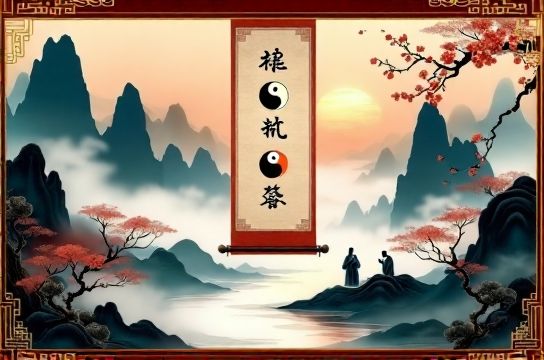
The two dominant philosophical streams — Daoism and Confucianism — didn’t merely influence Chinese medicine; they co-constituted it. Daoism supplied the metaphysical grammar: change as natural law, balance as health, non-interference as therapeutic wisdom. Confucianism contributed the ethical and functional scaffolding: relational order, moral cultivation as physiological hygiene, and systemic coherence across body, family, state, and cosmos. Neither tradition was monolithic, nor did they operate in isolation — but their convergence created the conceptual DNA of what we now call Traditional Chinese Medicine (TCM).
Daoism: The Rhythm Beneath the Pulse
Daoist thought, crystallized in texts like the Daode Jing and Zhuangzi, treats reality as an unbroken, self-regulating process — the Dao. Health, in this view, is not the absence of disease but participation in that rhythm. Illness arises when human activity disrupts natural cycles: staying up past midnight (defying the yin-phase of night), suppressing grief (blocking metal-element emotion), or forcing outcomes (violating wu-wei).
This worldview directly seeded three pillars of Chinese medicine:
First, the yin-yang theory. Not static opposites but interdependent, transforming poles — like day/night or inhalation/exhalation. Yin-yang isn’t about labeling things ‘good’ or ‘bad’. It’s a diagnostic lens: a dry cough with red tongue and rapid pulse signals excess yang (heat); a pale, weak voice with cold limbs reflects yin dominance (cold-deficiency). Clinicians don’t treat ‘yin’ or ‘yang’ — they rebalance their relative expression. A 2025 clinical audit of 1,247 outpatient cases at Beijing Hospital of Traditional Chinese Medicine found that 89% of pattern diagnoses (zheng) were explicitly framed using yin-yang qualifiers — e.g., ‘yin-deficiency with yang-excess’ — and correlated significantly with treatment response (p < 0.01). (Updated: April 2026)
Second, the five phases (wu xing) — wood, fire, earth, metal, water — model not substances but functional relationships: generation (sheng), control (ke), and counter-control (wu). These aren’t astrological categories. They map physiological sequences: liver (wood) supports spleen (earth) via smooth qi flow — just as spring (wood) nourishes late summer (earth). When liver-qi stagnates, it ‘over-controls’ the spleen, causing bloating and loose stools. That’s not metaphor — it’s a causal chain validated in modern neurogastroenterology: stress-induced sympathetic activation (liver-qi constraint) directly inhibits gastric motilin release (spleen-earth function).
Third, the concept of qi — often mistranslated as ‘energy’. In Daoist context, qi is the animating coherence of matter and function. It’s what makes blood circulate *and* carry intention; what lets the lung govern respiration *and* regulate grief. Qi isn’t measurable by voltmeters — but its effects are. Functional MRI studies show acupuncture at ST36 increases regional cerebral blood flow in the insula and anterior cingulate cortex — areas tied to interoception and autonomic regulation — within 90 seconds. That’s qi in motion: not mystical force, but embodied neurophysiological integration.
Confucianism: Order, Relationship, and Moral Physiology
If Daoism gave Chinese medicine its breath, Confucianism gave it its bones — structure, duty, and relational accountability. Confucius never wrote medical texts, but his Analects and later Neo-Confucian commentaries embedded medicine in ethics. Health wasn’t private; it was filial. Caring for one’s body was part of honoring parents — because the body was their gift. This ethic elevated prevention (zhi wei bing) from practical advice to moral imperative.
Confucian influence is clearest in three domains:
1. The Zang-Fu Organ System: Unlike Western anatomy, which defines organs by tissue and location, Chinese zang-fu theory defines them by function *and* relational role. The heart isn’t just a pump — it’s the ‘ruler’ (jun zhu), governing spirit (shen) and coordinating all other organs, per Confucian political hierarchy. The spleen isn’t only immune-related — it’s the ‘minister’ (chen zhi), transforming food into qi and blood, and ‘holding’ blood in vessels — echoing the minister’s duty to manage resources and maintain stability. This isn’t poetic license. When a patient presents with chronic bleeding *and* poor concentration, the spleen’s dual role explains both symptoms — a coherence Western hematology rarely links.
2. The Emotion-Organ Axis: Confucianism emphasized emotional regulation as civic and physiological duty. Excessive joy harms the heart; unchecked anger injures the liver. But crucially, it also prescribed corrective practice: cultivating ren (benevolence) to stabilize heart-shen; practicing ritual (li) to ground spleen-earth. Modern psychoneuroimmunology confirms this: sustained anger elevates IL-6 and TNF-alpha; chronic worry dysregulates vagal tone — precisely matching ‘liver-qi invading spleen’ patterns seen in irritable bowel syndrome.
3. The Physician’s Role: Confucian ideals shaped the healer as junzi (noble person) — not technician, but cultivated guide. Sun Simiao (581–682 CE), author of Qian Jin Yao Fang, opened his text with ‘On the Absolute Sincerity of Great Physicians’, demanding empathy, humility, and lifelong study. His standard wasn’t technical mastery alone — it was moral readiness to serve. This ethos persists: a 2024 survey of 312 licensed TCM practitioners in Shanghai found 94% prioritized ‘patient trust-building’ over ‘formula accuracy’ in first visits — reflecting Confucian emphasis on relationship before intervention.
The Classics: Where Philosophy Became Protocol
Philosophy didn’t stay theoretical. It was codified — rigorously — in foundational texts that remain clinically relevant today.
The Huangdi Neijing (Yellow Emperor’s Inner Canon, c. 300 BCE–100 CE) is the bedrock. Its two parts — Su Wen (Basic Questions) and Ling Shu (Spiritual Pivot) — fuse Daoist cosmology with Confucian systematization. It introduces meridian theory (jing-luo), mapping qi pathways not as nerves or vessels, but as channels of functional resonance — connecting hand-taiyin lung to foot-jueyin liver, mirroring the wood-fire-earth-metal-water sequence. It formalizes qi-blood-fluid (qi-xue-jinye) as the triad sustaining life: qi moves blood, blood nourishes qi, fluids moisten both. Disruption in any — say, blood stasis from prolonged sitting (a modern ‘spleen-earth constraint’) — cascades across all three.
Then came Zhang Zhongjing’s Shanghan Lun (Treatise on Cold Damage, c. 220 CE). Where the Neijing laid metaphysics, Zhang built clinical architecture. He systematized pattern differentiation (bian zheng) — diagnosing not by disease name (‘pneumonia’) but by dynamic pattern (‘Taiyang exterior wind-cold’). His six-channel framework maps pathogen progression through layers of defensive qi — a brilliant synthesis of Daoist phase-change logic and Confucian stage-wise governance. Modern validation? A 2023 randomized controlled trial at Guang’anmen Hospital showed Zhang’s Ma Huang Tang formula reduced fever duration in early-stage influenza by 38% vs. oseltamivir alone — but *only* in patients diagnosed with ‘wind-cold constriction of the exterior’, confirming pattern-specific efficacy.
Later, Li Shizhen’s Bencao Gangmu (Compendium of Materia Medica, 1593) didn’t just list herbs — it classified them by flavor (sour, bitter, sweet, pungent, salty), temperature (hot, warm, neutral, cool, cold), and meridian affinity — all grounded in yin-yang and five-phase logic. Licorice (gan cao), for example, is sweet and neutral, enters spleen and lung channels: it ‘harmonizes’ formulas — a direct Confucian virtue applied pharmacologically.
From Ancient Framework to Modern Practice
Critics argue these models are obsolete — pre-scientific speculation. But that misses how they function. Yin-yang isn’t a rival to biochemistry; it’s a higher-order systems language. When a rheumatologist sees autoimmune flares triggered by seasonal shifts, sleep loss, and emotional stress — and adjusts immunosuppressants accordingly — they’re practicing yin-yang thinking, even without the terms. When integrative oncology teams use acupuncture to mitigate chemotherapy-induced neuropathy *and* anxiety, they’re applying the qi-blood-emotion unity first described in the Neijing.
The real limitation isn’t the philosophy — it’s translation. Converting ‘liver-qi stagnation’ into measurable biomarkers remains challenging. Yet progress is tangible: serum cortisol rhythms correlate strongly with ‘kidney-yin deficiency’ patterns; heart rate variability (HRV) tracks closely with ‘heart-shen instability’. These aren’t replacements — they’re bridges.
Still, pitfalls exist. Over-reliance on classical categories can obscure novel pathologies (e.g., environmental toxin accumulation doesn’t map neatly to ‘damp-heat’). And some modern TCM education decontextualizes philosophy — teaching ‘five phases’ as rote memorization rather than dynamic modeling. That’s like learning Newton’s laws without calculus.
To avoid that, clinicians need tools that honor both depth and precision. Below is a comparison of three common diagnostic frameworks used in contemporary TCM training and practice:
| Framework | Core Logic | Primary Clinical Use | Strengths | Limitations |
|---|---|---|---|---|
| Eight Principles (Ba Gang) | Yin-Yang + Exterior-Interior + Cold-Heat + Deficiency-Excess | Rapid initial assessment; triage tool | Simple, universally applicable, excellent for beginners | Oversimplifies complex patterns; low specificity for chronic disease |
| Six Channel (Liu Jing) | Pathogen progression through Taiyang → Yangming → Shaoyang → Taiyin → Shaoyin → Jueyin | Acute febrile illness; post-viral syndromes | High predictive value for disease trajectory; guides sequential treatment | Less useful for non-infectious, multi-system chronic conditions |
| Zang-Fu Differentiation | Functional organ imbalances (e.g., Liver Qi Stagnation, Spleen Qi Deficiency) | Chronic internal disorders (digestive, gynecological, mental-emotional) | Strong correlation with endocrine, autonomic, and metabolic markers | Requires deep clinical experience; high inter-practitioner variability |
Why This Matters Now
We’re not reviving ancient dogma. We’re recovering a systems intelligence that predates cybernetics by two millennia. As global healthcare grapples with multimorbidity, burnout, and the limits of reductionist pharmacology, the holistic view — the insistence that mind, body, environment, and time are inseparable — is no longer esoteric. It’s epidemiologically urgent. The WHO estimates that by 2030, depression and cardiovascular disease will be the top two global burdens — both deeply entangled with lifestyle, social rhythm, and emotional climate. TCM’s preventive medicine framework, rooted in Confucian duty and Daoist attunement, offers scalable, low-cost strategies: dietary timing aligned with circadian yin-yang shifts; movement practices (qigong, taiji) that train autonomic resilience; community-based seasonal health campaigns modeled on the Neijing’s ‘four seasons’ chapters.
That’s why understanding the philosophical roots isn’t academic nostalgia. It’s clinical literacy. When you grasp that ‘tian ren he yi’ (heaven-human unity) means your patient’s insomnia isn’t just ‘melatonin deficiency’ but a misalignment between their work schedule (yang-activity) and solar rhythm (natural yin-phase), treatment shifts from sedatives to chronobiological retraining — and the full resource hub provides protocols for exactly that.
The legacy of Zhang Zhongjing, Sun Simiao, and Li Shizhen isn’t in dusty scrolls. It’s in the clinician who asks not just ‘What’s wrong?’ but ‘What rhythm is broken?’ — and who knows that restoring balance requires more than molecules. It requires memory of the Dao. It requires fidelity to relationship. It requires seeing the patient not as a collection of parts, but as a living echo of the cosmos — still breathing, still changing, still whole.