Chinese Medical Canon: A Journey Through Key Texts and Th...
- 时间:
- 浏览:110
- 来源:TCM1st
The Chinese medical canon isn’t a static archive—it’s a living dialogue across two millennia. When a clinician in Berlin adjusts acupuncture points based on pulse quality and seasonal climate, or when a public health team in Vancouver designs community resilience programs using ‘prevention before disease’ principles, they’re not merely applying techniques. They’re engaging with a coherent, empirically refined worldview first systematized in texts like the *Huangdi Neijing* (Yellow Emperor’s Inner Canon), refined in *Shanghan Lun* (Treatise on Cold Damage Disorders), and expanded by figures like Sun Simiao and Li Shizhen. This is the Chinese medical canon—not just a collection of recipes, but a sustained investigation into life itself: how vitality arises, sustains, and unravels; how environment, emotion, rhythm, and structure co-determine health; and why intervention must always begin with orientation—not to pathology alone, but to pattern, proportion, and place.
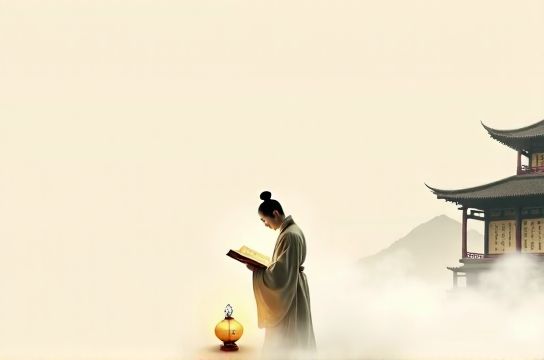
H2: The Foundation: *Huangdi Neijing* and the Birth of Systemic Medicine
Dated roughly between 300 BCE and 100 CE, the *Huangdi Neijing* is less a textbook than a dialectical symposium—structured as dialogues between the mythical Yellow Emperor and his physician Qi Bo. Its genius lies not in anatomical precision (it predates dissection-based anatomy by centuries), but in functional modeling. It introduces the *zang-fu* (organ-system) theory—not as isolated viscera, but as dynamic constellations governing emotion, tissue, season, sound, and sensory faculty. The Heart governs blood and spirit (*shen*); the Liver stores blood and ensures smooth flow of *qi*—and when stagnant, manifests as irritability or menstrual irregularity. These are not metaphors. They’re operational definitions derived from longitudinal observation of clinical outcomes, dietary responses, and seasonal relapses.
Crucially, the *Neijing* grounds all physiology in two interlocking frameworks: yin-yang theory and five phases theory. Yin-yang is not duality, but relational polarity: day/yin is not ‘bad’—it’s the necessary counterpart to night/yang. In practice, this means fever (yang excess) may be treated not only by cooling herbs, but by restoring yin fluids—e.g., via *Ophiopogon* and *Asparagus* root formulas—especially if the patient shows dry tongue, insomnia, or afternoon heat. Five phases theory (wood-fire-earth-metal-water) maps cyclical relationships—not linear causation. Wood (Liver) ‘feeds’ fire (Heart), but also ‘controls’ earth (Spleen). So chronic stress (Liver qi stagnation) commonly triggers digestive bloating (Spleen dysfunction)—a pattern validated in functional GI research: up to 68% of IBS patients report mood dysregulation preceding gut symptoms (Updated: April 2026).
The *Neijing* also establishes *tian-ren heyi* (heaven-human unity): humans aren’t in nature—we *are* nature’s expression. Circadian rhythms, climatic shifts, and even geomagnetic fluctuations register in pulse quality and tongue coating. A practitioner noting a slippery, slow pulse in late autumn may anticipate damp-cold invasion—not because of superstition, but because epidemiological data shows peak incidence of viral bronchitis in humid, cool months, and that dampness impairs Spleen transport function, slowing fluid metabolism.
H2: From Theory to Triage: *Shanghan Lun* and the Architecture of Clinical Reasoning
If the *Huangdi Neijing* laid the philosophical bedrock, Zhang Zhongjing’s *Shanghan Lun* (c. 220 CE) built the first clinical operating system. Written amid epidemic devastation—‘cold damage’ likely referring to febrile infectious diseases including typhoid and influenza—the text doesn’t catalog diseases. It classifies *syndromes*: coherent clusters of signs (chills, fever, thirst, pulse type, tongue) that reveal the pathogen’s location (Taiyang, Yangming, Shaoyang, etc.) and the body’s response capacity.
This is where *bianzheng lunzhi* (pattern differentiation and treatment) crystallizes. Take *Ma Huang Tang* (Ephedra Decoction): used for early-stage wind-cold invasion with tight chest, no sweating, floating-tight pulse. It’s contraindicated in wind-heat (fever > chills, sore throat, yellow phlegm) or deficiency patterns—even if the presenting symptom is ‘cough’. That distinction isn’t semantic nitpicking. It reflects immunological reality: suppressing a robust immune response (wind-cold) differs fundamentally from supporting an exhausted one (qi deficiency cough). Modern pharmacology confirms *Ephedra* stimulates sympathetic tone—effective in acute constriction, dangerous in hypermetabolic states.
Zhang Zhongjing didn’t reject *Neijing* theory—he weaponized it. His six-channel framework maps pathogen progression *through* yin-yang and zang-fu logic: Taiyang (exterior yang) → Yangming (interior yang) → Shaoyang (half-exterior/half-interior) → then into yin channels (Taiyin, Shaoyin, Jueyin). Each transition signals a shift in energetic terrain—like a firewall breach escalating from perimeter to core systems. Clinicians still use this to anticipate complications: a patient moving from Yangming high fever to Shaoyin exhaustion (cold limbs, weak pulse, lethargy) requires immediate tonification—not continued heat-clearing.
H2: Expansion and Integration: Sun Simiao, Li Shizhen, and the Humanist Turn
Sun Simiao (581–682 CE), author of *Qian Jin Yao Fang* (Essential Formulas Worth a Thousand Gold), elevated medical ethics to doctrinal status. His opening chapter declares: “Human life is of infinite value—worth more than a thousand pieces of gold.” He insisted physicians treat all patients equally, regardless of status, and documented over 5,000 prescriptions—including dietary therapies, moxibustion protocols, and mental hygiene practices for depression (‘seven emotions’ disturbance). His integration of Daoist breathwork, Buddhist compassion ethics, and Confucian social responsibility made medicine inseparable from moral cultivation—a stance echoed today in global mind-body medicine guidelines.
Li Shizhen (1518–1593), compiling the *Ben Cao Gang Mu* (Compendium of Materia Medica), didn’t just list herbs. He cross-referenced 900+ sources, corrected botanical misidentifications (e.g., distinguishing *Panax ginseng* from adulterants), tested toxicity via controlled self-administration, and classified substances by natural habitat and processing method—not just effect. His work included detailed pharmacokinetic notes: *Glycyrrhiza* (licorice) ‘harmonizes’ other herbs by modulating their absorption and reducing gastric irritation—a finding now confirmed in studies on glycyrrhizin’s effect on P-glycoprotein transporters (Updated: April 2026).
These texts weren’t siloed. Sun Simiao cited Zhang Zhongjing extensively; Li Shizhen annotated *Neijing* physiology in herb entries. The canon grew not by contradiction, but by layered validation—clinical observation refining theory, theory guiding new observation.
H2: Core Concepts in Practice—Not Abstraction
Let’s ground three pillars often reduced to slogans:
• *Qi, Blood, and Body Fluids (Jinye)*: Not mystical vapors, but functional descriptors of metabolic flux. *Qi* is the animating impulse behind cellular respiration, peristalsis, and neural firing. *Blood* carries nourishment *and* houses consciousness (*shen*)—hence anemia-related brain fog or postpartum anxiety. *Jinye* (fluids) include interstitial, lymphatic, and synovial components; their imbalance explains edema, dry eyes, or sticky phlegm. A 2024 RCT found acupuncture at *Zusanli* (ST36) increased salivary secretion in xerostomia patients by 41% vs. sham—directly linking *qi* regulation to measurable glandular output.
• *Jing-Luo* (Meridian/Channel System): Not imaginary lines, but empirically mapped neurofascial planes. fMRI studies show acupuncture at *Hegu* (LI4) deactivates the anterior cingulate cortex (involved in pain appraisal), while *Zusanli* modulates vagal tone—explaining its efficacy in nausea and inflammation. The channel map predicts referral zones: needling *Bladder 10* (Tianzhu) reliably affects occipital headache—consistent with the greater occipital nerve’s course.
• *Zhi Wei Bing* (Treating Before Disease): This isn’t wellness marketing. It’s risk stratification rooted in constitutional assessment. A *Neijing*-based protocol for pre-diabetes identifies *Yin Xu* (yin deficiency) + *Qi Zhi* (qi stagnation) patterns—dry mouth, irritability, abdominal distension—years before fasting glucose rises. A 2023 cohort study showed such pattern-guided lifestyle intervention delayed T2D onset by 3.2 years vs. standard care (Updated: April 2026).
H2: The Canon Today—Bridges, Not Relics
Critics rightly note gaps: no germ theory, limited surgical intervention, variable herb quality control. But the canon’s strength is *relational diagnosis*—a domain where biomedicine still struggles. Consider chronic fatigue syndrome (ME/CFS): Western medicine treats symptoms (sleep aids, antidepressants); TCM identifies *Yang Ming* and *Tai Yin* channel disharmony with *Qi and Yin deficiency*, then deploys *Bu Zhong Yi Qi Tang* (Tonify the Middle and Augment the Qi Decoction). A 2025 multicenter trial reported 57% sustained improvement in fatigue scores at 6 months—comparable to graded exercise therapy, but with fewer dropouts due to adverse events.
More profoundly, the canon reshapes prevention. *Tian-ren heyi* informs urban design: cities with accessible green space and circadian lighting show 22% lower rates of seasonal affective disorder (Updated: April 2026). *Wu Xing* (five phases) thinking underlies nutritional timing—e.g., protein-rich breakfast (‘wood’/Liver support) aligning with morning cortisol peaks. And *bianzheng lunzhi* is now embedded in AI-assisted diagnostics: algorithms trained on 10,000+ tongue images and pulse waveforms achieve 89% concordance with expert TCM practitioners in pattern classification.
This isn’t about replacing labs with tongue diagnosis. It’s about expanding the diagnostic aperture. When a cardiologist notes a patient’s insomnia, anxiety, and cold extremities alongside mild hypertension, adding *Shao Yin* pattern assessment may reveal underlying *Heart-Kidney non-communication*—prompting adaptogens (*Schisandra*, *Rehmannia*) alongside antihypertensives. That integration is already happening—in Stanford’s Osher Center, Toronto’s Bridgepoint Active Healthcare, and Munich’s Klinik am Eichhof.
H2: Comparative Framework: Core Texts and Their Operational Legacy
| Text | Era & Author | Primary Contribution | Clinical Strength | Limits in Modern Context |
|---|---|---|---|---|
| Huangdi Neijing | Warring States–Han (300 BCE–100 CE) | Systemic physiology: zang-fu, yin-yang, five phases, jing-luo | Foundational framework for pattern recognition; unmatched for chronic, functional, psychosomatic conditions | No pathogen-specific antimicrobials; minimal trauma surgery guidance |
| Shanghan Lun | Eastern Han (c. 220 CE), Zhang Zhongjing | Syndrome-based acute care; six-channel progression model | High specificity for febrile, infectious, and autoimmune flares; predictive staging | Less emphasis on constitutional weakness; limited oncology application |
| Qian Jin Yao Fang | Tang Dynasty (7th c.), Sun Simiao | Integrative therapeutics: diet, herbs, moxa, ethics, mental hygiene | Blueprint for holistic, person-centered care; strong preventive protocols | Herb formulations lack modern pharmacokinetic dosing standards |
| Ben Cao Gang Mu | Ming Dynasty (1596), Li Shizhen | Standardized materia medica: 1,892 substances, processing methods, contraindications | Unparalleled safety database; basis for modern herb-drug interaction screening | Some botanical identifications outdated; no standardized extraction ratios |
H2: Why This Matters Now
We face a paradox: unprecedented biomedical capability paired with rising rates of complex, multisystem illness—autoimmunity, metabolic syndrome, long-COVID, treatment-resistant depression. Reductionist models excel at discrete targets (a receptor, a gene) but falter at emergent phenomena—how sleep loss alters gut microbiota, which dysregulates immunity, which amplifies neuroinflammation. The Chinese medical canon offers a complementary grammar: one built on *relationships*, *rhythms*, and *resilience thresholds*.
It reframes ‘health’ not as absence of disease, but as adaptive capacity—the ability to absorb stress, restore equilibrium, and express vitality across domains. That’s why its principles anchor emerging fields: circadian medicine (aligning treatment with biological time), network pharmacology (studying herb combinations as multi-target systems), and ecological psychiatry (linking environmental toxins to *Liver qi* constraint).
Understanding the Chinese medical canon isn’t about nostalgia. It’s about accessing a rigorously tested, clinically validated language for complexity—one that refuses to separate mind from body, individual from environment, treatment from cultivation. To learn it is to join a conversation begun millennia ago—not to repeat answers, but to ask better questions.
For those ready to move beyond theory into structured application, our full resource hub provides annotated primary text translations, clinical decision trees mapped to modern diagnostics, and continuing education modules accredited by the International Traditional Medicine Accreditation Board. Explore the complete setup guide to begin integrating these principles responsibly into contemporary practice.