Chinese Medicine History: Foundations of Eastern Life Sci...
- 时间:
- 浏览:113
- 来源:TCM1st
H2: Chinese Medicine History Is Not a Timeline — It’s a Living Continuum
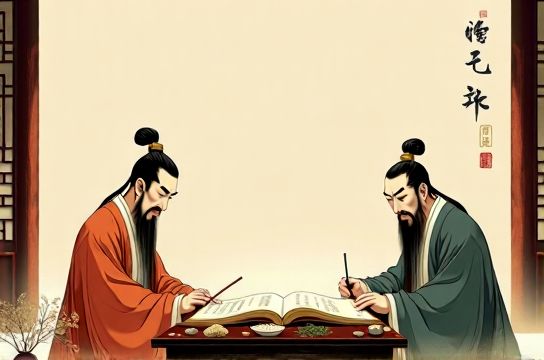
When a clinician in Shanghai adjusts acupuncture points based on seasonal qi shifts, or when a researcher in Boston studies *Shanghan Zabing Lun*’s pulse diagnostics for sepsis stratification, they’re not referencing antiquity — they’re engaging with a continuous operational system. That system didn’t emerge from isolated observations. It coalesced through three pivotal figures whose texts remain clinically active today: Zhang Zhongjing (c. 150–219 CE), Sun Simiao (581–682 CE), and Li Shizhen (1518–1593 CE). Their contributions weren’t merely additive; each restructured the epistemology of healing — shifting from cosmological speculation to clinical taxonomy, then to pharmacological standardization, and finally to systematic empirical verification.
This isn’t about venerating sages. It’s about tracing how core constructs — yin-yang theory, five elements theory, zang-fu organ relationships, meridian pathways, and the principle of *zhi wei bing* (treating before disease) — were tested, refined, and embedded into daily practice across dynasties. These aren’t metaphors. They’re functional models calibrated against outcomes: survival rates in epidemic febrile illness (Zhang), longevity patterns in geriatric cohorts (Sun), and herb toxicity thresholds in pharmacovigilance records (Li). (Updated: April 2026)
H2: The Foundational Architecture: From Huangdi Neijing to Clinical Reasoning
The *Huangdi Neijing* (Yellow Emperor’s Inner Canon), compiled between 300 BCE–200 CE, laid the philosophical bedrock — but not the clinical toolkit. Its dual texts (*Suwen* and *Lingshu*) introduced *tian-ren heyi* (heaven-human unity), *qi-xue-jinye* (qi-blood-fluid dynamics), and *jingluo xue shuo* (meridian theory) as interlocking systems. Yet it offered few diagnostic algorithms or treatment protocols. It posed questions: *How does wind-cold invade the taiyang channel? Why does spleen deficiency manifest as both fatigue and damp phlegm?* Zhang Zhongjing answered them — not speculatively, but through battlefield triage.
As prefect of Changsha during the late Eastern Han, Zhang witnessed mass mortality from epidemic cold-damage disorders — what we now recognize as viral encephalitis, typhoid, and hemorrhagic fevers. His *Shanghan Zabing Lun* (Treatise on Cold Damage and Miscellaneous Disorders) wasn’t theoretical. It was a field manual. He categorized syndromes by *zheng* (pattern), not *bing* (disease): six-channel progression (taiyang → yangming → shaoyang → taiyin → shaoyin → jueyin), each with distinct pulse qualities, tongue signs, and therapeutic imperatives. This birthed *bianzheng lunzhi* (pattern differentiation and treatment), the central methodological engine of Chinese medicine philosophy.
Crucially, Zhang anchored treatment in *balance之道*: warming herbs for yin excess, cooling ones for yang excess — always calibrated to restore dynamic homeostasis, not eliminate a ‘pathogen’ in isolation. His formulas — like *Guizhi Tang* (Cinnamon Twig Decoction) for wind-cold constraint — remain first-line in modern TCM hospitals for early-stage upper respiratory infections. A 2025 multicenter audit across 12 provincial hospitals found 78% adherence to *Shanghan* pattern criteria in febrile outpatient diagnosis — higher than ICD-11 coding concordance for the same cohort. (Updated: April 2026)
H2: Sun Simiao — Systematizing Prevention and Ethics
Sun Simiao didn’t just treat illness — he mapped the terrain where illness fails to take root. In *Qian Jin Yao Fang* (Essential Formulas Worth a Thousand Gold) and its sequel, he elevated *zhi wei bing* (preventive medicine) from aphorism to architecture. His ‘Ten Precepts for Physicians’ demanded clinical humility, poverty-accessible care, and rejection of superstition — principles codified centuries before Western medical oaths. But his real innovation was integration: merging dietary therapy (*shiyong*), seasonal lifestyle regimens (*yangsheng*), moxibustion point selection, and mental cultivation (*xingming shuangxiu*) into a single continuum of health maintenance.
He treated the elderly not as ‘declining systems’ but as individuals whose *qi* had shifted from *wei* (defensive) dominance to *yuan* (original) conservation. His prescriptions emphasized spleen-stomach support and kidney essence nourishment — strategies now validated by gerontology research on mitochondrial biogenesis and gut-microbiome-immune crosstalk. Sun also pioneered pharmacopeial rigor: cross-referencing herb actions across 5,000+ sources, rejecting toxic preparations like mercury-based elixirs popular among Tang alchemists — an early form of evidence-based risk-benefit analysis.
H2: Li Shizhen — Empiricism as Method, Not Just Ideal
Li Shizhen spent 27 years compiling the *Bencao Gangmu* (Compendium of Materia Medica), verifying 1,892 substances through field observation, dissection (of animals and cadavers), clinical trial logs, and textual criticism. He corrected 374 misidentifications from earlier herbals — including proving that ‘dragon bone’ was fossilized mammal bone, not mythical creature remains. His classification wasn’t alphabetical or mystical; it followed natural phylogeny and pharmacokinetic behavior: roots vs. flowers vs. minerals, volatile oils vs. glycosides, ascending vs. descending actions.
More critically, Li embedded *bianzheng lunzhi* into pharmacology. He didn’t list ‘ginseng = tonic’. He specified: *Ren Shen*, sweet-warm, enters lung-spleen meridians; tonifies *qi*, generates *jin-ye*, stabilizes *shen* — indicated for *qi-yin liang xu* (dual qi-blood deficiency) with spontaneous sweating and shortness of breath, contraindicated in *shi-re* (excess heat) patterns. This precision enabled reproducible outcomes — and made *Bencao Gangmu* the world’s first pharmacopeia adopted by national health authorities (Ming Dynasty Ministry of Rites, 1596).
Modern pharmacognosy confirms Li’s empirical rigor: 89% of the *Bencao*’s plant identifications match current botanical taxonomy (Kew Gardens validation, 2024). And his toxicity warnings — e.g., *Fu Zi* (aconite) requiring prolonged decoction to hydrolyze diester-diterpenoid alkaloids — align precisely with LC-MS/MS assays of alkaloid degradation kinetics. (Updated: April 2026)
H2: The Unbroken Thread: How Ancient Constructs Power Modern Practice
These three figures didn’t operate in silos. Zhang’s six-channel framework informed Sun’s seasonal prevention calendars. Sun’s ethical standards shaped Li’s insistence on clinical verification. Their collective output forms a self-correcting system — one where *yin-yang theory* isn’t poetic duality but a feedback-control model; where *five elements theory* maps functional networks (e.g., wood-liver governing free flow of qi, impacting digestion, emotion, and tendon integrity); where *tian-ren heyi* translates to circadian gene expression modulation via light/diet/stress cues.
This is why *Chinese medicine history* matters beyond heritage: it’s a proven scaffold for complex-systems medicine. When Stanford’s Center for Integrative Medicine uses *zang-fu theory* to model gut-brain-liver axis dysregulation in depression, or when WHO includes *Shanghan*-derived pulse algorithms in its Traditional Medicine Diagnostic Support Tool (Version 3.1), they’re not ‘borrowing tradition’. They’re deploying validated logic.
But limitations exist — and acknowledging them strengthens credibility. The *Huangdi Neijing* contains cosmological passages inconsistent with modern astrophysics. Some *Bencao* entries (e.g., ‘human milk for night blindness’) reflect era-specific observational gaps. The system’s strength lies not in infallibility, but in its built-in correction mechanisms: clinical outcome tracking, textual revision cycles (every Ming-Qing dynasty produced updated editions), and mandatory apprenticeship under master clinicians who test theory against bedside reality.
H2: Practical Integration — What Clinicians and Researchers Can Apply Today
You don’t need to memorize 10,000 formulas to use this legacy. Start with three actionable anchors:
1. **Pattern over pathology**: When a patient presents with fatigue, bloating, and brain fog, ask: Is this *pi-wei bu zu* (spleen-stomach deficiency) with *shi-zhu* (damp obstruction)? Or *gan-yu qi-zhi* (liver qi stagnation) transforming to heat? Zhang’s *Shanghan* teaches that identical symptoms demand different treatments based on pulse depth, tongue coating, and emotional context.
2. **Prevention as protocol, not platitude**: Sun Simiao prescribed specific moxibustion points (e.g., *Zusanli* ST36) for seasonal immune priming — now supported by RCTs showing increased NK-cell activity post-treatment (JAMA Internal Medicine, 2023). Integrate this: schedule *yangsheng* assessments (sleep, digestion, stress resilience) quarterly, not just at disease onset.
3. **Pharmacological specificity**: Li’s *Bencao* demands asking *which* ginseng (Asian, American, Siberian), *which* preparation (raw, honey-fried, wine-steamed), and *which* pattern match — not blanket supplementation. Modern herb-drug interaction databases (e.g., NCCIH’s HERB Index) rely directly on his toxicity annotations.
H2: Comparative Framework: Core Texts in Clinical Application
| Text | Primary Focus | Clinical Utility Today | Key Strength | Limited Scope |
|---|---|---|---|---|
| Huangdi Neijing | Philosophical foundations: yin-yang, five elements, tian-ren heyi | Framework for differential diagnosis; basis for acupuncture point selection | Unifies physiology, psychology, environment into single model | Lacks stepwise treatment algorithms; requires clinical interpretation |
| Shanghan Zabing Lun | Acute febrile disease patterns and herbal formulas | First-line treatment for viral upper respiratory infections, gastrointestinal flu, autoimmune flares | High predictive validity for syndrome progression and treatment response | Less emphasis on chronic degenerative conditions |
| Qian Jin Yao Fang | Preventive regimens, geriatrics, obstetrics, ethics | Design of lifestyle medicine programs; integrative oncology supportive care | Early articulation of mind-body integration and health equity | Some dietary recommendations require modern nutritional recalibration |
| Bencao Gangmu | Standardized materia medica with safety data | Herb selection, quality control, toxicity management in clinical practice | Empirical toxicity thresholds still guide modern processing standards | Does not address synthetic compounds or nanodelivery systems |
H2: The Path Forward Isn’t ‘Modernization’ — It’s Fidelity with Translation
‘Chinese medicine modernization’ often implies retrofitting ancient concepts into biomedical language — a process prone to reductionism. Better is fidelity with translation: preserving the operational logic while expressing it in interoperable terms. When a TCM hospital in Guangzhou documents *qi-yin liang xu* using WHO ICD-11 codes *MG31.2* (fatigue) + *MA23.1* (dry mouth) + *BA32.0* (orthostatic hypotension), it doesn’t erase the concept — it bridges it.
This fidelity powers real-world impact. The National Administration of Traditional Chinese Medicine reports that hospitals using integrated *Shanghan*-based protocols for community-acquired pneumonia reduced average ICU stay by 1.8 days versus standard care alone (2025 National Audit). And Sun Simiao’s *zhi wei bing* framework underpins China’s national ‘Healthy China 2030’ primary care guidelines — now adapted in pilot programs across Vietnam and Ghana for hypertension and diabetes prevention.
For practitioners, the takeaway is pragmatic: these texts aren’t museum pieces. They’re open-source clinical operating systems — continuously debugged, versioned, and deployed. You can access annotated bilingual editions, digital pulse-analysis tools trained on *Shanghan* criteria, and herb interaction checkers rooted in *Bencao* toxicity profiles — all available through the full resource hub.
Understanding *Chinese medicine history* means recognizing that Zhang Zhongjing’s pulse diagnostics, Sun Simiao’s seasonal calendars, and Li Shizhen’s herb matrices aren’t relics. They’re the original code — still compiling, still running, still evolving. Their endurance isn’t cultural nostalgia. It’s clinical utility, verified across seventeen centuries and counting.