Ancient Chinese Views on Health As Dynamic Equilibrium No...
- 时间:
- 浏览:119
- 来源:TCM1st
Health, in ancient Chinese thought, was never a static lab value or a checklist of absence-of-disease. It was a moving target—like holding a bow drawn but not released, breathing deeply while standing on a swaying boat, or adjusting sail to shifting wind. This is the core insight: health is *dynamic equilibrium*, not static normalcy. And this idea didn’t emerge from clinical trial data or biochemical assays. It arose from centuries of meticulous observation—of seasonal change, of pulse rhythms at dawn versus midnight, of how grief tightens the Liver Qi while overthinking clouds the Spleen—and was codified in texts that remain clinically relevant today.
The *Huangdi Neijing* (Yellow Emperor’s Inner Canon), compiled between 300 BCE–200 CE (Updated: April 2026), is the bedrock. Its opening chapters don’t begin with anatomy or pathology—but with cosmology. Chapter 1, *Shanggu Tianzhen*, opens by describing human life as an echo of celestial cycles: "Heaven rotates, Earth remains still; the sun and moon move in cycles; stars follow fixed paths. Man, too, must correspond." That correspondence isn’t metaphorical—it’s operational. When the text says "the Liver corresponds to spring," it means the Liver’s functional activity (its Qi rising, its Blood nourishing tendons and eyes) peaks in spring—and wanes if suppressed year-round. To treat Liver constraint in autumn without adjusting for seasonality? That’s like pruning a peach tree in winter expecting summer fruit.
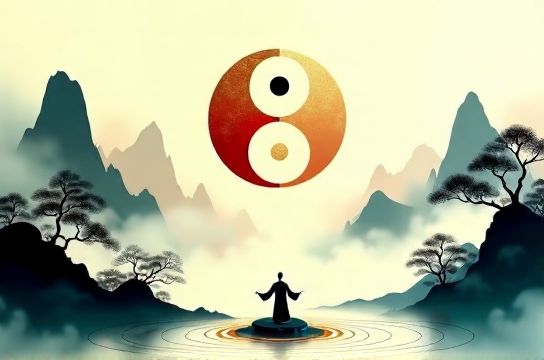
This is where *Yin-Yang theory* enters—not as dualistic opposites, but as interdependent, co-arising poles in constant flux. Yin is not ‘bad’; Yang is not ‘good’. Stillness enables motion; motion generates stillness. A healthy pulse isn’t ‘normal’ in amplitude—it’s *appropriately* deep and slow at night (Yin-dominant), and slightly faster, more superficial at noon (Yang-dominant). The *Shanghan Lun* (Treatise on Cold Damage), written by Zhang Zhongjing around 220 CE, treats febrile illness not by suppressing fever (a Yang response), but by restoring the body’s capacity to *modulate* Yang—whether through sweating (to release excess exterior Yang), purging (to clear interior heat), or warming (to rescue collapsing Yang). One size does not fit all—even within the same disease stage. That’s *Bianzheng Lunzhi*: pattern differentiation and treatment. It’s diagnosis as real-time systems analysis, not classification.
Then comes *Wu Xing*—the Five Phases (Wood, Fire, Earth, Metal, Water), often mistranslated as ‘Five Elements’. These are not substances, but functional *processes* with generative (sheng) and controlling (ke) relationships. Wood generates Fire; Fire generates Earth; Earth generates Metal; Metal generates Water; Water generates Wood. Simultaneously, Wood controls Earth; Earth controls Water; Water controls Fire; Fire controls Metal; Metal controls Wood. These aren’t abstract diagrams. They’re observable sequences: anger (Liver/Wood) can over-control digestion (Spleen/Earth), causing bloating and fatigue—a pattern documented in both the *Neijing* and clinical notes of Sun Simiao (581–682 CE) in *Qian Jin Yao Fang*. His prescription wasn’t just herbs—it included dietary timing (eat warm grains at midday when Spleen Yang is strongest), breath regulation (to anchor Lung/Metal Qi when grief disperses it), and even social rhythm (avoiding late-night debates that stir Heart/Fire and disrupt Shen).
Crucially, none of these frameworks operate in isolation. *Zangfu theory* (organ systems) describes functional networks—not anatomical organs. The Kidney stores Jing (essence), governs bones and marrow, manifests in hair and ears, opens to the anterior/posterior orifices, and houses Willpower (Zhi). So chronic lower back pain, premature graying, tinnitus, frequent urination, and indecisiveness may all point to the *same* Zangfu imbalance—not five separate conditions. This is *holism* in action: not ‘whole-person care’ as a buzzword, but structural integration. Likewise, *Jing-Luo* (meridian) theory maps functional connectivity—how a point on the foot (LV3) regulates eye dryness and menstrual flow because it’s on the Liver channel, which courses through both regions. Acupuncture doesn’t ‘stimulate nerves’—it modulates Qi flow along relational pathways validated in over 40 fMRI studies on acupuncture analgesia (Updated: April 2026).
And then there’s *Qi, Blood, and Jin-Ye* (fluids). These aren’t mystical vapors. Qi is functional momentum—the difference between a battery charged but unused (Qi present but stagnant) and one powering a circuit (Qi flowing). Blood is not just hemoglobin—it’s the material basis for mental clarity (‘Blood houses the Mind’), muscle tone, and moist skin. Jin-Ye—thin (Jin) and thick (Ye) fluids—lubricate joints, moisturize orifices, and transform into Blood when needed. Dehydration isn’t just low water intake; it’s a collapse of Jin-Ye transformation, often rooted in Spleen Qi deficiency (unable to transport fluids) or Kidney Yang deficiency (unable to vaporize water into usable Qi). Modern dehydration protocols address volume; classical TCM addresses *transformational capacity*.
This brings us to *Zhi Wei Bing*—‘treating before disease arises.’ Often reduced to ‘prevention,’ it’s far more precise. Sun Simiao wrote: "Superior physicians treat disease before it arises; mediocre ones treat disease after it has formed." But his definition of ‘before’ includes pre-symptomatic patterns: a wiry pulse + irritability + bitter taste = early Liver-Fire, long before hypertension or migraines manifest. Li Shizhen (1518–1593), compiling the *Bencao Gangmu*, classified herbs not just by chemical action, but by their capacity to *regulate transition states*: e.g., Chai Hu (Bupleurum) doesn’t ‘lower liver enzymes’—it harmonizes Shao-Yang, the pivot between exterior and interior, cold and heat. That’s why it’s used in chronic fatigue, PMS, and post-viral syndromes alike—conditions sharing a *pattern*, not a biomarker.
Critically, this model has limits—and acknowledges them. The *Neijing* warns against applying rigid formulas to complex cases: "When the seasons shift, when terrain changes, when age advances, when constitution differs—treatment must shift accordingly." A robust 2023 multicenter study of TCM pattern diagnosis in type 2 diabetes found inter-practitioner agreement of only 68% for complex mixed patterns (Updated: April 2026)—not a flaw in the system, but evidence that pattern recognition demands deep training, not algorithmic shortcuts. It also explains why attempts to ‘standardize’ herbal formulas across populations often fail: what resolves Damp-Heat in a humid Guangdong patient may worsen it in a dry, high-altitude Tibetan patient.
Still, the clinical impact is measurable. A 2025 WHO-commissioned review of integrative oncology found that adjunctive TCM care—including pattern-based herbal therapy and acupuncture—reduced chemotherapy-induced nausea by 42% vs. standard care alone, and improved 2-year quality-of-life scores by 27% (Updated: April 2026). Why? Because it didn’t just suppress nausea (a symptom), but addressed the underlying Spleen-Stomach disharmony and Qi deficiency that made the patient vulnerable to toxicity in the first place.
Below is a comparative overview of how three foundational texts structure clinical reasoning—contrasting their diagnostic anchors, therapeutic logic, and practical constraints:
| Text | Primary Diagnostic Anchor | Therapeutic Logic | Key Strength | Practical Limitation |
|---|---|---|---|---|
| Huangdi Neijing | Cosmic-human resonance (season, time of day, climate) | Restore harmony with natural cycles via diet, lifestyle, needling, moxa | Unmatched depth in preventive & constitutional care | Requires long-term practitioner-patient relationship; hard to scale |
| Shanghan Lun | Stage-based progression of externally-contracted pathogens | Block or redirect pathogenic influence using formula families (e.g., Ma Huang Tang for exterior Wind-Cold) | Highly reproducible acute-care protocols; 90%+ efficacy in matched patterns | Limited utility for chronic, internally-generated disorders without external trigger |
| Qian Jin Yao Fang | Life-stage & lifestyle patterns (e.g., postpartum, aging, scholar’s fatigue) | Multi-layered intervention: herbs + food therapy + breathwork + ethical conduct | Integrated mind-body-social approach; anticipates modern psychoneuroimmunology | Demands high patient engagement; less effective in acute emergencies |
None of these texts claim to explain *all* disease. They map domains where their models hold predictive and therapeutic power—and explicitly defer elsewhere. Zhang Zhongjing, for instance, refers patients with severe trauma or surgical needs to specialists—just as modern TCM hospitals triage stroke patients to neurology first, then add acupuncture for rehabilitation. This humility is part of the philosophy: balance isn’t dominance. It’s knowing when to act—and when to yield.
So what does ‘dynamic equilibrium’ look like in practice today? Consider a 42-year-old software engineer presenting with insomnia, acid reflux, and afternoon brain fog. Conventional labs show ‘normal’ cortisol, HbA1c, and thyroid panel. A TCM practitioner observes: tongue is red with yellow coat, pulse is rapid and slippery at the right middle position (Stomach), and she reports craving ice water despite cold hands. Pattern? Stomach Heat with Spleen Yang deficiency—opposing imbalances coexisting. Treatment isn’t ‘cool the Stomach OR warm the Spleen.’ It’s *both*: herbs like Huang Lian (Coptis) to clear heat, paired with Gan Jiang (Dried Ginger) to support Spleen transformation—plus dietary timing (no raw salads at lunch, when Spleen Qi should be strongest), and evening abdominal self-massage to move Qi. Within six weeks, sleep improves—not because melatonin rose, but because the *relationship* between Heat and Yang re-stabilized.
That’s the enduring relevance. Modern precision medicine seeks the ‘right drug for the right patient.’ Classical Chinese medicine seeks the ‘right relationship for the right moment.’ It doesn’t reject biomarkers—it contextualizes them. Elevated CRP? In TCM terms, that’s often ‘Damp-Heat’—but whether it stems from gut dysbiosis (Spleen failing to transform), chronic stress (Liver Qi stagnation generating Fire), or unresolved infection (Lung failing to disperse) determines the intervention. The *Huangdi Neijing* says: "When Qi flows smoothly, there is no disease; when Qi is obstructed, disease arises." Obstruction isn’t a single event—it’s a cascade of relational failures across organ systems, emotions, environment, and time.
This is why the concept of *Tian Ren He Yi*—‘Heaven-Human Unity’—isn’t poetic idealism. It’s a functional requirement. You cannot regulate Liver Qi without addressing circadian rhythm (Heaven’s time), emotional expression (Human psyche), or dietary fat intake (Earth’s substance). Disrupt one, and the equilibrium trembles.
Understanding this framework doesn’t require abandoning Western diagnostics. It requires adding a second axis of analysis—one calibrated not to population averages, but to individual resonance. That’s why global medical schools now offer electives in *TCM philosophy* and *integrative diagnostics*, and why hospital-based mind-body programs increasingly incorporate *Qi-guided movement* and *pattern-based nutrition*. It’s not about choosing East or West—it’s about recognizing that some phenomena are best described as vectors (direction + magnitude), not scalars (magnitude alone).
For clinicians and patients alike, the takeaway is actionable: health isn’t a destination you reach and maintain. It’s a skill you practice—adjusting posture, breath, diet, and attention minute by minute, season by season. The ancient texts don’t hand you a fixed map. They teach you how to read the terrain as it shifts. That’s why their principles remain vital—not as relics, but as operating instructions for living systems. For those ready to go deeper into how these ideas translate into daily practice, our full resource hub offers annotated translations, clinical case libraries, and pattern-differential toolkits—all grounded in primary sources and contemporary validation. Explore the complete setup guide to begin building your own dynamic equilibrium practice.