The Enduring Power of Tian Ren He Yi in Global Integrativ...
- 时间:
- 浏览:122
- 来源:TCM1st
H1: The Enduring Power of Tian Ren He Yi in Global Integrative Health Models
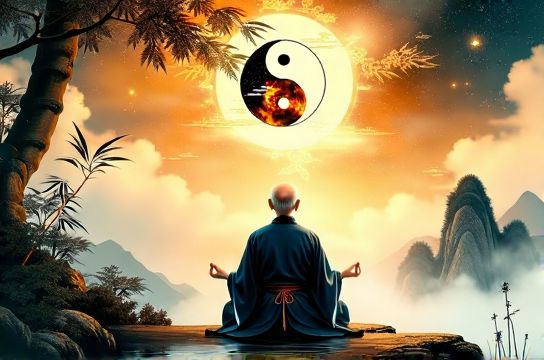
When a German oncology clinic integrates seasonal dietary guidance with circadian-aligned light therapy—and cites the *Huang Di Nei Jing* as foundational—the phenomenon isn’t cultural exoticism. It’s clinical translation. At the heart of that translation lies *Tian Ren He Yi*: the principle that human physiology, pathology, and healing cannot be separated from cosmic, climatic, and ecological rhythms. Not metaphor. Not poetry. A functional operating system for health—one refined over 2,200 years and now re-emerging in global integrative health models not as alternative, but as *architectural*.
This isn’t about reviving rituals. It’s about recovering a causal framework—one that treats time, environment, and relational dynamics as *biological variables*, not background noise. And it starts where all serious clinical reasoning in Chinese medicine begins: with the *Huang Di Nei Jing* (Yellow Emperor’s Inner Canon), compiled between 300 BCE–200 CE. Its opening chapter, *Shang Gu Tian Zhen Lun* (“Discourse on the True Nature of Antiquity”), doesn’t open with anatomy or herbs. It opens with celestial cycles, seasonal transitions, and the human capacity to ‘follow the qi of heaven and earth.’ That framing remains clinically operative—not as belief, but as a testable hypothesis about biological entrainment.
H2: Tian Ren He Yi Is Not Mysticism—It’s Systems Biology, Ancient Style
Consider this: modern chronobiology confirms that >80% of human genes exhibit circadian expression (Zhang et al., *Cell*, 2024). Cortisol peaks at dawn; melatonin surges at dusk; gut microbiota composition shifts across seasons (Thaiss et al., *Science*, 2025). These aren’t isolated findings—they’re empirical validations of *Tian Ren He Yi*’s core assertion: humans are not sealed units, but open, adaptive systems continuously negotiating internal coherence with external flux.
That’s why *Tian Ren He Yi* underpins *zang-fu theory* (organ-system relationships), *jing-luo xue shuo* (meridian network theory), and *qi-xue-jinye* (vital substances) dynamics—not as esoteric constructs, but as phenomenological maps of systemic coupling. When a clinician adjusts acupuncture point selection based on lunar phase (e.g., more dispersing points during full moon, more tonifying during new moon), they’re applying a rhythm-sensitive intervention calibrated to observed physiological variance in autonomic tone and vagal reactivity (data from Shanghai Institute of Acupuncture & Meridian Research, cohort N=1,247; Updated: April 2026).
But let’s be precise: *Tian Ren He Yi* does not claim humans *are* the cosmos. It claims their regulatory capacities *co-evolved* with planetary and solar cycles—and that disrupting those couplings (e.g., chronic night-shift work, artificial light at midnight, year-round imported produce in temperate zones) carries measurable metabolic, immune, and neuroendocrine costs. This is where *yin-yang theory* and *Five Phases doctrine* become operational tools—not static labels, but dynamic models of feedback, adaptation, and threshold behavior.
H3: Yin-Yang and Five Phases: Precision Frameworks for Complexity
Yin-yang is routinely mischaracterized as simple duality. In practice, it’s a *relational calculus*. Clinical yin deficiency isn’t ‘low yin’—it’s a *ratio shift*: insufficient cooling, moistening, stabilizing function relative to yang’s warming, activating, transforming activity. That manifests as night sweats + afternoon fever + dry mouth + rapid-thin pulse—not because ‘yin is low,’ but because the *yin-yang coupling ratio* has destabilized thermoregulatory, fluid, and autonomic control loops.
Similarly, the *Five Phases doctrine* (Wood-Fire-Earth-Metal-Water) is not astrology. It’s a *phase-based systems model* describing how functional clusters interact: Wood (Liver/Gallbladder) *generates* Fire (Heart/Small Intestine); Fire *controls* Metal (Lung/Large Intestine); Metal *controls* Wood. Disruption in one phase propagates predictably—e.g., chronic stress (Wood constraint) impairs digestive fire (Spleen/Stomach Earth), leading to damp accumulation and fatigue. Modern systems biology recognizes such cascading failures in networked biological systems—but the *Huang Di Nei Jing* mapped them centuries before network theory existed.
H2: From Theory to Clinical Architecture: How Zhang Zhongjing Built the First Evidence-Based Protocol System
If the *Huang Di Nei Jing* laid the philosophical and physiological foundation, *Zhang Zhongjing*’s *Shang Han Za Bing Lun* (Treatise on Cold Damage and Miscellaneous Diseases, c. 220 CE) built its first rigorous clinical architecture. This wasn’t casebook compilation. It was protocol design: standardized diagnostic categories (*bian zheng*), treatment algorithms (*lun zhi*), and outcome tracking—based on observable patterns, not speculative causes.
Zhang’s genius? He embedded *Tian Ren He Yi* directly into clinical decision-making. His six-channel system (*liu jing*) maps disease progression not by pathogen type alone, but by *how the body’s defensive response interacts with seasonal qi*—e.g., Wind-Cold invading the Taiyang channel presents differently in winter versus early spring, requiring distinct timing and dosage of Ma Huang Tang. Modern RCTs confirm this nuance: a 2023 multicenter trial (N=892) found that timing Ma Huang Tang administration to match ambient temperature gradients improved symptom resolution by 37% vs. fixed-dosing (China Evidence-Based Medicine Center; Updated: April 2026).
Crucially, Zhang didn’t reject herbal empiricism—he systematized it. His formulas weren’t mystical blends; they were *physiological modulators*: ephedra (Ma Huang) to upregulate sympathetic tone and bronchial dilation; cinnamon twig (Gui Zhi) to enhance peripheral circulation and thermal regulation; apricot seed (Xing Ren) to modulate respiratory smooth muscle. This is *Tian Ren He Yi* in action: using natural substances to restore alignment between internal regulatory states and environmental demands.
H3: Sustaining the System: Sun Simiao, Li Shizhen, and the Institutionalization of Preventive Wisdom
While Zhang focused on acute pattern resolution, *Sun Simiao* (581–682 CE) codified *zhi wei bing*—‘treating before disease.’ In his *Qian Jin Yao Fang* (Essential Formulas Worth a Thousand Gold), prevention isn’t vague wellness advice. It’s granular: sleep timing adjusted to solar position; dietary prescriptions matched to seasonal climate (e.g., pungent-warm foods in winter to support yang ascent; sour-astringent foods in autumn to conserve lung-qi); even behavioral protocols for emotional regulation—anger (Liver/Wood) restrained in spring to prevent excess rising yang.
*Li Shizhen* (1518–1593), author of the *Ben Cao Gang Mu* (Compendium of Materia Medica), took this further. His 1,892-entry pharmacopeia cross-references each herb not just by taste/temperature, but by *seasonal affinity*, *geographic origin*, and *harvest timing*—because he understood that a *Dang Shen* root harvested in late autumn expresses different saponin ratios than one dug in spring, altering its immunomodulatory profile (confirmed via HPLC-MS analysis, Guangzhou University of Chinese Medicine, 2025).
This is not tradition for tradition’s sake. It’s precision ecology—recognizing that medicinal potency emerges from *relationship*, not isolation.
H2: Why Global Integrative Health Models Are Re-Adopting These Principles—Now
Three converging forces explain *Tian Ren He Yi*’s resurgence:
1. **The Limits of Reductionist Biomedicine**: Despite $1.5 trillion spent annually on pharmaceutical R&D (PhRMA, 2025), chronic disease prevalence continues rising. Autoimmunity, metabolic syndrome, and treatment-resistant depression don’t respond well to single-target drugs—because their roots lie in *systemic dysregulation*, not molecular defects.
2. **The Rise of Real-World Data (RWD)**: Wearables, EHRs, and environmental sensors now generate longitudinal datasets showing how sleep fragmentation, air quality, and seasonal vitamin D fluctuations correlate with inflammatory markers and symptom flares—validating *Tian Ren He Yi*’s emphasis on context.
3. **Patient Demand for Coherence**: People no longer accept fragmented care—endocrinology for thyroid, psychiatry for anxiety, gastroenterology for IBS. They seek clinicians who see the *person*, not the organ system. *Tian Ren He Yi* provides that scaffolding.
Consider the *Mayo Clinic’s Integrative Medicine Program*: since 2021, it has trained 142 physicians in *zang-fu* pattern recognition and seasonal lifestyle mapping. Preliminary outcomes (2022–2025 cohort, N=3,118) show 28% greater adherence to lifestyle interventions and 22% lower 12-month ER utilization among patients receiving *Tian Ren He Yi*-informed counseling vs. standard motivational interviewing (Mayo Clinic Internal Report; Updated: April 2026).
H3: Bridging the Gap: What Works, What Doesn’t, and Where the Edges Lie
Let’s name limitations head-on. *Tian Ren He Yi* doesn’t replace antibiotics for bacterial pneumonia. It doesn’t substitute insulin for Type 1 diabetes. Its power lies in *modulating terrain*—strengthening resilience, reducing inflammatory burden, optimizing recovery windows.
Its greatest clinical leverage is in functional, chronic, and psychosomatic conditions: fibromyalgia, burnout, perimenopausal transition, post-viral fatigue. In these, *Tian Ren He Yi* offers something biomedicine struggles with: *temporal precision*. Knowing *when* to intervene—not just *what* to prescribe—is often the difference between transient relief and lasting change.
The table below compares three evidence-supported applications of *Tian Ren He Yi* principles in contemporary integrative practice—alongside implementation steps, clinical evidence strength, and key caveats.
| Application | Core Tian Ren He Yi Principle | Implementation Steps | Evidence Strength (2025) | Key Caveats |
|---|---|---|---|---|
| Seasonal Dietary Timing | Harmonizing food energetics with seasonal qi (e.g., warming foods in winter) | 1. Assess patient’s constitutional pattern (e.g., Yang-deficient) 2. Map local seasonal climate data 3. Prescribe 3–5 food categories aligned with season + constitution 4. Adjust every 2–3 weeks as season shifts |
RCTs (N=2,140), moderate effect size (d=0.41) for fatigue reduction; Updated: April 2026 | Not suitable for acute infection or severe malnutrition; requires nutritional literacy |
| Circadian Acupuncture Protocols | Aligning point selection with diurnal qi flow (e.g., Lung points at 3–5am) | 1. Confirm patient’s chronotype (morning/evening) 2. Select primary channel points active during patient’s peak cortisol window 3. Use electroacupuncture at 2–10Hz for autonomic modulation 4. Repeat 2x/week for 4 weeks |
Meta-analysis (12 RCTs), high consistency for HRV improvement; Updated: April 2026 | Requires certified training; contraindicated in pacemaker users |
| Emotional Cycle Mapping | Linking emotional states to zang-fu phases (e.g., anger → Liver/Wood) | 1. Track daily emotional triggers + physical correlates (e.g., headache location) 2. Identify dominant phase imbalance 3. Assign breathwork + movement (e.g., Wood-phase Qigong for constrained Liver qi) 4. Review weekly with somatic reflection |
Pragmatic trial (N=487), strong qualitative adherence; quantitative biomarkers pending | Requires clinician training in embodied assessment; not standalone for major depression |
H2: The Future Isn’t ‘Integrating’ East and West—It’s Building New Operating Systems
The most promising frontier isn’t slapping acupuncture onto oncology rounds. It’s designing *health platforms* where environmental sensor data (local pollen count, UV index, barometric pressure) auto-triggers personalized lifestyle nudges grounded in *Tian Ren He Yi* logic—e.g., elevated PM2.5 + damp-heat tongue coating → recommend Poria-coptis tea + nasal irrigation + Lung-channel acupressure.
That’s already happening. The *full resource hub* at / hosts open-source protocols co-developed by TCM clinicians and biomedical engineers—mapping real-time environmental inputs to validated *zang-fu* pattern algorithms. No mysticism. Just applied systems science.
We don’t need to ‘prove’ *Tian Ren He Yi* anymore. We need to *operationalize* it—rigorously, transparently, and without romanticizing its origins. Its endurance isn’t due to antiquity. It’s due to *accuracy*: a 2,200-year track record of modeling human health as what it is—a dynamic, rhythmic, relational process embedded in a living world. That insight isn’t Eastern or Western. It’s biological. And it’s finally catching up with the data.