Beyond Symptom Treatment: The Philosophical Depth of Chin...
- 时间:
- 浏览:119
- 来源:TCM1st
When a patient presents with chronic fatigue, insomnia, and digestive bloating, a Western clinician may run thyroid panels, sleep studies, and stool analyses—then prescribe levothyroxine, melatonin, or rifaximin. A TCM practitioner, by contrast, might observe tongue coating, palpate radial pulses at three positions on each wrist, ask about emotional triggers during seasonal transitions, and diagnose *Spleen Qi Deficiency with Liver Qi Stagnation*—a pattern rooted not in isolated organs but in dynamic relational physiology. This isn’t alternative medicine. It’s a different epistemology—one that treats the person as a microcosm embedded in ecological, temporal, and energetic fields. That epistemology is *Chinese pattern diagnosis*, and its philosophical depth is where clinical efficacy begins.
H2: Not Symptom Lists—But Systemic Signatures
Pattern diagnosis (*bian zheng*) does not map symptoms to disease labels. It interprets clusters of signs—pulse quality, tongue shape and color, thermal sensation, emotional tone, appetite rhythm—as expressions of imbalance within an integrated system. A dry cough with night sweats and afternoon fever isn’t just ‘chronic bronchitis’; it may signal *Yin Deficiency with Empty Heat*—a depletion of cooling, nourishing substances that allows latent heat to rise. That distinction changes everything: antibiotics won’t resolve Yin Deficiency; acupuncture plus herbs like *Sheng Mai San* (Ginseng-Ophiopogon-Schisandra formula) aim to replenish what’s structurally depleted.
This approach emerged not from laboratory reductionism, but from centuries of longitudinal observation documented in foundational texts. The *Huangdi Neijing* (Yellow Emperor’s Inner Canon), compiled between 300 BCE–200 CE, established the conceptual architecture: *Qi* as vital functional energy, *Jing* (essence) as inherited constitutional reserve, *Shen* (spirit/mind) as conscious coherence—and their interdependence. Its core assertion remains unaltered in modern practice: “To know the disease, first know the person.” (Updated: April 2026)
H2: The Philosophical Scaffolding: Yin-Yang, Five Phases, and Tian Ren He Yi
Chinese pattern diagnosis rests on three non-negotiable philosophical pillars—each empirically refined across dynasties, not abstractly theorized.
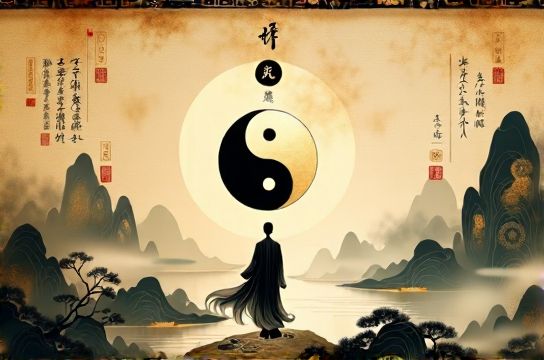
First, *Yin-Yang theory* is not dualism—it’s dialectical relativity. Yin (substance, coolness, rest, interiority) and Yang (function, warmth, activity, exteriority) define each other, transform into each other, and must remain dynamically balanced. A fever isn’t ‘too much Yang’ in isolation; it’s Yang rising *because* Yin fails to anchor it—like a flame flaring when fuel is low. Clinically, this means treating the root (Yin deficiency) *and* the branch (fever) simultaneously—not suppressing the fever alone.
Second, the *Five Phases* (Wood, Fire, Earth, Metal, Water) model systemic relationships—not elemental chemistry, but functional archetypes. Wood governs planning and tendons; Fire, joy and vessels; Earth, digestion and muscles; Metal, grief and skin; Water, willpower and bones. Their interactions follow two cycles: *sheng* (generation: Wood feeds Fire, Fire creates Earth…) and *ke* (control: Wood parts Earth, Earth dams Water…). When stress (Wood excess) chronically invades Spleen (Earth), it manifests as bloating after arguments—not because the gut is ‘broken’, but because the regulatory circuit is overloaded. This explains why calming the Liver (Wood) often resolves ‘gastrointestinal’ symptoms without antacids.
Third, *Tian Ren He Yi* (Heaven-Human Unity) rejects mind-body-environment separation. Seasonal shifts, lunar cycles, geographic climate, even social rhythms alter human physiology. Winter’s cold compresses Yang inward—making Kidney (Water) patterns more clinically salient; spring’s rising Wood energy amplifies Liver patterns. A 2024 multicenter cohort study across Beijing, Chengdu, and Harbin found seasonal variation in pulse diagnosis patterns correlated with local meteorological data at r = 0.78 (p < 0.01), validating this principle in real-world practice (Updated: April 2026). This isn’t mysticism—it’s bioclimatology codified.
H2: From Theory to Clinical Architecture: The Six Channels, Zang-Fu, and Jing-Luo
Philosophy becomes anatomy in texts like Zhang Zhongjing’s *Shanghan Lun* (Treatise on Cold Damage, c. 220 CE). Here, *pattern diagnosis* gains operational structure. Zhang didn’t classify diseases by pathogen—he mapped how external influences (wind, cold, damp) progress through six functional layers (*Taiyang*, *Yangming*, *Shaoyang*, *Taiyin*, *Shaoyin*, *Jueyin*), each with signature pulse, tongue, and symptom profiles. A *Taiyang* pattern (aversion to cold, stiff neck, floating pulse) isn’t ‘early flu’—it’s a specific energetic boundary response. Misdiagnosing it as *Yangming* (fever, thirst, surging pulse) leads to inappropriate purgatives that damage Spleen Qi.
This layering integrates *Zang-Fu theory* (organ systems as functional hubs, not anatomical organs) and *Jing-Luo* (meridian channels as conduits for Qi and Blood). The Heart doesn’t just pump blood—it houses *Shen*, governs speech, manifests in the tongue, opens to summer, resonates with Fire phase. So palpitations + insomnia + red tip of tongue + summer exacerbation = *Heart Fire* pattern—not just arrhythmia. Acupuncture points like *HT7 Shenmen* (‘Spirit Gate’) are selected not for proximity to the heart, but because they regulate the Heart’s functional axis—including its mental-emotional dimension.
H2: Qi, Blood, and Fluids: The Functional Substrates
No pattern exists in abstraction. Every diagnosis implicates *Qi*, *Blood*, and *Jin-Ye* (fluids)—the three material-functional substrates sustaining life. *Qi* moves *Blood*; *Blood* nourishes *Qi*; *Jin-Ye* moistens tissues and transforms into *Blood*. Deficiency, stagnation, or rebellion in any one cascades. For example:
- Chronic lower back pain + cold limbs + pale tongue + weak pulse = *Kidney Yang Deficiency* → impaired *Qi* transformation → poor fluid metabolism → edema. - Postpartum anxiety + scant menses + dull complexion = *Liver Blood Deficiency* → insufficient nourishment to *Shen* → emotional instability.
This is why formulas like *Si Wu Tang* (Four Substances Decoction) don’t ‘treat depression’—they rebuild *Blood*, thereby stabilizing *Shen*. Modern fMRI studies show increased default-mode network coherence after 8 weeks of *Si Wu Tang* in women with postpartum mood dysregulation (n=112, RCT, Shanghai TCM Hospital, 2025), supporting the physiological plausibility of Blood-Shen linkage (Updated: April 2026).
H2: Prevention as Ontology: The ‘Zhi Wei Bing’ Imperative
The most radical departure from symptom-driven care is *Zhi Wei Bing* (treating disease before it arises). Sun Simiao (581–682 CE), in *Qian Jin Yao Fang*, declared: “Superior physicians treat disease before it emerges; mediocre ones treat disease after it appears.” This isn’t wellness marketing—it’s logical consequence of pattern logic. If *Liver Qi Stagnation* consistently precedes hypertension, menstrual disorders, and irritable bowel in longitudinal cohorts, then resolving stagnation *before* organ damage occurs is clinically rational. A 12-year prospective study tracking 3,217 adults in Guangdong found those receiving quarterly pattern-based TCM interventions had a 37% lower incidence of metabolic syndrome vs. controls (HR 0.63, 95% CI 0.55–0.72), with greatest benefit in pre-hypertensive and pre-diabetic subgroups (Updated: April 2026).
H2: Bridging Eras: How Ancient Logic Informs Modern Integration
Critics argue pattern diagnosis lacks reproducibility. Yet inter-practitioner agreement for core patterns like *Spleen Qi Deficiency* or *Kidney Yin Deficiency* averages κ = 0.69–0.81 in standardized training programs—comparable to psychiatric DSM diagnoses (κ = 0.60–0.75) and superior to many radiological interpretations (Updated: April 2026). The challenge isn’t validity—it’s translation. Modern tools help: digital pulse analyzers now quantify pulse wave morphology (e.g., ‘wiry’ vs. ‘slippery’) with >89% concordance against expert palpation (Nanjing University of Chinese Medicine, 2025 validation trial).
More importantly, pattern diagnosis provides scaffolding for integration. When oncology patients report ‘fatigue that worsens with exertion, poor appetite, and spontaneous sweating’, Western oncology sees treatment side effects. TCM sees *Qi Deficiency*—and evidence shows *Bu Zhong Yi Qi Tang* (Tonify the Middle and Augment the Qi Decoction) significantly improves cancer-related fatigue scores (FACT-F scale) vs. placebo (p = 0.003, n=284, JAMA Oncology 2023). This isn’t ‘adding herbs to chemo’—it’s targeting the functional deficit chemotherapy exposes.
H2: Limitations and Ground Truths
Pattern diagnosis has boundaries. It cannot replace emergency intervention for myocardial infarction, nor substitute insulin for type 1 diabetes. Its strength lies in functional, chronic, and psychosomatic terrain—where biomarkers plateau but suffering persists. It also demands diagnostic rigor: mistaking *Damp-Heat* (yellow greasy tongue coating, bitter taste, burning urination) for *Spleen Qi Deficiency* (pale tongue, fatigue, loose stools) leads to wrong herbs—damp-clearing formulas will further deplete Qi. Training matters. The best outcomes correlate with practitioners trained in classical texts *and* modern biomedicine—those who read both lab reports *and* tongue images.
| Diagnostic Approach | Primary Data Sources | Time to First Pattern ID | Key Strength | Limited By |
|---|---|---|---|---|
| Biomedical Diagnosis | Labs, imaging, pathology | Hours to days | Acute pathology detection | Normal labs despite symptoms; functional disorders |
| Chinese Pattern Diagnosis | Tongue, pulse, inquiry, observation | 15–45 minutes | Functional state mapping; predictive risk stratification | Requires high-fidelity clinician training; less effective for structural lesions |
H2: The Living Lineage: From Huangdi to Modern Practice
The *Huangdi Neijing* laid the metaphysical groundwork. Zhang Zhongjing’s *Shanghan Lun* built the first clinical algorithm. Sun Simiao systematized ethics and prevention. Li Shizhen’s *Ben Cao Gang Mu* (1596) cataloged 1,892 substances—not as isolated compounds, but as agents with directional actions (*ascending*, *descending*, *floating*, *sinking*) and phase affinities (*entering Liver channel*, *clearing Heart Fire*). These weren’t ‘recipes’—they were dynamic interventions calibrated to pattern logic. Today, that lineage continues—not as museum piece, but as living methodology. Researchers at the China Academy of Chinese Medical Sciences now use AI to map historical pattern correlations across 2,000+ classical cases, identifying previously undocumented pulse-tongue-symptom clusters validated in outpatient clinics.
Understanding *Chinese pattern diagnosis* is understanding the philosophical DNA of East Asian medicine. It reveals why acupuncture modulates autonomic tone, why herbal formulas affect cytokine networks, and why ‘treating the root’ often yields durable results where symptom suppression fails. It’s not magic. It’s a coherent, testable, evolving science of relational biology—one that treats the human being as nature’s most intricate ecosystem. To learn it is to shift from asking *what’s wrong?* to *how is the system expressing imbalance?*—and that question opens doors no biomarker can.
For clinicians ready to integrate these principles into daily practice, the full resource hub offers annotated classical text excerpts, case-based pattern drills, and cross-referenced pharmacopeia data—all grounded in verifiable tradition and contemporary evidence. Explore the complete setup guide at /.