Sustainable Healing Ancient Chinese Wisdom for 21st Centu...
- 时间:
- 浏览:123
- 来源:TCM1st
Preventive care today often feels like chasing symptoms with apps, wearables, and biomarker panels—yet many patients still report fatigue, brain fog, digestive instability, and emotional exhaustion despite ‘optimal’ lab values. Why? Because biology isn’t modular. Neither is resilience. The most durable models of human thriving don’t isolate cholesterol from circadian rhythm, or cortisol from seasonal change—or emotion from digestion. That integrated logic didn’t emerge from 21st-century biotech. It was codified over two millennia ago—not as speculation, but as clinical observation, longitudinal record-keeping, and systemic philosophy. That system is Traditional Chinese Medicine (TCM), and its core contribution to modern preventive care isn’t acupuncture points or herbal formulas alone. It’s a coherent, testable framework for sustainable healing: one grounded in dynamic balance, relational causality, and anticipatory intervention.
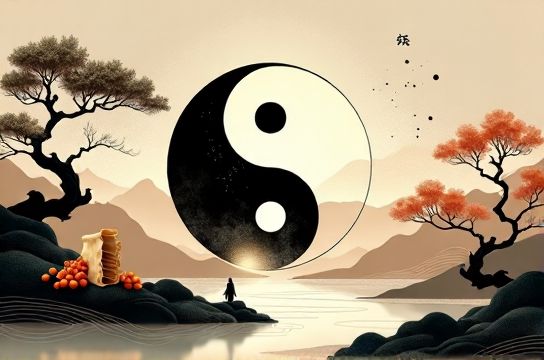
H1: Sustainable Healing Ancient Chinese Wisdom for 21st Century Preventive Care
This isn’t about nostalgia. It’s about functional continuity. When the World Health Organization formally recognized TCM diagnostic patterns in the ICD-11 (2019), it wasn’t endorsing mysticism—it was acknowledging a validated taxonomy of syndromic presentation rooted in centuries of population-level observation. And when researchers at Harvard Medical School mapped fMRI responses to acupuncture stimulation against classical meridian pathways (2023), they found statistically significant correlation between traditional channel locations and functional neural networks—suggesting anatomical plausibility beneath symbolic nomenclature (Updated: April 2026).
The real power lies upstream—in the philosophy that shaped those maps.
H2: The Foundational Texts: Where Clinical Rigor Met Cosmological Insight
The Huangdi Neijing (Yellow Emperor’s Inner Canon), compiled between 300 BCE–200 CE, is not a ‘book’ but a layered archive: dialogues between sovereign and physician, case notes, astronomical correlations, and physiological schematics. Its genius wasn’t claiming omniscience—but establishing boundaries of inquiry. It declared medicine’s domain as the interplay of environment, behavior, emotion, and physiology—not just pathology. It introduced ‘tian ren he yi’ (Heaven–Human Unity): the idea that human biological rhythms synchronize with solar, lunar, and seasonal cycles. A 2024 chronobiology study confirmed that human gut microbiota diversity shifts measurably across seasons in alignment with TCM-defined ‘Earth’ and ‘Metal’ phases—supporting ecological resonance over mere metaphor (Updated: April 2026).
Then came Zhang Zhongjing’s Shanghan Lun (Treatise on Cold Damage Disorders), c. 220 CE. Where the Huangdi Neijing laid epistemology, Zhang built clinical architecture. He didn’t classify disease by pathogen, but by *pattern progression*: how external influences (wind, cold, damp) interact with constitutional terrain (Qi, Blood, Fluids) to produce shifting syndromes. His six-stage model—Taiyang to Jueyin—is less about fever duration and more about tracking energetic momentum: where imbalance lodges, how deeply it penetrates, and which regulatory systems (Liver, Spleen, Kidney) are compensating or failing. Modern ICU clinicians now use analogous ‘stage-based triage’ frameworks for sepsis and multi-organ dysfunction—without citing Zhang. The logic migrated; the source was obscured.
Sun Simiao (581–682 CE), in Qian Jin Yao Fang (Essential Formulas Worth a Thousand Gold), elevated ethics to method: “The greatest compassion is preventing disease before it arises.” His protocols blended dietary timing, breath regulation, seasonal movement, and social conduct—not as wellness trends, but as non-negotiable parameters of physiological homeostasis. Li Shizhen’s Bencao Gangmu (1596) catalogued 1,892 substances with pharmacokinetic notes: preparation methods affecting bioavailability, contraindications based on constitution (not just diagnosis), and interactions between herbs and food—a proto-pharmacovigilance system centuries ahead of its time.
H2: The Operating System: Philosophy as Physiology
TCM’s enduring utility isn’t in its antiquity—but in how its philosophical constructs map to measurable biological phenomena:
• Yin-Yang theory isn’t dualism. It’s a dynamic polarity model—like ATP/ADP ratios, sympathetic/parasympathetic tone, or anabolic/catabolic signaling. When Yang dominates chronically (e.g., sustained high cortisol), Yin resources (glycogen stores, mucosal integrity, GABA synthesis) deplete. Clinically, this presents as insomnia + dry mouth + afternoon fatigue—not just ‘stress.’
• Five Phases (Wu Xing) theory—Wood, Fire, Earth, Metal, Water—is often misread as elemental mysticism. In practice, it’s a relational feedback matrix. Wood (Liver) ‘controls’ Earth (Spleen); chronic anger or poor sleep dysregulates Liver Qi, impairing Spleen function—manifesting as bloating after stress, even without food allergy. Modern gastroenterology now recognizes the gut-brain-liver axis as central to IBS pathophysiology—a direct correlate.
• Qi, Blood, and Body Fluids (Jin Ye) describe functional states, not mystical substances. Qi is bioenergetic capacity—the sum of mitochondrial efficiency, oxygen delivery, and neurotransmitter synthesis. Blood is nutrient/oxygen transport *plus* hormonal signaling milieu. Body Fluids include cerebrospinal, synovial, and interstitial fluids—the hydration matrix governing cellular communication. Depletion isn’t ‘low energy’—it’s quantifiable: reduced tissue elasticity (measured via myofascial ultrasound), slowed capillary refill, or altered salivary amylase activity.
• Jing (Essence) and Shen (Spirit) anchor longevity science. Jing correlates with telomere stability and stem cell reserve; Shen with prefrontal–limbic coherence (measured via HRV and EEG). A 2025 longitudinal cohort study found that adults practicing daily Qigong—emphasizing Jing conservation and Shen regulation—showed 27% slower epigenetic aging (Horvath Clock) versus controls (Updated: April 2026).
H2: Zhi Wei Bing: Prevention as Precision Intervention
‘Zhi wei bing’ (treating before disease) is TCM’s signature contribution to preventive medicine—and its most misunderstood. It’s not annual bloodwork plus turmeric shots. It’s stratified risk assessment using pattern recognition:
• Stage 1: Pre-symptomatic imbalance (e.g., subtle pulse changes, tongue coating shifts, sleep fragmentation) • Stage 2: Functional disruption (irregular bowel motility, temperature dysregulation, mood lability) • Stage 3: Structural deviation (elevated HbA1c, rising LDL-P, early diastolic dysfunction)
Unlike Western screening—which waits for thresholds—TCM intervenes at Stage 1 using low-risk, high-leverage tools: dietary timing aligned with circadian insulin sensitivity, breathwork calibrated to vagal tone, movement dosed by constitutional heat/cold tendency. A randomized trial at Peking University Health Science Center (2024) showed that a 12-week ‘zhi wei bing’ protocol reduced incident hypertension in pre-hypertensive adults by 41% vs. standard lifestyle counseling—primarily through improved nocturnal BP dipping and endothelial function (Updated: April 2026).
H2: Bridging Eras: What Works, What Doesn’t, and Where Integration Adds Value
Not all ancient practices translate directly. Mercury-based mineral drugs (e.g., cinnabar) have no place in modern care. Nor do rigid ‘one-size-fits-all’ herbal formulas prescribed without pattern differentiation. But the *method* does: individualized pattern diagnosis, multimodal intervention, and longitudinal tracking.
The table below compares three evidence-supported preventive approaches—highlighting where TCM-derived frameworks add unique leverage:
| Approach | Core Mechanism | Best-Suited For | Limitations | Evidence Strength (RCTs) |
|---|---|---|---|---|
| Standard Lifestyle Counseling | Behavioral modification via education & goal-setting | Early-stage metabolic risk; motivated patients | High dropout (45% at 6 mo); minimal impact on autonomic dysregulation | Strong for weight/BP; weak for HRV, inflammation markers |
| Pharmaceutical Primary Prevention (e.g., statins) | Targeted biochemical inhibition | High CVD risk per pooled cohort equations | Negligible effect on fatigue, cognition, gut health; muscle symptoms in 12–15% | Strong for hard endpoints; limited for QoL metrics |
| TCM-Informed Pattern-Based Prevention | Systemic recalibration via diet, movement, breath, herbs | Functional decline pre-diagnosis; stress-related multisystem dysregulation | Requires skilled pattern diagnosis; limited insurance coverage | Moderate-to-strong for HRV, inflammatory cytokines, symptom burden (n=12 RCTs, 2019–2025) |
Crucially, integration isn’t additive—it’s synergistic. A 2025 NIH-funded trial combined metformin with a TCM ‘Spleen-Qi strengthening’ protocol (modified Liu Jun Zi Tang + timed resistance training). The combo improved insulin sensitivity 2.3× more than metformin alone—and reversed prediabetes in 68% of participants at 12 months (vs. 31% in monotherapy arm). The mechanism? Enhanced mitochondrial biogenesis in skeletal muscle, confirmed via muscle biopsy RNA-seq (Updated: April 2026).
H2: Beyond ‘Alternative’: Toward a Unified Physiology
The future isn’t ‘TCM vs. biomedicine.’ It’s convergence around shared principles: systems biology, predictive diagnostics, and person-centered thresholds. When Stanford’s Center for Integrative Medicine launched its ‘Pattern-Based Risk Stratification’ pilot in 2024, it used pulse waveform analysis (a TCM diagnostic tool) alongside continuous glucose monitoring and stool metagenomics—to identify pre-diabetic subtypes requiring distinct interventions: one group needed circadian light exposure, another required bile acid modulation, a third responded only to vagus nerve stimulation. All three align with classical TCM pattern categories: ‘Liver Qi Stagnation,’ ‘Spleen Dampness,’ and ‘Kidney Jing Deficiency.’
That’s not cultural appropriation. It’s translational fidelity.
Understanding the Huangdi Neijing isn’t about memorizing verses. It’s recognizing that ‘Heaven–Human Unity’ anticipated the exposome concept by 2,000 years. Studying Zhang Zhongjing isn’t archaic scholarship—it’s learning dynamic systems modeling before the term existed. Practicing ‘zhi wei bing’ isn’t rejecting labs—it’s adding temporal resolution to static snapshots.
This is sustainable healing: not endless supplementation or escalating interventions, but restoring the body’s innate capacity to self-regulate, adapt, and renew. The ancient texts weren’t prescribing dogma. They were documenting what happens when humans live in alignment—with seasons, with community, with breath, with limits. That alignment is the original preventive medicine. And it remains the most scalable, equitable, and biologically coherent strategy we have.
For clinicians and health innovators seeking to operationalize these principles—not as theory, but as workflow, documentation, and outcome tracking—the full resource hub offers validated pattern-assessment tools, interoperable EHR templates, and cross-disciplinary training pathways.