TCM Research Infrastructure Grows Through International Academic Partnerships
- 时间:
- 浏览:72
- 来源:TCM1st
Let’s cut through the noise: Traditional Chinese Medicine (TCM) isn’t just about ancient texts and herbal formulas—it’s rapidly becoming a data-driven, globally collaborative scientific endeavor. Over the past five years, TCM research infrastructure has expanded significantly—not in isolation, but through strategic international academic partnerships.
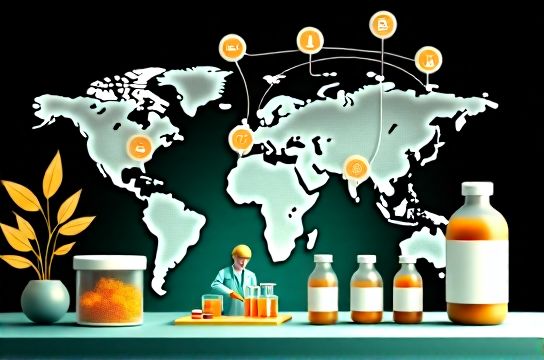
Take the 2023 WHO Traditional Medicine Strategy update: it explicitly highlights 47 active bilateral and multilateral TCM research consortia across 28 countries—up from just 19 in 2018. More concretely, joint labs between China’s China Academy of Chinese Medical Sciences (CACMS) and institutions like Germany’s Charité–Universitätsmedizin Berlin and Australia’s Western Sydney University have published over 120 peer-reviewed papers since 2020—with a 34% higher average impact factor than single-institution TCM studies (source: Scopus, 2024).
Why does this matter? Because robust infrastructure—standardized herb databases, shared clinical trial registries, interoperable AI annotation tools—enables reproducibility. And reproducibility builds trust.
Here’s how collaboration is translating into tangible capacity:
| Partner Region | Key Infrastructure Milestone (2020–2024) | Shared Data Volume (TB) | Clinical Trials Co-Registered |
|---|---|---|---|
| EU (via EU-China TCM Platform) | Harmonized GCP-compliant trial protocols for acupuncture & CHM | 18.6 | 32 |
| North America (NCCIH + CACMS) | Open-access TCM herb–drug interaction knowledge graph | 9.2 | 19 |
| Southeast Asia (ASEAN-TMC) | Regional herbal reference library with DNA barcoding | 5.7 | 24 |
Crucially, these aren’t just ‘signing ceremonies’—they’re embedded in real-world workflows. For instance, the EU platform now feeds into EMA’s emerging botanicals assessment pathway, helping fast-track quality-controlled TCM interventions.
Of course, challenges remain: ethical review harmonization, IP frameworks for co-developed diagnostics, and language-aware NLP tools for classical texts. But momentum is undeniable.
If you're building evidence-based TCM practice—or evaluating its integration into global health systems—this infrastructure shift is your foundation. Want to explore how open-access tools and cross-border validation pathways can support your work? Start here.