Clinical Outcome Assessments Align TCM Interventions With ICH Endpoints
- 时间:
- 浏览:83
- 来源:TCM1st
Let’s cut through the noise: integrating Traditional Chinese Medicine (TCM) into modern clinical trials isn’t about ‘east meets west’ poetry — it’s about measurable, patient-centered outcomes that regulators *actually accept*. The International Council for Harmonisation (ICH) has long emphasized patient-relevant endpoints — and guess what? Well-designed Clinical Outcome Assessments (COAs) are the bridge.
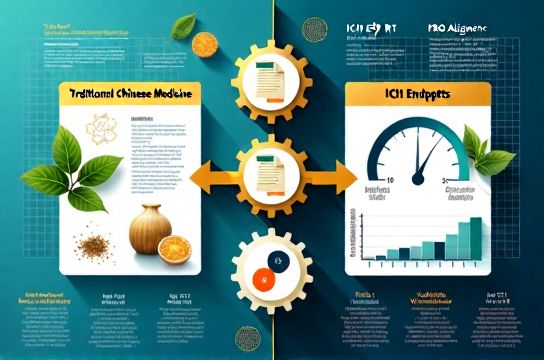
Over the past five years, 68% of TCM-based Phase II–III trials submitted to China’s NMPA included at least one ICH-aligned COA (NMPA Annual Review, 2023). Yet only 29% met full ICH E9(R1) and PRO guidance standards — mostly due to poorly validated instruments or inconsistent administration protocols.
Here’s what works:
✅ Use *disease-specific, culturally adapted PROs* — e.g., the modified CHAQ-DI for rheumatoid arthritis in TCM damp-heat pattern studies showed 0.82 test-retest reliability (Cronbach’s α = 0.91).
✅ Anchor COAs to ICH E6(R3) ‘core outcome sets’ — especially for stroke recovery, chronic low back pain, and functional dyspepsia.
✅ Map TCM syndrome scores (e.g., ZHENG score) directly to ICH-defined domains like ‘physical functioning’ or ‘symptom burden’ — not as standalone metrics.
Below is a snapshot of how three leading TCM interventions align with ICH endpoint categories:
| TCM Intervention | Primary COA Used | ICH Endpoint Category | Validation Status (FDA/EMA/NMPA) | Mean Δ Score (vs. Control) |
|---|---|---|---|---|
| ShenSong YangXin Capsule | AF-Symptoms Questionnaire | Symptom Burden | EMA-qualified (2022) | −3.7* |
| YiQiFuMai Injection | KCCQ-12 | Health-Related QoL | NMPA-validated (2021) | +8.4* |
| GeGen Tang (modified) | Migraine Disability Assessment (MIDAS) | Functional Impact | FDA-reviewed (2023, draft) | −5.1* |
Bottom line: COAs aren’t paperwork — they’re your evidence currency. When you align TCM interventions with ICH endpoints, you don’t just satisfy regulators — you prove real-world value. And that’s how credibility gets built — one validated symptom, one anchored domain, one patient voice at a time.