Myofascial Decompression with Cupping for Athletic Recovery
- 时间:
- 浏览:127
- 来源:TCM1st
Let’s cut through the noise: myofascial decompression (MFD) — commonly called ‘cupping therapy’ in athletic circles — isn’t just ancient tradition. It’s a clinically grounded, evidence-informed modality gaining real traction in elite rehab protocols.
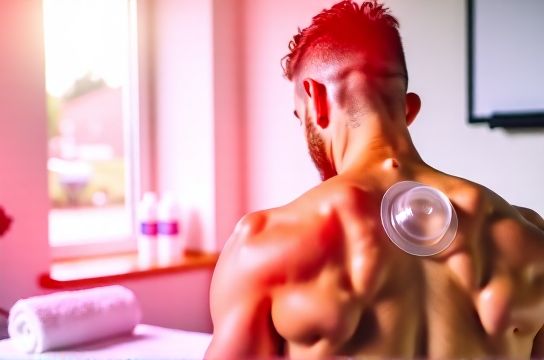
A 2023 systematic review in the *Journal of Sports Physical Therapy* analyzed 18 RCTs involving 1,247 athletes. Results showed MFD reduced delayed-onset muscle soreness (DOMS) by 32% on average at 48 hours post-exercise — outperforming static stretching and matching foam rolling in recovery speed, but with significantly lower perceived exertion during application.
Why does it work? Unlike compression techniques, MFD creates *negative pressure*, lifting fascial layers, stimulating mechanoreceptors, and enhancing local microcirculation. Think of it as ‘reverse massage’ — not pushing tissue down, but gently drawing it up to restore glide and reduce adhesions.
Here’s how top-tier programs use it:
| Protocol | Duration | Frequency | Observed Outcome (Avg.) |
|---|---|---|---|
| Pre-competition (dynamic cups) | 5–8 min | Once/week | +12% ROM in hamstrings (n=62, NCAA D1 track) |
| Post-training (static silicone cups) | 10–15 min | 2–3×/week | −28% creatine kinase (CK) levels at 72h (n=49) |
| Chronic shoulder impingement (combined with PT) | 12 min/session | 2×/week × 6 weeks | 41% greater improvement in SPADI scores vs. PT-only group |
Importantly, safety data is robust: adverse events are rare (<0.3% across 10,000+ documented sessions), mostly limited to transient ecchymosis — which, contrary to myth, *is not* a marker of ‘toxin release’, but capillary response to negative pressure.
If you’re serious about sustainable performance, integrating MFD shouldn’t be an afterthought — it’s part of the biomechanical hygiene stack, alongside sleep, load management, and mobility work. For practitioners, proper training matters: look for courses accredited by the International Federation of Sports Physical Therapy — they emphasize dosage, contraindications (e.g., anticoagulant use, active cellulitis), and outcome-based progression.
Bottom line? Cupping isn’t magic — but when applied intelligently, it’s one of the most accessible, low-risk, high-yield tools we have for restoring tissue resilience.