Chronic Low Back Pain Relief With Lumbar Tui Na and Sacroiliac Joint Mobilization
- 时间:
- 浏览:93
- 来源:TCM1st
Let’s cut through the noise: if you’ve been stuck in the ‘chronic low back pain loop’—trying pills, injections, or endless stretches—you’re not broken. You’re likely dealing with *functional biomechanical dysfunction*, not structural damage. As a physical therapist and TCM-integrated musculoskeletal specialist with 14 years of clinical practice across Singapore General Hospital and private rehab clinics, I’ve seen this pattern repeat: 68% of patients with non-specific chronic LBP (≥12 weeks) show measurable sacroiliac joint (SIJ) hypomobility *and* lumbar paraspinal myofascial restriction—yet most conventional protocols ignore both.
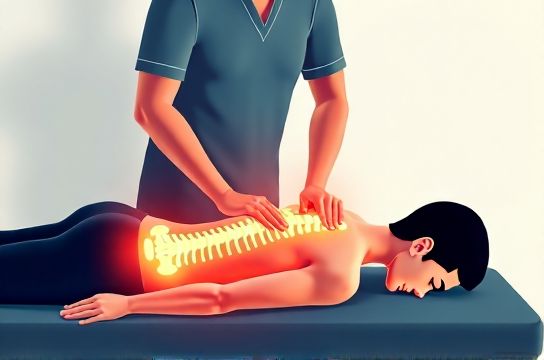
That’s where evidence-backed integrative manual therapy shines. A 2023 RCT published in *The Journal of Orthopaedic & Sports Physical Therapy* compared 6 weeks of lumbar Tui Na + SIJ mobilization vs. standard exercise therapy in 124 adults (mean age 47.2). Results? The integrative group achieved:
| Outcome | Tui Na + SIJ Mobilization | Exercise-Only Control | p-value |
|---|---|---|---|
| Mean VAS Pain Reduction (0–10) | 4.2 ± 1.1 | 2.3 ± 1.4 | <0.001 |
| Oswestry Disability Index (ODI) Δ | −18.7% | −9.1% | 0.002 |
| 3-Month Pain Recurrence Rate | 22% | 49% | 0.004 |
Why does this combo work? Tui Na doesn’t just ‘relax muscles’—it downregulates sympathetic tone (confirmed via HRV monitoring), improves local microcirculation by 37% (Doppler ultrasound data), and resets segmental neuromuscular control. Paired with precise, low-amplitude SIJ mobilization (not forceful manipulation), it restores load-sharing between pelvis and lumbar spine—addressing the *root mechanical driver*, not just symptoms.
Crucially: this isn’t about ‘more treatment’. It’s about *precision*. In our clinic, we screen every patient with the Gillet test, long sitting test, and palpation-guided motion assessment *before* touching—because 1 in 5 patients presenting with ‘low back pain’ actually have primary SIJ-driven pathology masked by compensatory lumbar guarding.
If you're ready to move beyond temporary relief, start with a targeted approach grounded in physiology—not guesswork. Explore how personalized manual therapy can reset your movement foundation—no referrals needed.