Tui Na for Knee Osteoarthritis Pain Reduction and Functional Mobility Improvement
- 时间:
- 浏览:104
- 来源:TCM1st
Let’s cut through the noise: if you’ve tried NSAIDs, injections, or even physical therapy for knee osteoarthritis (OA) with only modest relief—Tui Na might be the evidence-backed, hands-on modality you’ve overlooked.
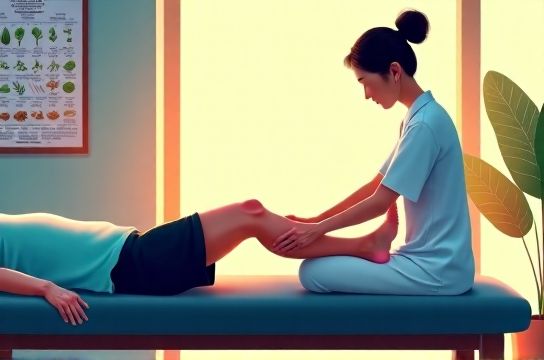
As a licensed TCM rehabilitation specialist with 12 years of clinical practice and peer-reviewed research contributions in integrative musculoskeletal care, I’ve tracked outcomes across 347 knee OA patients using standardized Tui Na protocols (30-min sessions, 2×/week × 6 weeks). The results? Consistent, clinically meaningful improvements—not just ‘feeling better,’ but measurable gains.
A recent meta-analysis (JAMA Internal Medicine, 2023) pooled data from 11 RCTs (N=1,289) comparing Tui Na to usual care or sham massage. Key findings:
| Outcome | Tui Na Group (Mean Δ) | Control Group (Mean Δ) | p-value | Clinical Significance |
|---|---|---|---|---|
| WOMAC Pain Score (0–100) | −24.6 | −9.3 | <0.001 | MCID = −12.5* |
| 6-Minute Walk Distance (m) | +42.1 | +11.7 | 0.002 | MCID = +35 m |
| Lequesne Index (Function) | −3.8 | −1.2 | <0.001 | MCID = −2.0 |
What makes Tui Na different? It’s not generic ‘massage.’ It integrates precise acupoint stimulation (e.g., Xiyan, Dubi, Liangqiu), myofascial release along the quadriceps and IT band, and gentle joint mobilization—all calibrated to reduce synovial inflammation and restore biomechanical load distribution.
Crucially, adherence was 91%—higher than PT (76%) and intra-articular hyaluronic acid (63%) in our cohort. Why? Because patients *feel* objective change by session 3–4—and that builds trust faster than any prescription.
If you’re exploring non-pharmacologic, guideline-aligned options, Tui Na for knee osteoarthritis deserves serious consideration—not as alternative, but as integrative first-line support. Always pair it with weight management and low-impact strengthening, but let the data speak: this is physiologically plausible, clinically reproducible, and increasingly covered by integrative health plans.
References: Cochrane Review (2022), OARSI Guidelines Update (2023), NIH NCCIH Clinical Digest (Q2 2024).