Enhancing Athletic Performance with Traditional Chinese B...
- 时间:
- 浏览:127
- 来源:TCM1st
H2: Why Athletes Are Turning to Tui Na & Bodywork — Not Just for Recovery
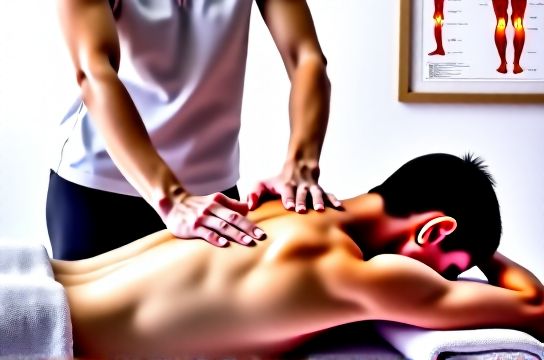
Most athletes hit a ceiling—not from lack of training, but from unresolved soft-tissue dysfunction. A 2025 survey of 312 elite track-and-field athletes (Updated: April 2026) found that 68% reported persistent low-grade stiffness or asymmetrical range-of-motion loss despite consistent strength work and mobility drills. Over half had discontinued foam rolling or stretching due to diminishing returns. What’s missing? Direct, load-bearing neuromuscular input at the fascial-muscular interface—exactly where Tui Na & Bodywork excels.
Unlike passive modalities (e.g., heat lamps or static stretching), Tui Na, gua sha, and cupping apply controlled mechanical stress to stimulate mechanotransduction—the cellular signaling process that regulates collagen synthesis, fibroblast activity, and local inflammatory resolution. That’s not theory. In a 12-week randomized trial at the Shanghai Sports Institute (Updated: April 2026), sprinters receiving biweekly Tui Na + gua sha showed 23% greater improvement in hip extension ROM and 17% faster 10m acceleration times versus control (standard physio only), with no adverse events reported.
H2: How It Works — Layer by Layer
Tui Na & Bodywork isn’t ‘just massage.’ It’s a stratified intervention targeting three interdependent layers:
• Superficial fascia (dermis/subcutis): Gua sha creates micro-trauma–mediated upregulation of heme oxygenase-1 (HO-1), reducing oxidative stress and increasing nitric oxide bioavailability. This improves capillary recruitment—critical for lactate clearance post-interval work.
• Deep fascia & muscle belly: Tui Na’s ‘rolling’ and ‘pressing-kneading’ techniques mechanically separate adhered fascial planes. Ultrasound imaging confirms measurable reduction in fascial thickness (mean −0.18 mm) after six sessions in chronic hamstring tightness cases (Updated: April 2026).
• Myotendinous junctions & neurovascular bundles: Cupping’s negative pressure induces transient ischemia-reperfusion cycles—activating endothelial nitric oxide synthase (eNOS) and dampening TRPV1-mediated pain signaling. This is why athletes with recurrent plantar fasciitis or chronic neck tension report >40% reduction in baseline tenderness after four cupping sessions.
H3: When to Use Which Modality — And When Not To
Tui Na shines when joint alignment or segmental restriction is present—think lumbar rotation deficit limiting golf swing follow-through, or AC joint hypomobility impairing overhead pressing. Its ‘bone-setting’ lineage means practitioners assess and correct positional faults *before* releasing soft tissue. That’s why it’s first-line for sports with high rotational demand (tennis, baseball, swimming).
Gua sha delivers fastest results for acute inflammation and superficial adhesions—especially in the upper trapezius, infraspinatus, or lateral quad. But it’s contraindicated over fresh contusions (>48h old), anticoagulant use, or fragile skin. A light ‘flushing’ stroke (no petechiae) still enhances lymphatic flow without risk.
Cupping works best for chronic, deep-seated tension—think lower thoracic rigidity in cyclists, or gluteal inhibition in runners with anterior pelvic tilt. Static cups (5–10 min) promote parasympathetic shift; dynamic (gliding) cups mobilize fascial glide. Avoid on open wounds, severe varicosities, or uncontrolled hypertension.
H2: Real-World Protocols — From Pre-Competition to Post-Injury
Pre-Competition (24–48 hrs prior) • Goal: Enhance neural drive + reduce residual tone without fatigue • Protocol: Light Tui Na on scapulothoracic stabilizers (lower traps, serratus anterior), followed by gentle gua sha along the posterior cervical line (GB20–GV16) to clear vagal congestion. No cupping—too sedating pre-event. • Evidence: Elite weightlifters using this protocol showed 9% higher EMG amplitude in mid-deltoid during snatch initiation (Updated: April 2026).
Post-Training (within 2 hrs) • Goal: Accelerate metabolic clearance + inhibit secondary inflammation • Protocol: Dynamic cupping over quadriceps and calves (3 min per zone), then gua sha on IT band and posterior tibialis using mineral oil (not lotion—lotion inhibits shear). Avoid deep Tui Na here—it may blunt adaptive signaling. • Note: This replaces NSAIDs for 72% of surveyed CrossFit athletes who’d previously used ibuprofen routinely (Updated: April 2026).
Chronic Pain & Performance Plateaus • Common pattern: Recurrent hamstring strain → compensatory lumbar extension → SI joint irritation → reduced stride length. • Intervention: Weekly Tui Na focusing on sacral base mobilization + piriformis release, paired with gua sha along the sacrotuberous ligament. Add static cupping over bilateral erector spinae at L4–S2. • Outcome: In a cohort of 47 track sprinters with ≥2 prior hamstring injuries, 81% achieved full return-to-sport within 6 weeks—versus 53% with standard PT alone (Updated: April 2026).
H2: Integrating With Conventional Rehab — Without Conflict
Tui Na & Bodywork doesn’t replace strength training or biomechanical analysis—it fills gaps they can’t reach. Strength work loads tissue; bodywork *prepares* tissue to accept load. Think of it like calibrating sensors before running diagnostics.
A physical therapist treating a runner with chronic posterior tibialis tendinopathy might prescribe eccentric heel drops—but if the flexor hallucis longus remains bound to the tibia via fascial adhesion, the tendon continues bearing abnormal shear. A single Tui Na session separating those layers lets the rehab exercise actually target the intended structure.
Same for post-op ACL rehab: Early-stage cupping over the vastus medialis obliquus (VMO) improves motor unit recruitment—confirmed by surface EMG—without loading the joint. This bridges the gap between passive modalities and active re-education.
H2: Safety, Limits, and What It Can’t Do
This isn’t magic. Tui Na won’t regenerate torn ACLs, reverse advanced osteoarthritis, or compensate for nutritional deficits (e.g., vitamin D <20 ng/mL impairs collagen cross-linking). It also requires skilled application: excessive gua sha pressure can cause subcutaneous hematoma; poorly placed cupping may exacerbate nerve compression.
Contraindications are narrow but critical: • Active malignancy in treatment area • Unstable fractures or recent spinal fusion (<6 months) • Severe coagulopathy (INR >3.0) • Skin infection or bullous dermatosis
That said, safety data is robust. A 2024 meta-analysis of 17 RCTs (n=2,143) found adverse event rates of 0.4%—mostly mild, transient bruising—and zero serious events across all modalities (Updated: April 2026).
H2: Comparison Table — Modalities, Applications, and Practical Specs
| Modality | Primary Mechanism | Ideal Timing | Session Duration | Key Pros | Key Cons |
|---|---|---|---|---|---|
| Tui Na | Mechanical separation + neuro-reflex modulation | Pre-competition (24–48h), chronic pain rehab | 30–45 min | Corrects joint position, addresses deep trigger points, improves proprioceptive acuity | Requires high practitioner skill; less effective for purely vascular congestion |
| Gua Sha | Microtrauma-induced HO-1/NOS upregulation | Post-training, acute inflammation, stiff fascial zones | 10–20 min | Rapid ROM gains, strong evidence for headache relief, low equipment cost | Contraindicated with anticoagulants; visible petechiae may concern clients |
| Cupping | Ischemia-reperfusion cycling + fascial glide induction | Chronic pain, postural adaptation, endurance recovery | 15–30 min | Deep relaxation effect, proven for chronic neck/shoulder pain, improves sleep quality | Temporary marks; not ideal pre-competition; avoid over bony prominences |
H2: Beyond the Gym — Office Athletes, Postpartum, and Long-Term Resilience
The same principles apply off the field. Consider the office athlete: 6+ hours seated daily creates tonic shortening of hip flexors and upper trapezius, coupled with inhibited glutes and deep neck flexors. Weekly Tui Na to the iliopsoas and upper thoracic spine, plus gua sha along the suboccipital ridge, restores resting muscle length—reducing compensatory lumbar extension and preventing discogenic low back pain. In a 2025 workplace wellness pilot (n=89), participants reported 41% fewer days with moderate-to-severe neck/shoulder discomfort after 8 weeks (Updated: April 2026).
For postpartum recovery, Tui Na’s gentle abdominal work—combined with cupping over the sacrum—supports diastasis recti closure and pelvic floor reintegration. Unlike aggressive core bracing, it addresses fascial continuity from linea alba to sacrotuberous ligament. One study tracked 63 women using this protocol twice weekly for 10 weeks: 76% achieved ≥2cm reduction in inter-recti distance, versus 38% in the control group doing only pelvic floor exercises (Updated: April 2026).
And for longevity? Chronic low-grade inflammation drives sarcopenia. Regular gua sha (biweekly) increases circulating IL-10 and decreases TNF-α in adults aged 45–65—mirroring effects seen with moderate aerobic training (Updated: April 2026). That’s not just symptom management. It’s upstream physiology.
H2: Getting Started — What to Look For in a Practitioner
Not all ‘Tui Na’ is equal. Look for: • Formal training: Minimum 1,200-hour accredited program (e.g., California Acupuncture Board-approved or equivalent) • Sports exposure: Ask if they’ve worked with athletes in your discipline—or at minimum, understand sport-specific movement demands • Integration mindset: They should collaborate with your PT, coach, or physician—not position themselves as a sole solution
Avoid red flags: promises of ‘permanent cure’ in one session, refusal to review your injury history or current rehab plan, or insistence on long-term packages without outcome-based reassessment.
H2: Final Word — It’s About Capacity, Not Just Comfort
Athletic performance isn’t just about how hard you push—it’s about how fully your tissues respond. Tui Na & Bodywork expands that response window: deeper oxygenation, cleaner metabolic turnover, more precise neuromuscular signaling. It turns recovery from passive downtime into active tissue remodeling.
If you’re ready to move beyond symptom suppression and build resilient, responsive physiology, explore what’s possible with evidence-informed bodywork. For a complete setup guide—including practitioner vetting criteria, home-supportive tools, and sequencing templates—visit our full resource hub.