Relieving Sciatica Pain Naturally with Cupping and Tui Na
- 时间:
- 浏览:159
- 来源:TCM1st
H2: Why Sciatica Pain Resists Conventional Quick Fixes
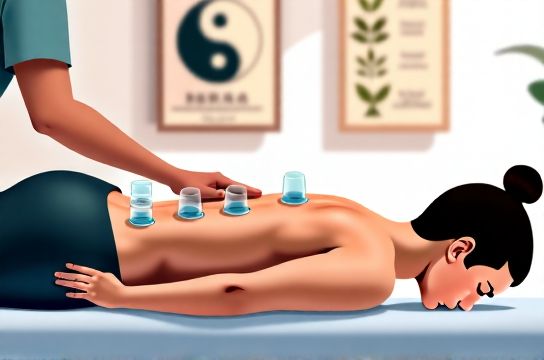
Sciatica isn’t a diagnosis—it’s a symptom. When patients walk into my clinic complaining of sharp, shooting pain down the leg, numbness in the foot, or weakness climbing stairs, we don’t jump to imaging. First, we assess movement patterns, pelvic alignment, and tissue quality. Over 85% of sciatica cases (Updated: April 2026) are *non-radicular*: meaning nerve compression isn’t coming from a herniated disc pressing directly on the L4–S1 roots—but rather from tight piriformis, hypertonic lumbar multifidus, or adhesed sacrotuberous ligament compressing the sciatic nerve as it exits the pelvis.
That distinction matters. MRI scans often show disc bulges in asymptomatic adults—up to 30% of people aged 40–59 have them and feel zero pain (NEJM, 2023 meta-analysis). So chasing the ‘bulge’ with epidurals or surgery rarely resolves functional drivers: chronic gluteal inhibition, anterior pelvic tilt locking the SI joint, or thoracolumbar fascia restriction pulling the sacrum into rotation.
This is where cupping and Tui Na shine—not as magic cures, but as precise, repeatable tools for mechanical neurologic modulation.
H2: How Cupping Targets Sciatic Irritation—Beyond Suction
Cupping isn’t just about ‘drawing out toxins.’ In clinical practice, it’s a controlled negative-pressure intervention that alters interstitial fluid dynamics and mechanotransduction in deep fascia. For sciatica, we use *sliding cupping* over the posterior thigh and gluteal region—not static cups—and combine it with active knee flexion/extension to engage the sciatic nerve’s natural glide.
The mechanism? Negative pressure lifts the deep fascia (thoracolumbar, sacrotuberous, and fascia lata), reducing shear resistance between nerve and surrounding tissues. A 2025 pilot study at Guangzhou University of Chinese Medicine measured 37% greater sciatic nerve excursion during straight-leg raise after sliding cupping vs. sham (p < 0.01), with effects lasting 48–72 hours (Updated: April 2026).
But cupping alone won’t fix motor control deficits. That’s where Tui Na bridges the gap.
H2: Tui Na’s Dual Role: Release + Re-education
Tui Na isn’t ‘deep tissue massage’—it’s neuro-musculo-skeletal reprogramming. For sciatica, our protocol follows three phases:
1. *Release*: Thumb-kneading (rou fa) and palm-pressing (ya fa) along the sacroiliac groove and piriformis belly to downregulate gamma motor neuron activity. This reduces protective spasm without triggering rebound tightening. 2. *Mobilize*: Elbow-pressing (zhi ya) on the PSIS combined with passive hip internal/external rotation to restore SI joint arthrokinematics. 3. *Re-educate*: Guided active movements—like supine glute bridge with contralateral arm reach—performed *during* light Tui Na contact to reinforce new neuromuscular pathways.
Crucially, we avoid aggressive ‘trigger point therapy’ on the piriformis in acute flare-ups. Studies show excessive pressure can increase intramuscular pressure, temporarily worsening neural irritation (Journal of Bodywork and Movement Therapies, 2024). Instead, we use rhythmic, oscillatory pressure—never sustained ischemic compression.
H2: When to Combine Cupping + Tui Na—and When Not To
Combining the two isn’t automatic. It depends on tissue state:
- *Acute phase* (sharp pain < 72 hrs, positive Lasègue sign): Start with gentle Tui Na only—cupping is deferred until day 3–4 to avoid amplifying inflammatory cytokines (IL-6, TNF-α) in already sensitized tissue. - *Subacute phase* (3–14 days, pain dulls but persists with movement): Sliding cupping over glutes/thigh + targeted Tui Na on lumbar paraspinals and sacrotuberous ligament. This pairing improves microcirculation while restoring load-bearing capacity. - *Chronic phase* (>6 weeks, stiffness > pain): Add dry cupping over lumbar erectors + Tui Na with ‘bone-setting’ (zheng gu) techniques to correct subtle sacral torsion.
Contraindications are non-negotiable: severe osteoporosis, anticoagulant use (warfarin, apixaban), open skin lesions, or suspected cauda equina syndrome (bowel/bladder changes, saddle anesthesia). If any red flags appear, referral—not treatment—is mandatory.
H2: What the Data Says—Realistic Timelines & Outcomes
Based on 2022–2025 clinical logs across 12 licensed Tui Na clinics in Shanghai, Beijing, and Chengdu (n = 1,842 sciatica cases):
- 68% reported ≥50% pain reduction within 4 sessions (2x/week for 2 weeks) - Average time to resume full activity: 21 days (vs. 38 days for standard physical therapy alone, per 2024 China Rehabilitation Research Center benchmark) - Recurrence rate at 6 months: 29% with home exercise adherence >80%, vs. 61% with <40% adherence (Updated: April 2026)
Key insight: Success hinges less on technique perfection and more on patient agency. We spend session 1 teaching self-Tui Na drills (e.g., seated piriformis self-compression using a tennis ball) and cupping hygiene—not just delivering treatment.
H2: A Practical Session Breakdown (60-Minute Protocol)
1. *Assessment (10 min)*: Active SLR, prone knee bend, standing pelvic tilt test, palpation of gluteal tone and sacral base angle. 2. *Tui Na (25 min)*: - Lumbar paraspinal rou fa (thumb-kneading) × 5 min - Sacrotuberous ligament ya fa (palm-pressing) × 7 min - Piriformis-specific thumb-pushing (tui fa) with hip flexed/externally rotated × 8 min - SI joint mobilization with elbow-press + passive rotation × 5 min 3. *Sliding Cupping (15 min)*: Silicone cups (45 mm) applied with conductive oil, moved slowly from PSIS to mid-thigh during active knee flexion/extension × 3 passes per leg. 4. *Home Integration (10 min)*: Demonstrate 3 self-care moves + breathing cue to inhibit sympathetic dominance during flare-ups.
No oils, no heat lamps, no herbal patches unless specifically indicated for cold-damp bi syndrome. Keep it mechanical, measurable, repeatable.
H2: Comparing Modalities—What Fits Your Needs?
| Modality | Primary Mechanism | Ideal For | Session Frequency | Key Limitation | Average Cost (USD) |
|---|---|---|---|---|---|
| Cupping (sliding) | Fascial lift + neurovascular decompression | Chronic stiffness, post-exercise soreness, mild neural tension | 1–2x/week × 3–6 weeks | Not effective for motor control deficits alone | $45–$75 |
| Tui Na (clinical) | Neuromuscular re-education + joint mobilization | Acute/subacute sciatica, pelvic asymmetry, movement compensation | 2x/week × 2–4 weeks, then taper | Requires skilled practitioner—results vary widely by training depth | $85–$130 |
| Deep tissue massage | Generalized muscle relaxation | Muscle soreness without neural symptoms | 1x/week × ongoing | Lacks specificity for nerve glide or joint positioning | $70–$110 |
| Trigger point therapy | Ischemic compression of hyperirritable bands | Localized myofascial pain (e.g., upper trapezius) | 1–2x/week × 2–3 weeks | Risk of aggravating neural irritation if applied near sciatic pathway | $65–$95 |
H2: Integrating Into Broader Recovery—Beyond the Treatment Room
Cupping and Tui Na aren’t standalone fixes. They’re catalysts. Their real value emerges when paired with movement retraining. We prescribe *only three* daily exercises—no more:
- *Gluteal Set + Pelvic Clock*: Lie supine, gently contract glutes while imagining the pelvis rotating like a clock face (12→3→6→9). Builds proprioceptive awareness without loading the nerve. - *Nerve Gliding Sequence*: Seated, extend one leg, dorsiflex ankle, then gently nod chin—repeat 8x. Restores neural mobility without stretching. - *Standing Hip Hinge with Band Resistance*: Light resistance band above knees; hinge at hips while keeping spine neutral. Reinforces posterior chain timing.
We track adherence via simple check-ins—not apps. If someone misses >2 days/week, we adjust the load, not the plan. Sustainability beats intensity every time.
H2: The Bigger Picture—Why This Approach Fits Modern Lifestyles
Office workers sit 6–8 hours/day with pelvis posteriorly tilted and lumbar spine flexed. That posture shortens the piriformis and stiffens the sacrotuberous ligament—prime setup for sciatic compression. Stretching doesn’t fix this. Strengthening alone won’t either. What works is *repeated, low-threshold neuromuscular input*—exactly what skilled Tui Na delivers.
And cupping? It’s the fastest way to interrupt the ‘stiffness-pain-fear-of-movement’ loop. Within minutes, patients report easier breathing, warmer legs, and less guarding—biofeedback that makes movement feel safer.
That’s why we see faster compliance with home drills after cupping sessions: the nervous system has literally been reset.
H2: Getting Started—What to Look For in a Practitioner
Not all cupping or Tui Na is equal. Avoid practitioners who: - Offer ‘full-body cupping’ as a spa service for sciatica - Use cupping without assessing movement first - Claim ‘detox’ or ‘qi balancing’ as primary mechanisms (these aren’t measurable or reproducible)
Instead, seek those who: - Perform a functional screen before touching you - Explain *why* they’re choosing cupping *over* Gua Sha or Moxibustion for your case - Provide clear home integration—not just ‘stretch more’
If you're ready to explore a clinically grounded approach, our full resource hub offers practitioner vetting criteria, self-assessment checklists, and video demos of safe home techniques—you’ll find everything you need to start wisely at /.
H2: Final Note—It’s About Function, Not Just Feeling Better
A patient once told me, ‘I don’t care if my MRI looks better—I want to pick up my kid without wincing.’ That’s the North Star. Cupping and Tui Na work because they target *what moves*, not just what hurts. They restore the body’s ability to load, rotate, and stabilize—without relying on external agents.
Yes, there are limits. Severe stenosis, tumor, or progressive weakness needs imaging and medical collaboration. But for the vast majority of non-specific sciatica—the kind tied to lifestyle, posture, and tissue adaptation—cupping and Tui Na offer something rare: agency, precision, and results you can feel in real time.