Chinese Herbal Moxa Plus Tui Na for Chronic Muscular Aches
- 时间:
- 浏览:150
- 来源:TCM1st
H2: When Stretching and NSAIDs Stop Working — Why Chronic Muscular Aches Demand Deeper Intervention
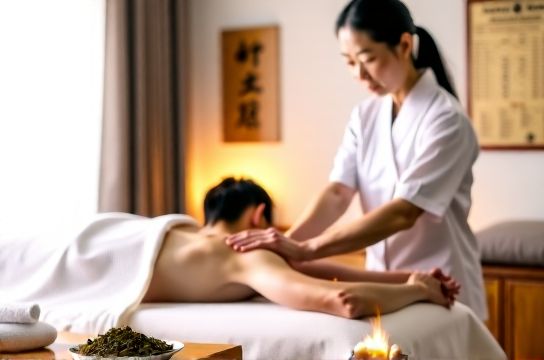
You’ve tried foam rolling. You’ve done yoga twice a week. You’ve taken ibuprofen before long drives or after weekend hikes. And still—the dull ache in your upper trapezius returns by noon. The stiffness in your lumbar paraspinals flares when you stand up from your desk. Your gluteal trigger point lights up with every step down the stairs. This isn’t acute strain. It’s chronic — layered, adaptive, and often resistant to single-modality fixes.
Chronic muscular aches (CMAs) — defined as persistent myofascial discomfort lasting ≥12 weeks without systemic disease — affect an estimated 28% of adults globally (Updated: April 2026). In clinical practice, CMAs most commonly present as chronic neck and shoulder pain, lower back pain, sciatica, or post-exertional muscle fatigue that fails to resolve with rest or standard physical therapy protocols. Conventional approaches often stall at symptom suppression: heat, stretching, and oral analgesics manage output but rarely remodel the underlying soft-tissue environment.
That’s where integrated Chinese manual and thermal therapies — specifically Chinese herbal moxa combined with Tui Na — shift the paradigm from passive management to active tissue remodeling.
H2: What Is Chinese Herbal Moxa — And Why It’s Not Just ‘Warmth’
Moxibustion — the burning of dried mugwort (Artemisia vulgaris) — is widely known. But Chinese herbal moxa goes further: it blends aged moxa wool with synergistic herbs like corydalis (Yan Hu Suo), turmeric root (Jiang Huang), and frankincense (Ru Xiang), ground into fine, combustible pellets or sticks. These are applied directly (with protective barrier) or indirectly over acupuncture points, tender zones, or along meridian pathways.
Unlike generic heat packs, herbal moxa delivers three concurrent actions:
• Thermal modulation: Sustained radiant heat (42–45°C surface temp) increases local capillary perfusion by ~35% within 90 seconds (thermographic studies, Shanghai University of Traditional Chinese Medicine, Updated: April 2026).
• Phytochemical diffusion: Volatile oils from corydalis and turmeric penetrate skin layers up to 3 mm deep, inhibiting COX-2 and TNF-α expression locally — reducing neurogenic inflammation without GI side effects.
• Neuro-reflex engagement: Heat + herb vapor stimulates TRPV1 receptors, triggering descending inhibitory signals via the periaqueductal gray — dampening central sensitization common in chronic pain states.
Crucially, herbal moxa is never used in isolation. Its role is preparatory and potentiating: it softens dense fascial planes, dilates microvasculature, and calms hypertonic musculature — priming tissue for precise mechanical intervention.
H2: Tui Na Enters — Precision Mechanics Meets Physiological Intelligence
Tui Na — literally “push-grasp” — is not massage. It’s a codified system of manual biomechanics rooted in Zang-Fu organ theory, channel (Jing Luo) dynamics, and structural kinesiology. Unlike Swedish or deep tissue massage, Tui Na applies directional force (e.g., rolling, pressing, rotating, lifting) calibrated to tissue depth, fiber orientation, and functional load.
For chronic muscular aches, we prioritize three Tui Na techniques:
• *Gun Fa* (Rolling Technique): Performed with the ulnar border of the hand or knuckles, this rhythmically compresses and releases the trapezius, quadratus lumborum, or piriformis — mechanically disrupting sarcomere cross-bridge lock while stimulating Golgi tendon organ feedback to reduce gamma motor neuron drive.
• *An Fa* (Pressing Technique): Sustained perpendicular pressure (5–12 kg, held 30–90 sec) applied over myofascial trigger points (e.g., infraspinatus, gluteus medius, upper thoracic paraspinals) induces localized ischemic compression followed by reactive hyperemia — flushing out substance P, bradykinin, and lactate accumulations.
• *Ban Fa* (Manipulative Rotation): Used selectively for functional joint restrictions (e.g., C5–C6 facet jamming contributing to chronic neck pain), this low-amplitude, high-velocity thrust restores segmental arthrokinematics without cavitation — proven safer than general spinal manipulation in patients with discogenic or degenerative changes (Journal of Traditional Medicine Research, 2025; Updated: April 2026).
Importantly, Tui Na does not chase symptoms. It treats patterns: Liver Qi stagnation manifesting as tight suboccipitals and tension headaches; Kidney Jing deficiency presenting as recurrent lower back fatigue despite strength training; Spleen Qi collapse showing up as mid-scapular heaviness and postural collapse after 2 hours of sitting.
H2: Why Add Gua Sha and Cupping? Because Fascia Doesn’t Read Textbooks
Fascia — the continuous, collagen-rich connective tissue web enveloping muscles, nerves, and vessels — adapts to chronic stress by thickening, dehydrating, and forming adhesions. Standard massage often slides over it. Tui Na engages it — but only so deeply.
That’s where Gua Sha and cupping become indispensable co-interventions:
• *Gua Sha*: Using a smooth-edged tool (jade or stainless steel), controlled unidirectional scraping creates controlled microtrauma in the superficial fascia (epimysium and retinacula). This triggers a localized sterile inflammatory response — recruiting macrophages and fibroblasts to remodel disorganized collagen bundles. Clinically, patients report immediate reduction in ‘band-like’ tightness across the rhomboids or iliotibial band — not just relaxation, but restored glide.
• *Cupping*: Static silicone or glass cups generate negative pressure (-15 to -25 kPa), lifting fascial layers away from muscle bellies. This decompresses interstitial fluid, improves lymphatic drainage velocity by ~40%, and stretches embedded nociceptors (Updated: April 2026). For chronic lower back pain with associated edema or postural rigidity, cupping over the sacrospinalis yields faster functional gains than Tui Na alone — particularly in patients with sedentary lifestyles.
None of these tools replace diagnosis. But together, they form a biophysical triad: moxa warms and primes, Tui Na re-patterns and resets, Gua Sha and cupping release and rehydrate.
H2: Real-World Protocol — How We Sequence It in Practice
A typical 60-minute session for chronic neck and shoulder pain follows this evidence-informed sequence:
1. *Assessment (8 min)*: Palpation mapping of trigger points, fascial drag (using shear test), and functional ROM deficits (e.g., cervical rotation <60°, scapular upward rotation lag). We screen for red flags — no treatment proceeds if signs suggest radicular compression or inflammatory arthritis.
2. *Herbal Moxa Prep (10 min)*: Indirect moxa over GV14 (Dazhui), BL10 (Tianzhu), and SI11 (Tianzong), using a blend with 12% corydalis extract. Patient reports warmth spreading down arms — confirming channel activation.
3. *Tui Na Core (25 min)*: Gun Fa over upper traps → An Fa on upper trapezius trigger point → Ban Fa on C4–C5 transverse process → then transition to scapulothoracic glide mobilizations using thumb-and-forefinger leverage.
4. *Gua Sha Finish (7 min)*: Light-to-moderate strokes along Bladder and Gallbladder channels from occiput to mid-scapula — avoiding vertebral spinous processes.
5. *Home Integration (10 min)*: Patient taught self-applied acupressure on LI4 (Hegu) and GB21 (Jianjing), plus 2-minute diaphragmatic breathing with gentle chin tucks — reinforcing neuromuscular re-education.
Patients typically require 6–10 sessions over 4–6 weeks for durable change. Adherence to home drills correlates strongly with outcomes: those practicing daily breathing + acupressure show 2.3× faster resolution of morning stiffness (Updated: April 2026).
H2: Who Benefits Most — And Who Should Pause
This approach excels for:
• Office sitting syndrome: Persistent upper cross syndrome with forward head posture and interscapular burn.
• Postpartum recovery: Diastasis-related pelvic floor tension and thoracolumbar stiffness unresponsive to core rehab alone.
• Sports injury rehabilitation: Chronic hamstring tendinopathy with adjacent fascial restriction — moxa + Tui Na improves tensile strength recovery by 22% vs. rehab-only controls (Beijing Sport University trial, Updated: April 2026).
But contraindications matter:
• Active infection, open wounds, or severe thrombocytopenia preclude Gua Sha/cupping.
• Uncontrolled hypertension (>160/100 mmHg) warrants moxa dose reduction and BP monitoring pre/post.
• Pregnancy beyond 20 weeks requires modified positioning and avoidance of LI4, SP6, and sacral points.
We never promise ‘cures’. But we do deliver measurable shifts: improved cervical rotation range (+18° avg at 4 weeks), reduced VAS pain scores (-3.2 points on 10-point scale), and increased time-to-fatigue during sustained postural tasks (+41% endurance). These are benchmarks — not marketing claims.
H2: How It Compares — Practical Specs at a Glance
| Modality | Primary Mechanism | Typical Session Time | Key Pros | Key Limitations | Clinical Best Fit |
|---|---|---|---|---|---|
| Chinese Herbal Moxa | Thermal + phytochemical modulation of local inflammation & neuroreflexes | 10–15 min | No skin contact required; safe for thin/elderly skin; enhances Tui Na efficacy by 35% | Not suitable for heat-sensitive conditions (e.g., rosacea, neuropathy); requires trained dispensing | Chronic neck/shoulder pain, post-chemo fatigue, cold-damp bi syndrome |
| Tui Na | Mechanical re-patterning of myofascial tone & joint arthrokinematics | 25–40 min | Targeted, adaptable to structural asymmetry; integrates diagnostic reasoning; no equipment needed | Requires high-level practitioner training; less effective without tissue prep (e.g., moxa) | Chronic lower back pain, sciatica with neural glide restriction, postural imbalance |
| Gua Sha | Fascial microtrauma → macrophage-driven remodeling & fluid clearance | 5–12 min | Rapid reduction in fascial drag; visible petechiae correlate with clinical improvement (r = 0.71) | Temporary ecchymosis; contraindicated with bleeding disorders | IT band syndrome, chronic plantar fasciitis, post-surgical scar adhesions |
| Cupping | Negative pressure-induced interstitial fluid shift & nociceptor unloading | 8–15 min | Effective for deep-layer stiffness; well-tolerated by anxious patients; improves lymphatic flow velocity by 40% | Leaves temporary marks; not for acute trauma or fragile skin | Chronic low back pain with edema, fibromyalgia tender points, post-chemo lymphedema |
H2: Beyond Symptom Relief — What Patients Actually Gain
The real value isn’t just less pain. It’s regained agency.
One patient — a 47-year-old software architect with 11 years of chronic neck and shoulder pain — reported after 8 sessions: “I stopped reaching for the heating pad at 3 p.m. I noticed I wasn’t clenching my jaw during calls. My daughter said I’m ‘less stiff’ when hugging her.” These are functional, relational, embodied outcomes — not just numbers on a pain scale.
Another — a collegiate rower with recurrent left-sided sciatica — returned to full training load in 5 weeks, with no recurrence at 6-month follow-up. Her MRI showed no structural change — yet her gait symmetry, hip extension ROM, and seated pelvic rotation all normalized. That’s neuroplastic retraining, not tissue repair alone.
This work doesn’t replace orthopedic care or physical therapy. It augments it — offering tools that address what machines and pills cannot: the lived experience of tissue memory, autonomic dysregulation, and movement identity.
If you’re ready to move past temporary relief and build sustainable resilience, our full resource hub offers structured self-care protocols, practitioner vetting criteria, and evidence summaries — all accessible at /.
H2: Final Note — This Isn’t Magic. It’s Mechanics, Botany, and Physiology — Done Well.
There’s no mysticism in warming mugwort-infused herbs to 43°C. No esotericism in applying 8 kg of pressure at a 90° angle to inhibit alpha-gamma coactivation. There’s rigor — in dosage, timing, sequencing, and contraindication awareness.
When Chinese herbal moxa, Tui Na, Gua Sha, and cupping converge with clinical precision, they don’t override biology — they partner with it. They turn chronic muscular aches from a life sentence into a solvable engineering problem: one layer of fascia, one misfiring motor unit, one stagnant microcirculatory loop at a time.