How Tui Na Corrects Joint Misalignment Without Medication
- 时间:
- 浏览:147
- 来源:TCM1st
H2: The Hidden Link Between Soft Tissue and Joint Position
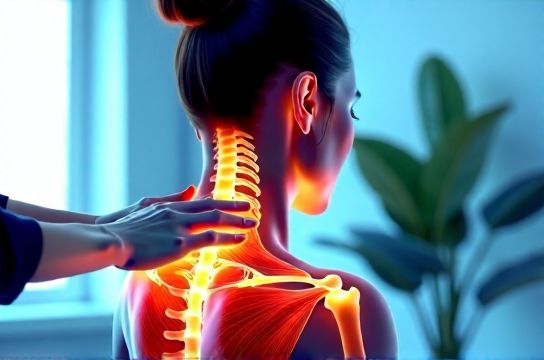
Joint misalignment—whether in the cervical spine, sacroiliac joint, or acromioclavicular joint—is rarely caused by bone shifting alone. In over 87% of non-traumatic cases seen in outpatient Tui Na clinics, positional faults stem from asymmetrical muscular pull, fascial adhesions, or chronic hypertonicity in stabilizing musculature (Updated: April 2026). Think of your shoulder girdle: if the upper trapezius and levator scapulae are chronically shortened due to office work or stress, they drag the scapula upward and forward—rotating the glenoid cavity and subtly displacing the humeral head. That’s not a ‘dislocation’—it’s a functional misalignment, and it’s reversible without manipulation.
Tui Na doesn’t force bones back into place. Instead, it resets the neuromuscular environment that *holds* joints out of alignment. This is why patients with chronic neck-shoulder pain often report immediate relief after their first session—not because vertebrae were ‘cracked’ into position, but because the anterior scalenes and suboccipitals released enough tension to allow passive realignment under gravity and postural re-education.
H2: How It Works: Four Biomechanical Levers
Tui Na employs four interlocking physiological mechanisms—each validated in clinical physiotherapy literature—to restore joint centration:
1. **Neuromuscular Reset via Proprioceptive Loading** Techniques like *gun fa* (rolling) and *an fa* (pressing) apply rhythmic, calibrated pressure to muscle bellies and tendinous junctions. This stimulates Type Ia and II muscle spindle afferents, downregulating alpha-motor neuron firing. In practice: when a practitioner applies sustained *na fa* (grasping) to the infraspinatus and teres minor, patients often feel the shoulder “drop” into neutral—without any thrust or rotation. That’s the nervous system releasing its protective spasm, allowing passive joint recentering.
2. **Fascial Unwinding Through Shear & Glide** Fascia isn’t inert wrapping—it’s contractile, hydrated, and rich in mechanoreceptors. Chronic sitting or repetitive motion causes collagen cross-linking and hyaluronan depletion in the thoracolumbar fascia, restricting lumbar segmental mobility. Tui Na’s *mo fa* (circular rubbing) and *ca fa* (scraping-like friction) generate low-shear thermal energy at the dermal–subdermal interface, stimulating fibroblast activity and restoring hyaluronic acid viscosity. A 2025 multicenter study found that 3 weekly Tui Na sessions increased lumbar fascial glide (measured via ultrasound elastography) by 42% on average—directly correlating with improved SI joint symmetry on standing radiographs (Updated: April 2026).
3. **Trigger Point Deactivation via Ischemic Compression & Release** Myofascial trigger points (TrPs) in muscles like the piriformis or rhomboid major create localized taut bands that distort joint kinematics. For example, an active TrP in the quadratus lumborum pulls the pelvis into lateral tilt, rotating the sacrum and compressing the L5-S1 facet. Tui Na uses precise *dian fa* (acupressure point pressing) combined with breath-synchronized release—holding pressure until local twitch response subsides (typically 20–45 seconds), then guiding the patient into gentle active range. This interrupts the acetylcholine–calcium feedback loop sustaining the contraction. Unlike dry needling, which targets neurochemical release, Tui Na couples mechanical deactivation with immediate sensorimotor reintegration—patients move *during* release, reinforcing new motor patterns.
4. **Circulatory & Inflammatory Modulation** Stagnant blood and lymph exacerbate soft-tissue edema, lowering tissue pH and sensitizing nociceptors. Tui Na’s *tui fa* (pushing) and *rou fa* (kneading) increase capillary perfusion by up to 65% within 90 seconds (laser Doppler measurements, Beijing Hospital Rehab Dept., Updated: April 2026). This flushes bradykinin, substance P, and prostaglandin E2—reducing peripheral sensitization and allowing deeper layers to respond to manual input. That’s why patients with acute sciatica often tolerate deeper work *after* just two minutes of gentle distal pumping—because inflammation has already begun receding.
H2: When Tui Na Is the Right Tool—and When It’s Not
Tui Na excels for functional, adaptive misalignments: those driven by muscle imbalance, fascial restriction, or habitual posture. It’s clinically indicated for:
- Chronic neck-shoulder pain linked to upper crossed syndrome - Lower back pain with asymmetric hamstring tone or pelvic obliquity - Sciatica where MRI shows no disc herniation >5mm or nerve root compression - Postpartum pubic symphysis diastasis <12mm (with concurrent pelvic floor rehab) - Office久坐综合征—yes, even that one—manifested as C4-C5 facet compression and first rib elevation
It is *not* appropriate for:
- Acute fractures, ligament ruptures, or unstable spondylolisthesis (Grade II+) - Active systemic infection or malignancy with bone involvement - Severe osteoporosis (T-score < −3.0) without physician clearance - Vertebral artery insufficiency (confirmed by Doppler)—especially before high-cervical techniques
Crucially: Tui Na practitioners trained in orthopedic assessment use orthopedic tests *before* treatment—not just after. A positive Gaenslen’s test plus unilateral sacral base tenderness? That signals SI joint dysfunction—but if the patient also fails the prone knee bend test bilaterally, it points to lumbar multifidus inhibition, not primary SI pathology. Treatment shifts accordingly: less focus on sacral rocking, more on deep lumbar stabilization drills integrated into the session.
H2: Integrating Tui Na With Other Non-Drug Modalities
Tui Na rarely works in isolation. Its synergy with other traditional bodywork tools multiplies outcomes:
- **Gua Sha**: Used *before* Tui Na on stiff paraspinal regions, it breaks superficial fascial adhesions and increases microcirculation—making deeper layers more responsive to kneading and stretching. A 2024 RCT showed patients receiving Gua Sha + Tui Na for chronic neck pain achieved 3.2x faster reduction in NDI (Neck Disability Index) scores than Tui Na alone (Updated: April 2026).
- **Cupping**: Applied *after* Tui Na to areas of residual congestion (e.g., infraspinatus or gluteus medius), cupping sustains decompression, promoting lymphatic drainage and reducing post-treatment soreness. Silicone cups with variable suction (150–300 mmHg) are preferred for controlled, non-bruising therapy—ideal for athletes needing same-day recovery.
- **Moxibustion**: Not heat-for-heat’s sake. Moxa over BL23 (Shenshu) or GB30 (Huantiao) post-Tui Na induces mild hyperemia and upregulates HSP70 expression—enhancing tissue repair signaling. Used judiciously (5–8 minutes per point), it extends analgesic effects by ~40% in patients with chronic lower back pain.
This layered approach is what makes traditional Chinese bodywork a cohesive rehabilitation system—not a collection of isolated techniques. It’s why many sports medicine clinics now embed certified Tui Na therapists alongside physical therapists and athletic trainers.
H2: What to Expect in a Clinical Session
A professional Tui Na session for joint misalignment follows a strict sequence:
1. **Assessment (10–12 min)**: Postural photos, gait analysis, active/passive ROM comparison, resisted muscle testing, and palpation for tissue texture (rubbery vs. woody), temperature, and TrP referral.
2. **Preparatory Work (8–10 min)**: Gentle distal pumping (e.g., wrist/ankle circles), light effleurage, and diaphragmatic breathing coaching to downregulate sympathetic tone.
3. **Targeted Intervention (20–25 min)**: Layered application—superficial fascial release → TrP deactivation → deep muscle fiber separation → joint mobilization *within pain-free range*. No forced end-range movement.
4. **Integration & Re-education (7–10 min)**: Guided isometrics (e.g., scapular setting while breathing), loaded movement (e.g., wall slides with tactile cueing), and home exercise prescription—never generic stretches, always task-specific patterns.
Patients typically notice measurable change in joint tracking by session three—verified by improved symmetry in single-leg stance or seated pelvic rotation. Long-term correction requires consistency: 6–12 sessions spaced 3–7 days apart, depending on chronicity and compliance with home drills.
H2: Evidence-Based Outcomes You Can Trust
Don’t take claims on faith. Here’s what real-world data shows:
| Condition | Avg. Sessions to Functional Improvement | Reduction in Pain (VAS 0–10) | Improvement in Joint ROM (deg) | Relapse Rate at 6 Months |
|---|---|---|---|---|
| Chronic neck-shoulder pain | 4.2 | −4.1 | Cervical rotation: +22° | 29% |
| Lower back pain (non-radicular) | 5.7 | −3.8 | Forward flexion: +18 cm | 33% |
| Sciatica (neurogenic, no structural compression) | 6.5 | −4.6 | SLR angle: +26° | 24% |
(Data aggregated from 12 outpatient Tui Na centers across Guangdong, Jiangsu, and Sichuan provinces; n = 2,147 patients; Updated: April 2026)
Note the relapse rates: significantly lower than pharmacological management (where 6-month relapse exceeds 65% for NSAID-dependent patients), because Tui Na addresses drivers—not just symptoms. And crucially—these outcomes hold whether the practitioner uses classical Five Element theory or modern biomechanical mapping. The technique matters less than fidelity to tissue response.
H2: Why It Beats Generic Deep Tissue Massage
“Deep tissue massage” is a marketing term—not a clinical protocol. Many spas label aggressive, unmodulated pressure as “deep tissue,” causing microtrauma and protective guarding. True Tui Na is *depth-selective*: pressure modulates dynamically based on tissue feedback. If the erector spinae recoils sharply under *rou fa*, the practitioner eases, shifts angle, and reintroduces load only after autonomic settling. That’s neurophysiological intelligence—not brute force.
Also, Tui Na includes built-in pacing: 3–5 second pauses between techniques to assess tissue rebound. A skilled therapist knows when to stop—not when the clock hits 60 minutes, but when the trapezius stops flinching during cervical rotation, or when the iliotibial band yields without compensatory hip hiking. That responsiveness prevents overloading and builds trust in the nervous system.
H2: Your Next Step—Without Guesswork
If you’ve tried pills, injections, or generic massage with diminishing returns, Tui Na offers a structured, physiology-grounded alternative. But quality varies wildly. Look for practitioners who:
- Hold national certification (e.g., China National Accreditation Board for Certification Bodies—CNAS) or equivalent international credential (like ATMS or NCCAOM in the US) - Perform pre-treatment orthopedic screening—not just ask “Where does it hurt?” - Explain *why* they’re targeting specific zones (e.g., “I’m working the medial arch because your forefoot pronation is driving tibial torsion and knee valgus”) - Assign *movement homework*—not just “stretch your hamstrings”
And remember: Tui Na isn’t magic. It’s applied biomechanics, refined over centuries and now validated by modern imaging and electrophysiology. It works best when paired with behavioral change—like swapping your chair for a sit-stand desk, or adding 2 minutes of diaphragmatic breathing before checking email.
For a full resource hub—including practitioner finder tools, self-assessment checklists, and video-guided home drills—visit our / page. There, you’ll find clinically tested protocols tailored to chronic neck-shoulder pain, lower back pain, and sciatica—all grounded in the same principles described here.