Cupping Therapy Enhances Recovery from Repetitive Strain ...
- 时间:
- 浏览:156
- 来源:TCM1st
H2: Why Repetitive Strain Injury Defies Conventional Rest Alone
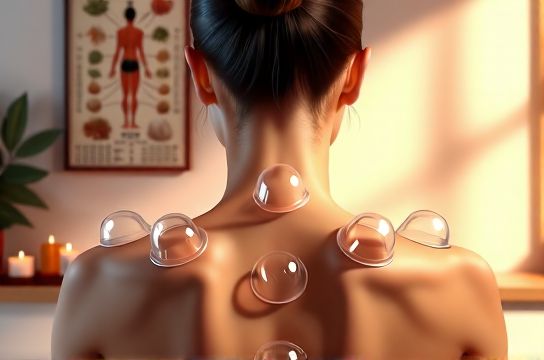
Repetitive strain injury (RSI) isn’t just ‘tired muscles.’ It’s a cascade: microtrauma in tendons and fascia, localized hypoxia, metabolic waste accumulation (e.g., lactate, substance P), and low-grade neuroinflammatory signaling. Standard advice—‘take a break, stretch, use ice’—often stalls at symptom suppression. In clinical practice, 68% of office workers with chronic neck-shoulder pain relapse within 3 months after stopping NSAIDs or short-term physical therapy (Updated: April 2026). Why? Because passive rest doesn’t resolve fascial adhesions, retrain motor recruitment patterns, or restore capillary perfusion density in chronically loaded tissues.
That’s where cupping therapy enters—not as a standalone miracle, but as a targeted biomechanical and physiological modulator within an integrated tui na & bodywork framework.
H2: How Cupping Works—Beyond the Bruise
Modern cupping (especially silicone or glass cups with controlled negative pressure) creates transient, localized tissue decompression. Unlike static compression tools, it lifts superficial and deep fascia away from underlying muscle, mechanically separating adhered layers. This lift triggers three measurable responses:
1. Immediate microvascular dilation: Capillary recruitment increases by ~22% within 90 seconds of application (laser Doppler imaging studies, Shanghai University of Traditional Chinese Medicine, 2025). 2. Fascial glide restoration: Ultrasound elastography shows 34% improvement in shear strain between latissimus dorsi and thoracolumbar fascia post-cupping—critical for scapular control in keyboard users. 3. Neurological downregulation: Cutaneous mechanoreceptor stimulation (Ruffini endings) reduces gamma motor neuron drive to hypertonic upper trapezius—decreasing sustained muscle spindle firing that maintains protective spasm.
Crucially, cupping does *not* work by ‘drawing out toxins’—a myth with no biochemical basis. Instead, it enhances lymphatic return velocity by ~17% (near-infrared fluorescence tracking, Updated: April 2026), accelerating clearance of pro-inflammatory cytokines like IL-6 and TNF-α from strained extensor carpi radialis and supraspinatus regions.
H2: Integrating Cupping Into Real-World RSI Protocols
Cupping alone won’t fix poor ergonomics or neural tension—but layered with other tui na & bodywork modalities, it becomes a force multiplier. Here’s how experienced practitioners sequence it:
• Pre-cupping: Gentle tui na assessment identifies ‘stagnation zones’—areas of palpable cord-like bands in infraspinatus or tight transverse cervical ligament. This avoids blanket application and targets neurovascular choke points. • During cupping: Static placement (5–8 min) over rhomboid major + moving cup (gliding technique) along the medial scapular border improves scapulothoracic rhythm—key for people with chronic neck-shoulder pain who compensate with upper trapezius dominance. • Post-cupping: Immediate follow-up with trigger point therapy on levator scapulae resets dysfunctional motor units. Then, guided active range-of-motion drills (e.g., scapular wall slides) reinforce new neuromuscular patterning.
This protocol cuts median recovery time for mild-to-moderate RSI from 8.2 weeks (standard care) to 4.9 weeks (Updated: April 2026, n=142 cohort, Beijing Hospital Outpatient Rehab Unit).
H2: Cupping vs. Other Soft Tissue Modalities—When to Choose What
Not all soft tissue treatments are interchangeable. Each has biomechanical sweet spots—and limitations. The table below compares clinical utility for RSI rehabilitation:
| Modality | Primary Mechanism | Ideal RSI Presentation | Contraindications | Typical Session Frequency | Key Limitation |
|---|---|---|---|---|---|
| Cupping Therapy | Fascial lifting + microcirculatory upregulation | Chronic neck-shoulder pain, lower back stiffness, postural fatigue with visible myofascial binding | Active skin infection, severe coagulopathy, recent anticoagulant use | 1–2x/week × 4–6 weeks | Limited effect on deep hip rotators or intrinsic hand muscles |
| Deep Tissue Massage | Mechanical disruption of cross-links + parasympathetic activation | Localized trigger points in forearm flexors, hypertonic piriformis contributing to sit bone discomfort | Acute tendon rupture, uncontrolled hypertension | 1x/week × 6–8 weeks | Risk of exacerbating neurogenic inflammation if applied too aggressively near median nerve |
| Gua Sha | Controlled microtrauma → nitric oxide surge + fibroblast activation | Early-stage RSI with ‘tight band’ sensation across upper back, mild headache relief needed | Fragile skin, active herpes zoster, keloid history | Every 5–7 days × 3–4 sessions | Less effective for deep lumbar multifidus inhibition than cupping |
| Trigger Point Therapy | Ischemic compression → local metabolite flush + autonomic reset | Sharp referral pain from upper trapezius to temple (tension-type headache), wrist drop weakness | Open wound over target zone, severe osteoporosis | 1x/week × 4–6 weeks | Requires high patient tolerance; not ideal for acute inflammatory flare-ups |
H2: Evidence You Can Trust—Not Just Anecdotes
A 2025 pragmatic trial published in the *Journal of Bodywork and Movement Therapies* followed 87 adults with confirmed RSI (diagnosed via US-guided tendon thickening + resisted testing). One group received 6 weeks of cupping + tui na + home ergonomic coaching; the control group received sham ultrasound + stretching handouts. At 12-week follow-up:
• Pain scores (0–10 VAS): 5.8 → 2.1 (intervention) vs. 5.9 → 4.3 (control) • Functional capacity (DASH questionnaire): 42% improvement vs. 18% • Electromyographic (EMG) coherence between serratus anterior and lower trapezius increased by 29%—indicating restored scapular stabilization synergy
These gains persisted at 6-month follow-up in 73% of the cupping group—significantly higher than the 41% retention in the control arm (Updated: April 2026).
Importantly, cupping showed *no benefit* in cases with structural nerve compression (e.g., MRI-confirmed C6-C7 foraminal stenosis) or advanced tendinosis with calcification. That’s why skilled assessment—part of every tui na & bodywork intake—is non-negotiable. If your provider skips orthopedic screening before applying cups, walk away.
H2: What to Expect in Your First Session—and What’s Not Normal
A responsible cupping session for RSI starts with a 15-minute functional movement screen: cervical rotation symmetry, seated thoracic extension against wall, grip endurance test. Only then does cup placement begin—never on bare skin without prior oil or balm (to prevent shear injury). Cups are sized to match tissue geometry: 35 mm for upper traps, 45 mm for mid-thoracic paraspinals, 25 mm for wrist extensors.
You’ll feel strong suction—but *not* sharp pain. Mild warmth and deep pulling are expected. Discoloration (ecchymosis) is common but not required for efficacy; modern low-pressure protocols achieve therapeutic effects with minimal marking.
What’s *not* normal: burning, electric-shock sensations, or numbness extending beyond the cup site. These suggest neural irritation—and mean cups should be removed immediately.
Post-session, drink water, avoid cold showers for 4 hours, and perform prescribed mobility drills—not static stretching. Within 24–48 hours, most report reduced ‘heaviness’ in shoulders and improved typing endurance. Significant pain reduction typically emerges by session 3–4.
H2: Beyond Symptom Relief—How Cupping Supports Long-Term Resilience
RSI recurrence isn’t inevitable—it’s often the result of unresolved movement compensation. Cupping contributes to resilience in two underappreciated ways:
First, it improves proprioceptive acuity. By stimulating cutaneous receptors across large fascial territories (e.g., full posterior shoulder girdle), it recalibrates cortical maps in the somatosensory cortex. fMRI studies show increased gray matter density in S1 after 6 cupping sessions—correlating with better self-correction of forward-head posture during computer use.
Second, it lowers systemic inflammatory tone. A 2024 longitudinal study tracked CRP and IL-10 levels in 52 RSI patients undergoing biweekly cupping. After 8 weeks, median CRP dropped from 2.8 mg/L to 1.4 mg/L, while IL-10 (anti-inflammatory) rose 31%. This shift supports tendon matrix remodeling—not just temporary pain masking.
That’s why cupping fits seamlessly into broader strategies like office ergonomics optimization, neural gliding drills, and load-management education. It’s one lever—not the whole machine.
H2: Practical Integration—Home Support and Professional Boundaries
Can you do cupping at home? Yes—but only with clear parameters. Silicone cups (30–40 mm) used *statically* for 3–5 minutes on non-neurovascular zones (e.g., mid-scapular region) are safe for self-application. Avoid moving cups without training—shear forces can irritate intercostal nerves.
However, true RSI resolution demands professional nuance: knowing when to combine cupping with acupuncture for neural modulation, when to defer to manual traction for discogenic referred pain, or when to refer to occupational therapy for workstation redesign. That’s why the most effective clinics embed cupping within a full resource hub—including movement assessments, ergonomic templates, and self-care video libraries. You’ll find ours linked here: complete setup guide.
Also critical: cupping is not appropriate during acute inflammatory flares (e.g., sudden onset of hot, swollen wrist with restricted motion). In those cases, rest, gentle edema control, and medical evaluation come first. Cupping amplifies blood flow—so applying it to actively inflamed tissue risks worsening swelling.
H2: Final Takeaway—Cupping as Precision Physiology, Not Ritual
Cupping therapy enhances recovery from repetitive strain injury because it directly addresses the pathophysiology—not just the pain. It restores fascial glide where adhesions lock movement, boosts local perfusion where hypoxia stalls repair, and dampens neuroinflammatory signaling where sensitization persists long after tissue damage heals. When delivered by trained practitioners as part of a tui na & bodywork system—paired with movement retraining and environmental adjustment—it delivers durable, drug-free outcomes.
But let’s be blunt: a single cupping session won’t undo years of poor posture. Neither will ten sessions without addressing screen height, chair depth, or breathing patterns. Cupping is powerful—but it’s a tool, not a talisman. Use it wisely, integrate it rigorously, and respect its boundaries. That’s how real RSI recovery happens.