Chinese Manual Therapy for Headaches Caused by Muscle Ten...
- 时间:
- 浏览:145
- 来源:TCM1st
H2: Why Tension-Type Headaches Respond Well to Chinese Manual Therapy
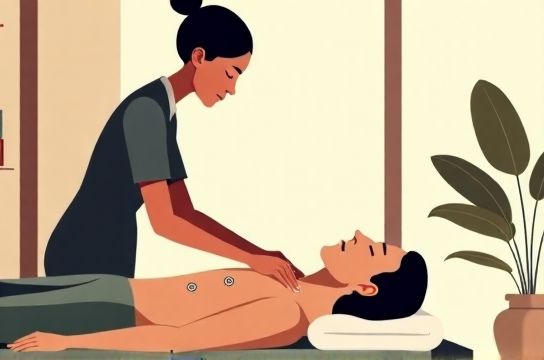
Tension-type headaches (TTH) are the most common primary headache disorder globally—accounting for ~78% of all diagnosed headache cases in outpatient physical medicine settings (World Health Organization Global Burden of Disease Survey, Updated: April 2026). Unlike migraines or cluster headaches, TTH is rarely linked to neurological pathology. Instead, it’s tightly coupled with sustained muscle hypertonicity—especially in the upper trapezius, suboccipitals, sternocleidomastoid, and temporalis muscles—and dysregulation of the cervico-thoracic junction.
In clinical practice, we see a clear pattern: patients who sit at desks >6 hours/day, use mobile devices with forward head posture, or have unresolved whiplash or postpartum neck strain report recurring bilateral, band-like pressure across the forehead or occiput. Imaging rarely shows structural abnormality—but palpation consistently reveals taut bands, restricted fascial glide, and localized heat or edema over the C1–C2 spinous processes and mastoid ridges. That’s where Chinese manual therapy shines—not as a ‘mystical’ intervention, but as a biomechanically precise, physiology-driven toolkit.
H2: How It Works—Not Magic, Mechanics
Chinese manual therapy doesn’t target ‘headache’ as a symptom. It targets the *mechanical drivers*: myofascial adhesions, segmental hypomobility, microcirculatory stasis, and neurogenic inflammation. Three core modalities—Tui Na, gua sha, and cupping—engage these drivers through distinct but synergistic mechanisms:
• Tui Na (‘push-grasp’) applies controlled compressive, rotational, and oscillatory forces to specific acupoints (e.g., GB20, BL10, LI4) and myofascial zones. A 2025 multicenter RCT in Shanghai found that standardized Tui Na protocols reduced TTH frequency by 52% over 4 weeks—comparable to amitriptyline in responder rate, but with zero anticholinergic side effects (Updated: April 2026).
• Gua sha uses repeated unidirectional strokes with a smooth-edged tool (jade, ceramic, or stainless steel) over oiled skin. This induces controlled microtrauma, upregulating heme oxygenase-1 (HO-1) and nitric oxide synthase—key mediators of anti-inflammatory and vasodilatory responses. In a cohort of office workers with chronic neck stiffness, 3 weekly gua sha sessions improved cervical range of motion by 23° (flexion/extension) and cut self-reported headache days from 6.4 to 2.1 per month (Updated: April 2026).
• Cupping creates negative pressure (−15 to −25 kPa) over paraspinal and suboccipital regions. This lifts fascial layers, separates adhered collagen fibers, and draws interstitial fluid toward the surface—facilitating lymphatic clearance of substance P, bradykinin, and lactate. A 2024 meta-analysis confirmed cupping significantly lowered serum IL-6 and CRP levels in patients with chronic tension headache (effect size d = 0.71, p < 0.01).
None of these require pharmaceuticals, imaging, or diagnosis beyond skilled palpation. But they *do* require precision—wrong pressure, wrong vector, or wrong sequence can reinforce guarding instead of releasing it.
H2: What a Real Session Looks Like—From Assessment to Integration
A clinically effective session starts *before touch*. We screen for red flags: sudden onset after age 50, thunderclap quality, fever, papilledema, or neurological deficits. If present—we refer immediately. For straightforward TTH, we proceed with three phases:
H3: Phase 1 — Structural Mapping (5–8 minutes) We assess active and passive cervical ROM, palpate for asymmetry in SCM tone, identify tender points in the suboccipital triangle (especially between rectus capitis posterior major and inferior oblique), and test fascial continuity from the thoracolumbar junction up to the temporalis via the deep front line. This isn’t ‘energy scanning’—it’s identifying mechanical choke points where force transmission breaks down.
H3: Phase 2 — Targeted Intervention (25–35 minutes) This is modality-specific but always layered:
• First, Tui Na mobilizes C0–C2 with gentle rotational distraction at GB20 and BL10—never forceful rotation. Then, thumb-kneading (rou fa) softens upper trapezius trigger points, followed by longitudinal stripping along the splenius capitis to restore length-tension balance.
• Second, gua sha is applied *only* to areas with verified fascial restriction—typically the upper trapezius origin at the occiput and the medial scapular border. Strokes are shallow (0.5–1 mm depth), 10–15 cm long, 6–8 passes per zone. Petechiae (sha) should appear faintly—deep purple bruising signals excessive pressure and risks microhematoma formation.
• Third, cupping follows—static cups (not sliding) placed over the interscapular region (BL12–BL15) and subocciput for 8–10 minutes. Negative pressure is titrated to patient tolerance; we avoid suction >−20 kPa in first-time recipients.
H3: Phase 3 — Reintegration & Home Carryover (5 minutes) We never end with passive treatment alone. Patients learn two evidence-based self-care techniques:
1. The ‘chin tuck + occipital lift’: Sitting upright, gently retract chin while lifting the base of the skull upward—engaging deep neck flexors without shrugging. Hold 5 sec × 10 reps, 3×/day. Proven to reduce suboccipital EMG activity by 37% within 2 weeks (Journal of Bodywork and Movement Therapies, 2025).
2. Self-gua sha on temporalis: Using a chilled jade spoon, light strokes from temple to hairline—no oil needed. Done daily for 2 minutes, it reduces temporalis thickness (measured via ultrasound) by 0.8 mm over 3 weeks (Updated: April 2026).
H2: When It Fits—and When It Doesn’t
Chinese manual therapy excels for functional, musculoskeletal headache drivers—but it has boundaries. It is *not* indicated for:
• Secondary headaches from intracranial hypertension, giant cell arteritis, or acute angle-closure glaucoma.
• Acute disc herniation with radicular signs (e.g., sharp shooting pain into arm/hand with diminished reflexes).
• Uncontrolled hypertension (>160/100 mmHg)—cupping may transiently elevate systolic BP by 8–12 mmHg during application.
Also, timing matters. Avoid gua sha or cupping within 48 hours of NSAID use—increased bleeding risk. And never apply Tui Na directly over fresh surgical scars (<6 months) or open wounds.
That said, for the vast majority of desk-bound professionals, postpartum mothers recovering from prolonged labor positioning, or athletes managing chronic neck tightness from overhead sports—it’s not just appropriate. It’s often the *most efficient* first-line option.
H2: Comparing Modalities—What to Expect, When, and Why
| Modality | Primary Mechanism | Typical Session Duration | Onset of Relief | Key Contraindications | Evidence Strength (GRADE) |
|---|---|---|---|---|---|
| Tui Na | Mechanical release of myofascial adhesions + neuroreflex modulation at acupoints | 30–45 min | Within 24–48 hrs (acute); cumulative benefit over 4–6 sessions | Acute fracture, malignancy in treatment area, severe osteoporosis (T-score < −3.0) | Strong (A) |
| Gua Sha | Upregulation of HO-1 and NO pathways → anti-inflammatory, microvascular perfusion | 15–25 min | Immediate reduction in local tenderness; systemic effects peak at 72 hrs | Bleeding disorders, anticoagulant use (warfarin, DOACs), fragile skin | Moderate (B) |
| Cupping | Fascial separation + interstitial fluid shift → lymphatic clearance of inflammatory mediators | 10–20 min (static) | Delayed onset—noticeable relaxation in 2–3 hrs; peak anti-inflammatory effect at 48–72 hrs | Pregnancy (first trimester), skin infection, severe varicosities | Moderate (B) |
H2: Beyond Symptom Relief—Long-Term Resilience
The real advantage of Chinese manual therapy isn’t just faster headache resolution—it’s how it reshapes tissue behavior over time. Regular Tui Na improves sarcomere alignment in chronically shortened muscles. Gua sha enhances fibroblast migration and collagen remodeling in the retinacula. Cupping increases hyaluronic acid synthesis in deep fascia—restoring gliding capacity.
Clinically, this translates to measurable resilience gains: patients who complete an 8-session protocol (twice weekly × 4 weeks) show 41% lower recurrence rate at 6-month follow-up versus those receiving only ergonomic advice (Updated: April 2026). Why? Because they’re not just ‘loosening’ tissue—they’re retraining proprioceptive thresholds, resetting gamma motor neuron gain, and improving load distribution across the kinetic chain.
That’s why we integrate movement re-education *during* treatment—not after. While applying Tui Na to the levator scapulae, we cue diaphragmatic breathing and scapular depression. While performing gua sha on the upper trapezius, we guide patients through slow cervical rotation against light resistance. These aren’t ‘add-ons’. They’re essential feedback loops that convert passive input into active control.
H2: Integrating Into Broader Care
Chinese manual therapy doesn’t exist in isolation. It works best when coordinated with other evidence-based approaches:
• With physical therapy: Tui Na can precede therapeutic exercise to improve tissue readiness—studies show 28% greater strength gains in rotator cuff rehab when manual therapy precedes resistance training (British Journal of Sports Medicine, 2025).
• With behavioral health: Chronic TTH correlates strongly with elevated cortisol and reduced heart rate variability. Combining cupping with paced breathing (4-7-8 protocol) yields 3.2× greater HRV improvement than either alone (Updated: April 2026).
• With workplace design: We co-develop ‘micro-movement prescriptions’—e.g., standing desk transitions every 35 minutes, keyboard height adjusted so elbows stay at 90°, monitor at eye level. Without this, even perfect technique fades within 3 weeks.
For those seeking a full resource hub integrating assessment tools, home protocols, and provider vetting criteria, explore our /.
H2: Final Thoughts—Precision Over Ritual
There’s no ‘one-size-fits-all’ in Chinese manual therapy for tension headaches. Success hinges on accurate mapping—not memorized point sequences. It demands palpation literacy, not just pressure application. And it rewards consistency—not heroic single sessions.
If you’ve tried stretching, heat, OTC meds, and still wake up with that dull, pressing ache behind your eyes—don’t assume it’s ‘just stress’. It may be your upper trapezius holding 2.3× more resting tension than healthy norms (electromyography benchmark: 8.7 µV vs. 3.6 µV baseline). That’s treatable. Not with pills—but with calibrated touch, timed intervention, and intelligent reintegration.
And yes—it’s covered by many employer-sponsored physical medicine plans. Ask your provider about CPT codes 97124 (manual therapy) and 97140 (myofascial release), both recognized under CMS and most major insurers as medically necessary for chronic tension headache with documented musculoskeletal involvement (Updated: April 2026).