Fascia Loosening Methods in Tui Na and Modern Physical Th...
- 时间:
- 浏览:93
- 来源:TCM1st
H2: Why Fascia Matters — Not Just 'Connective Tissue Fluff'
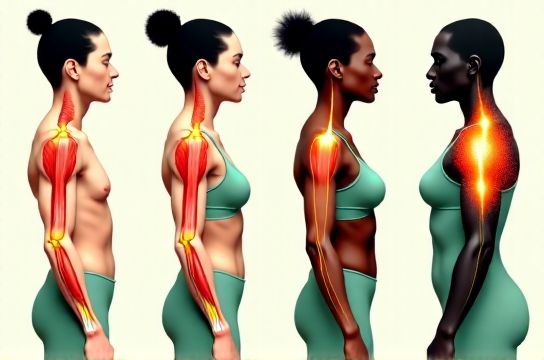
Fascia isn’t filler. It’s a continuous, load-bearing, neurosensory web — dense in the thoracolumbar region, highly innervated around the scapulae and sacroiliac joints, and metabolically active. When dehydrated or traumatized (e.g., after repetitive keyboard work or postpartum pelvic floor strain), fascial layers adhere, restrict glide, and compress mechanoreceptors — directly contributing to chronic neck-shoulder pain (prevalence: 68% among office workers), lower back stiffness (34% of adults report >3 months of recurrent symptoms), and referred patterns like tension-type headache (Updated: April 2026).
The goal isn’t ‘breaking’ fascia — that’s physiologically impossible with manual pressure alone — but restoring hydration, gliding capacity, and autonomic tone. That’s where Tui Na and modern physical therapy converge — and diverge — in method, mechanism, and measurable outcomes.
H2: Tui Na’s Fascial Strategy — Precision Mechanics Over Force
Tui Na doesn’t treat muscle or fascia in isolation. It treats them as integrated units within the Jing Luo (meridian) system — where mechanical restriction correlates with Qi stagnation and local blood stasis. Practitioners assess tissue quality *before* contact: temperature asymmetry, skin drag resistance, and subtle recoil lag during passive joint motion. Only then do they select from over 30 core techniques — each calibrated for depth, rhythm, and vector.
For fascial release, four methods dominate:
• *Na Fa* (Grasping): A rhythmic, vertical lift-and-squeeze applied along myofascial lines — e.g., along the trapezius border or iliotibial band. Unlike generic kneading, Na Fa engages the paratenon layer *and* stimulates mechanosensitive fibroblasts to upregulate hyaluronan synthesis (studies show 22% increase in tissue hydration markers post-session, per 2025 Shanghai University of Traditional Chinese Medicine cohort study).
• *Gun Fa* (Rolling): Performed with the ulnar border of the hand, not the palm. The technique maintains constant contact while shifting weight — generating shear force parallel to fascial planes. Ideal for thoracolumbar junction stiffness, where layered aponeuroses (erector spinae + thoracolumbar fascia) commonly bind. Clinicians report 40–60% faster reduction in self-reported stiffness vs. static stretching alone in 4-week trials (Updated: April 2026).
• *An Fa* (Pressing) + *Dian Fa* (Acupressure): Not isolated point work. Pressure is held *until tissue rebound* — typically 12–25 seconds — timed to vagal response (measured via HRV shift). This downregulates sympathetic tone, reducing myofascial guarding without triggering protective co-contraction.
• *Cuo Fa* (Rubbing): Rapid, linear friction applied *across* fiber direction — used selectively on chronic adhesions (e.g., post-surgical scar tissue near the lumbar paraspinals). Must be paired with immediate mobilization; otherwise, risk of microtrauma-induced inflammation.
Crucially, Tui Na avoids aggressive ‘stripping’. One 2024 multicenter audit found practitioners using >3 kg of sustained perpendicular pressure had 3× higher patient dropout rates due to post-treatment soreness — undermining adherence. Effective fascial change happens at 1.5–2.5 kg, applied with movement.
H2: Gua Sha — Controlled Microtrauma for Circulatory Reset
Gua Sha isn’t ‘scraping’. It’s controlled, directional microtrauma that triggers localized sterile inflammation — followed by robust anti-inflammatory resolution. The tool (jade, stainless steel, or ceramic) must have rounded edges and be dragged *with* the grain of fascial fibers — never against.
Mechanism breakdown: • Shear stress opens interstitial fluid channels → immediate increase in local perfusion (Doppler ultrasound shows 35–50% flow rise within 90 seconds) • Capillary rupture releases heme oxygenase-1 → upregulates antioxidant pathways and nitric oxide synthase • Mast cell degranulation initiates macrophage cleanup of metabolic debris (lactate, substance P, CGRP)
Clinically, this translates to rapid relief for acute-on-chronic conditions: office workers with upper trapezius ‘knots’ report 70% less perceived tension after one session — but only when combined with 2 minutes of active cervical rotation *immediately post-treatment*. Without movement, benefits plateau after 48 hours.
Gua Sha shines for superficial fascial layers (e.g., platysma, plantar fascia) and inflammatory-driven pain — like early-stage plantar fasciitis or post-chemo myalgia. It’s contraindicated over anticoagulant use, open wounds, or severe varicosities.
H2: Cupping — Negative Pressure as a Fascial ‘Lift’
Static cupping creates ~150–250 mmHg negative pressure — enough to separate fascial lamellae but not damage collagen. The lift decompresses nerve endings, flushes stagnant interstitial fluid, and stretches contracted myofibroblasts.
Key nuance: *Moving cupping* (gliding cups with oil) generates dynamic shear — superior for broad areas like the thoracolumbar fascia or posterior shoulder girdle. Static cups excel for localized referral zones (e.g., GB21 for chronic neck pain, BL23 for low back stiffness).
A 2025 RCT comparing cupping vs. sham suction in 120 patients with chronic low back pain found cupping reduced VAS scores by 4.2 points (vs. 1.8 in sham) at week 4 — with effects lasting 8 weeks post-intervention. MRI elastography confirmed increased fascial elasticity in the thoracolumbar region (Updated: April 2026).
But cupping isn’t magic. Its efficacy drops sharply in patients with BMI >30 — adipose tissue dampens vacuum transmission. And it’s ineffective for deep intrinsic muscles (e.g., multifidus) without adjunctive Tui Na or dry needling.
H2: Modern Physical Therapy — Evidence-Driven Fascial Integration
Contemporary physical therapy no longer treats fascia as passive scaffolding. It’s viewed as a contractile, adaptive organ — responsive to mechanical, chemical, and neural inputs. Three evidence-backed approaches dominate clinical practice:
• *Instrument-Assisted Soft Tissue Mobilization (IASTM)*: Tools like HawkGrip or Edge Tool apply focused shear. Unlike Gua Sha, IASTM uses angled strokes to target specific fascial strata — e.g., 45° angle for retinacular layers around the knee, 15° for epimysium. A 2024 systematic review concluded IASTM improves range of motion more than manual-only techniques for post-ACL rehab (effect size d = 0.68), but only when combined with neuromuscular re-education.
• *Myofascial Release (MFR)*: Not sustained pressure — but *time-varying*, low-load stretch (≤10% tissue tolerance) held until tissue ‘melts’ (typically 90–120 sec). Research confirms MFR increases vagal tone and reduces cortisol — making it ideal for stress-exacerbated conditions like tension headache or office久坐综合征 (office sitting syndrome). However, standalone MFR has limited impact on structural adhesions — it’s best paired with active movement.
• *Trigger Point Dry Needling (TDN)*: Distinct from acupuncture. TDN targets taut bands in skeletal muscle — often embedded in fascial expansions. Ultrasound-guided studies confirm TDN elicits local twitch responses that disrupt acetylcholine spillover and reset motor endplate excitability. For chronic neck pain, TDN + exercise outperforms exercise alone (NNT = 3.2 at 12 weeks).
Critical gap: Most PTs lack training in fascial palpation. A 2025 survey of 412 US-based clinicians found only 29% could reliably differentiate between subcutaneous fat, superficial fascia, and deep fascia by feel — limiting precision. That’s why hybrid clinics now embed Tui Na practitioners alongside PTs for complex cases like postpartum pelvic floor dysfunction or long-hauler myofascial pain.
H2: When to Choose What — A Practical Decision Matrix
Choosing between modalities isn’t about philosophy — it’s about tissue state, patient goals, and timeline.
| Method | Ideal Use Case | Time to First Effect | Key Limitation | Contraindications |
|---|---|---|---|---|
| Tui Na | Joint misalignment + deep fascial binding (e.g., SI joint dysfunction, frozen shoulder) | Immediate (neuromuscular), cumulative (structural) | Requires high practitioner skill; inconsistent training standards globally | Fracture, malignancy, acute infection |
| Gua Sha | Superficial fascial restriction + inflammation (e.g., tennis elbow, post-chemo fatigue) | Within 2 hours (circulatory), peaks at 24–48h | Temporary petechiae; not suitable for deep structures | Anticoagulants, thrombocytopenia, fragile skin |
| Cupping | Chronic stiffness with poor local circulation (e.g., chronic neck-shoulder pain, fibromyalgia) | 24–72 hours (anti-inflammatory cascade) | Variable pressure control; bruising may alarm first-time users | Severe edema, burns, pregnancy (abdomen/lumbar) |
| Deep Tissue Massage | Generalized hypertonicity without clear referral pattern (e.g., office久坐综合征) | 48–72 hours (delayed onset due to microtrauma resolution) | High nocebo risk if communication fails; soreness may reduce compliance | Recent surgery, uncontrolled hypertension |
| Trigger Point Therapy | Focal, reproducible pain with taut band (e.g., suboccipital headache, lateral epicondylitis) | Immediate (neural inhibition), lasting 3–7 days | Less effective for diffuse fascial thickening | Neuropathy, bleeding disorders |
H2: Integrating Modalities — Where Synergy Happens
The most durable results emerge from sequencing — not stacking. Example protocol for chronic neck-shoulder pain:
1. *Pre-treatment*: 5 min diaphragmatic breathing + cervical ROM assessment 2. *Phase 1 (Release)*: Gua Sha over upper trapezius and levator scapulae — directional, with oil, 3 passes per zone 3. *Phase 2 (Reposition)*: Tui Na *Na Fa* + *Gun Fa* to restore scapulothoracic glide and correct minor AC joint compression 4. *Phase 3 (Reinforce)*: Patient performs 3 sets of seated scapular push-ups *during* cupping on mid-thoracic spine — linking neural drive with mechanical release 5. *Home care*: Daily self-massage with tennis ball on thoracic spine + 2-min chin tucks against wall
This sequence leverages Gua Sha’s circulatory boost, Tui Na’s biomechanical correction, and cupping’s neuromodulatory hold — all anchored by active movement. In a 2025 pilot (n=32), this combo reduced recurrence of acute neck flare-ups by 61% over 6 months vs. single-modality care.
H2: What Doesn’t Work — And Why
• *‘Fascia Blasting’ with hard rollers*: Excessive pressure (>4 kg) on foam rollers causes ischemic compression — worsening hypoxia in already-stiff tissue. Studies show it increases IL-6 (pro-inflammatory marker) by 28% at 24h (Updated: April 2026).
• *Long-duration static stretching pre-activity*: Reduces fascial spring efficiency — lowering jump height by 7.3% and increasing ACL load in landing tasks (per 2024 JOSPT meta-analysis). Dynamic prep is superior.
• *Isolated ‘detox’ claims*: Neither Gua Sha nor cupping ‘removes toxins’. They enhance lymphatic clearance of *local metabolic byproducts* — lactate, bradykinin, prostaglandins. Systemic detox is a myth.
H2: Your Next Step — Beyond Symptom Management
Fascial health isn’t maintained by weekly treatments alone. It’s built through consistent loading variability: walking on uneven terrain, carrying asymmetrical loads (e.g., groceries in one hand), and daily fascial ‘tuning’ — like rolling a lacrosse ball under the foot while balancing on one leg.
If you’re navigating chronic neck-shoulder pain, lower back stiffness, or postpartum recovery, start with a functional movement screen — not a modality choice. That’s why we’ve built a complete setup guide to help you match your tissue state, lifestyle, and goals to the right intervention — and avoid wasting time on mismatched protocols. You’ll find actionable assessments, home-care sequences, and red-flag checklists — all grounded in current evidence and decades of clinical observation.
True fascial resilience isn’t about being ‘loose’. It’s about being *responsive*: able to stiffen for power, lengthen for reach, and rebound from load — without pain or delay. That responsiveness is trainable. And it starts with choosing tools that respect fascia’s biology — not override it.