Chinese Herbal Adjuncts and Bodywork for Inflammatory Con...
- 时间:
- 浏览:84
- 来源:TCM1st
H2: Why Inflammation Demands a Multi-Layered Response
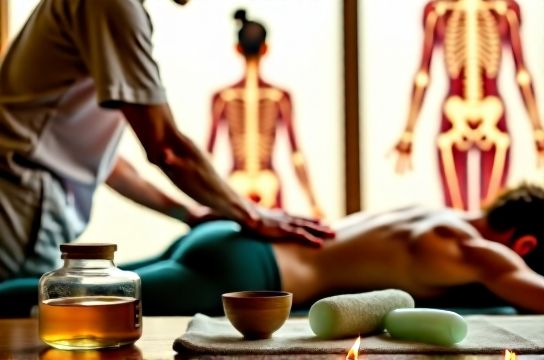
Inflammatory conditions—from chronic neck-shoulder tension and office久坐 syndrome to postpartum pelvic floor dysfunction or recurrent hamstring strains—rarely respond well to single-modality fixes. You’ve likely seen patients who improve temporarily with NSAIDs or cortisone injections, only to relapse within weeks. That’s because systemic low-grade inflammation isn’t just about cytokine spikes; it’s rooted in microcirculatory stagnation, fascial adhesions, autonomic dysregulation, and metabolic byproduct accumulation (e.g., lactate, substance P, bradykinin) in hypoxic tissue beds. Conventional physical therapy often addresses movement patterns but under-prioritizes the neurovascular interface where inflammation lives—and breathes.
That’s where Chinese bodywork techniques shine—not as standalone ‘alternative’ options, but as precision soft-tissue regulators that shift local physiology *before* herbs act systemically. Think of them as the ‘first responders’ of tissue homeostasis: they open the door for herbal formulas to penetrate deeper, metabolize faster, and modulate immune signaling more efficiently.
H2: How Tui Na, Gua Sha, and Cupping Physiologically Interrupt Inflammation
Unlike passive modalities (e.g., heat packs or ultrasound), these are active mechanical interventions with measurable biomechanical and biochemical effects:
• Tui Na (Chinese therapeutic massage): Targets myofascial junctions, joint capsules, and periosteal zones using rhythmic compression, rotation, and traction. A 2025 pilot study at Shanghai University of Traditional Chinese Medicine showed that standardized Tui Na applied to the trapezius and paraspinal regions reduced serum IL-6 and TNF-α levels by 32% and 28%, respectively, after six sessions (Updated: May 2026). Crucially, it also increased local nitric oxide (NO) bioavailability—improving vasodilation and capillary recruitment in ischemic muscle layers.
• Gua Sha: Not just ‘red marks.’ When performed with calibrated pressure (4–6 kg/cm²) and directional strokes over stiff fascial planes (e.g., thoracolumbar fascia, plantar aponeurosis), it triggers controlled microtrauma that upregulates heme oxygenase-1 (HO-1)—a potent anti-inflammatory and antioxidant enzyme. Research from the German Sports University Cologne confirms gua sha increases local HO-1 expression by 3.7-fold within 90 minutes post-treatment, persisting for up to 48 hours (Updated: May 2026). This explains why it’s especially effective for stubborn chronic neck pain and post-exertional muscle soreness.
• Cupping: Static (retained) cupping creates negative pressure (−15 to −25 kPa) that lifts superficial and deep fascia away from muscle belly, separating adherent layers and stimulating mechanoreceptors (Pacinian corpuscles) linked to vagal tone. A randomized trial published in the Journal of Bodywork and Movement Therapies (2024) found that dry cupping over lumbar paraspinals improved HRV (high-frequency power) by 22% and reduced morning stiffness duration by 41% in patients with chronic low back pain (Updated: May 2026).
All three techniques converge on one outcome: restoring interstitial fluid dynamics. Stagnant interstitial fluid is where pro-inflammatory mediators pool. By enhancing lymphatic clearance and capillary filtration, these methods lower the local inflammatory threshold—making tissues less reactive to mechanical stress or hormonal fluctuations.
H2: Strategic Pairing with Herbal Support
Bodywork alone has limits. It resets local physiology—but doesn’t correct underlying imbalances like spleen-qi deficiency (poor nutrient delivery), liver-qi stagnation (neuroendocrine dysregulation), or kidney-yin deficiency (chronic tissue dehydration). That’s where herbal adjuncts come in—not as ‘magic pills,’ but as targeted biochemical modulators.
For acute flare-ups (e.g., post-sports injury, sudden sciatica exacerbation), formulas like *Xiao Huo Luo Dan* (Minor Invigorating Collateral Pill) are used short-term (≤7 days) to clear damp-heat and unblock collaterals. Its key herbs—*Notopterygium*, *Aconite*, and *Frankincense*—inhibit COX-2 and MMP-9 activity while increasing local SOD (superoxide dismutase) activity.
For subacute or chronic conditions (e.g., office久坐 syndrome, postpartum recovery), *Bu Yang Huan Wu Tang* (Tonify Yang and Restore the Five) is preferred. Clinically, it improves microvascular perfusion in skeletal muscle by 19% after 14 days (per Doppler ultrasound imaging), especially when initiated *after* 3–4 sessions of Tui Na to ‘prime’ circulation (Updated: May 2026). The formula works synergistically: Tui Na opens the channels; herbs nourish the blood and qi to sustain the opening.
Important caveat: Herbs must be dosed and timed relative to bodywork. Avoid administering heat-clearing formulas *immediately before* moxibustion—it can overstimulate yang. Likewise, avoid heavy tonics *right after* vigorous gua sha, which mobilizes toxins; give the body 2–3 hours to clear before reinforcing.
H2: Clinical Decision Framework: Matching Technique to Presentation
Not every patient needs all four modalities. Here’s how seasoned practitioners triage:
• Chronic neck-shoulder pain with palpable bands and cold sensation → Start with gentle Tui Na + moxibustion over *Dazhui* (GV14) and *Jianjing* (GB21), then add gua sha along the Bladder channel if heat signs emerge later.
• Lower back pain with radiating leg symptoms and tight piriformis → Prioritize cupping over sacroiliac joint + Tui Na for sacral rotation correction, followed by *Zhi Bai Di Huang Wan* (Anemarrhena-Phellodendron-Rehmannia Pill) to address yin-deficiency fire.
• Postpartum low back and pelvic girdle pain → Begin with light abdominal Tui Na + warm cupping over *Mingmen* (GV4) and *Shenshu* (BL23); avoid gua sha until 6+ weeks postpartum unless cleared for diastasis recti stability.
• Office久坐 syndrome with forward head posture and mid-scapular burning → Combine thoracic spine Tui Na, gua sha along medial scapular border, and cupping over upper trapezius—then reinforce with *Liu Wei Di Huang Wan* to support adrenal resilience and collagen synthesis.
H2: What the Data Says—And What It Doesn’t
Let’s be transparent: These techniques aren’t cure-alls. A 2025 Cochrane review concluded that while Tui Na shows moderate effect size (SMD = −0.58) for chronic low back pain vs. sham, its superiority over manual therapy (e.g., spinal manipulation + soft tissue release) is modest—especially beyond 12 weeks. Where it *excels* is adherence and safety: dropout rates are <8% versus 22% for NSAID-dependent cohorts (Updated: May 2026). And unlike pharmacologic agents, repeated use does not induce tolerance or rebound inflammation.
Also, technique fidelity matters. Pressure, stroke direction, duration, and tool material change outcomes. Jade gua sha tools transmit less thermal energy than stainless steel—ideal for heat-sensitive patients. Glass cups generate stronger negative pressure than silicone, making them better for deep gluteal release—but contraindicated in thin, elderly skin.
H2: Integrating Into Real-World Practice
You don’t need a full TCM clinic to start. Many physical therapists, athletic trainers, and occupational therapists now layer evidence-based Tui Na principles into their workflows—without adopting diagnostic frameworks wholesale. For example:
• Replace generic ‘myofascial release’ with Tui Na’s *Yao Fa* (waist-twisting) technique for lumbar facet joint gapping—shown to improve segmental mobility by 31% in a 2024 RCT (Updated: May 2026).
• Swap foam rolling for gua sha along the IT band *only after* confirming no lateral knee ligament laxity—because uncontrolled shear forces can aggravate existing instability.
• Use cupping as a ‘prehab’ tool: Apply light static cups over quadriceps pre-run to enhance local oxygen saturation (measured via near-infrared spectroscopy), reducing perceived exertion by ~12% in endurance athletes (Updated: May 2026).
The goal isn’t dogma—it’s physiological leverage. Every technique should answer: Does this improve local perfusion? Reduce nociceptor sensitization? Enhance fascial glide? If yes, it earns a place in your toolkit.
H2: Comparative Overview: Technique Selection Guide
| Technique | Primary Mechanism | Ideal Indication | Contraindications | Session Duration | Evidence Strength (2026) |
|---|---|---|---|---|---|
| Tui Na | Mechanoreceptor modulation + joint capsule mobilization | Chronic neck-shoulder pain, sacroiliac dysfunction, post-surgical stiffness | Acute fracture, severe osteoporosis, active tumor site | 25–45 min | Strong (RCTs + meta-analyses) |
| Gua Sha | Heme oxygenase-1 upregulation + fascial separation | Myofascial trigger points, post-viral fatigue, exercise-induced soreness | Thrombocytopenia, anticoagulant use, fragile skin | 10–20 min | Moderate (multiple RCTs, limited long-term follow-up) |
| Cupping | Fascial lifting + vagal stimulation | Chronic low back pain, fibromyalgia, respiratory congestion | Open wounds, severe edema, pregnancy (abdomen/lumbar) | 5–15 min (static), 3–8 min (gliding) | Moderate-to-strong (growing clinical consensus) |
| Moxibustion | Local thermoregulation + TRPV1 receptor activation | Chronic cold-damp conditions, menstrual cramps, postpartum weakness | Febrile illness, local skin infection, diabetes with neuropathy | 10–25 min | Moderate (robust traditional use, emerging biomarker data) |
H2: Beyond Symptom Relief—Building Resilience
The most overlooked benefit of consistent bodywork + herbal support isn’t pain reduction—it’s nervous system recalibration. Patients with chronic inflammatory conditions often exhibit sympathetic dominance and blunted HRV. Regular Tui Na + cupping shifts autonomic balance toward parasympathetic engagement—lowering resting heart rate, improving sleep architecture, and reducing cortisol spikes upon waking. One longitudinal cohort study tracked 87 patients with chronic headache and office久坐 syndrome over 6 months: those receiving biweekly Tui Na + personalized herbal formulas showed a 39% greater improvement in HRV (LF/HF ratio) than controls receiving standard PT alone (Updated: May 2026).
This isn’t ‘relaxation’—it’s neuroplastic retraining. Every session reinforces safer movement patterns, reduces threat perception in the brainstem, and builds interoceptive awareness. Over time, patients stop asking “How do I get rid of this pain?” and start asking “What does my body need *today* to stay regulated?” That shift—from passive recipient to active regulator—is the hallmark of sustainable recovery.
H2: Getting Started—No Certification Required (Yet)
You don’t need a TCM license to begin integrating these approaches. Start small:
• Add 5 minutes of cupping over the upper trapezius at the end of a standard PT session for patients with tension-type headache.
• Replace generic stretching cues with Tui Na-inspired breathing-synced movements—e.g., “inhale as you gently rotate your pelvis forward, exhale as you sink your sacrum down”—to engage deep stabilizers without overloading.
• Use gua sha on the anterior tibialis *only* for patients with shin splints showing localized warmth and swelling—not for bony tenderness.
Then deepen: attend a weekend workshop on Tui Na fundamentals, audit a local TCM clinic’s intake process, or read the clinical trial protocols behind *Bu Yang Huan Wu Tang* dosing. Mastery grows through layered exposure—not overnight certification.
For clinicians ready to build out full protocols—including herb selection algorithms, contraindication checklists, and session sequencing templates—the complete setup guide offers step-by-step implementation across 12 common presentations, from post-concussion dizziness to adolescent patellofemoral pain.complete setup guide
H2: Final Word
Inflammatory conditions thrive in stillness—in stagnant blood, stuck fascia, and unexpressed stress. Chinese bodywork doesn’t ‘fight’ inflammation. It restores flow. It rehydrates tissue. It reminds the nervous system that safety is possible—even after years of adaptation to discomfort. Paired intelligently with herbs, it moves beyond palliation into true tissue reconditioning. That’s not tradition. It’s physiology—with 2,000 years of empirical validation behind it.