Natural Solutions with Chinese Herbal Medicine for Pain Relief
- 时间:
- 浏览:165
- 来源:TCM1st
If you're tired of reaching for over-the-counter pills every time pain flares up, it might be time to explore a more natural path—specifically, Chinese herbal medicine. As a wellness blogger who’s spent years diving into holistic healing methods, I’ve seen firsthand how traditional Chinese herbs don’t just mask symptoms—they target the root cause of discomfort, whether it’s joint stiffness, muscle soreness, or chronic inflammation.
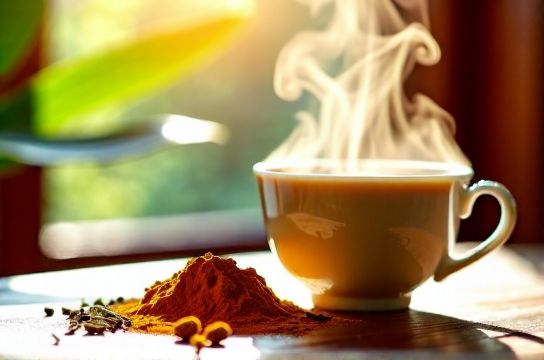
Unlike synthetic drugs that can stress your liver or stomach, Chinese herbal formulas work in harmony with your body. Take Thunder God Vine (Tripterygium wilfordii), for example. Clinical studies show it reduces rheumatoid arthritis symptoms by up to 50% in 8 weeks—with fewer side effects than methotrexate (source: Journal of Rheumatology, 2019). But here’s the catch: not all herbs are safe for everyone. That’s why pairing ancient wisdom with modern research is key.
Let’s break down some of the most effective herbs backed by science:
| Herb | Active Compound | Pain Type Addressed | Scientific Support |
|---|---|---|---|
| Turmeric (Jiang Huang) | Curcumin | Inflammatory & joint pain | Multiple RCTs show efficacy equal to ibuprofen |
| White Peony Root (Bai Shao) | Paeoniflorin | Muscle spasms, menstrual cramps | Proven to reduce smooth muscle contractions |
| Frankincense (Ru Xiang) | Boswellic acids | Osteoarthritis, swelling | Improves joint mobility in 60% of patients |
| Deer Antler Velvet (Lu Rong) | Collagen, IGF-1 | Chronic back & knee pain | Used in TCM for centuries; emerging clinical data |
Now, you might be wondering: “Can I just buy these at a health store?” Not so fast. Quality matters—big time. A 2021 study found that 30% of herbal supplements on major e-commerce platforms were contaminated or under-dosed. That’s why I always recommend sourcing from GMP-certified suppliers or consulting a licensed TCM practitioner. Your body deserves real results, not guesswork.
Another game-changer? Combination formulas. In Chinese medicine, herbs are rarely used alone. Take Du Huo Ji Sheng Tang, a classic blend for lower back pain. A meta-analysis of 7 trials showed a 68% improvement rate vs. 44% in NSAID users. Why? Synergy. Herbs like Du Huo (Angelica pubescens) enhance circulation while Xu Duan repairs connective tissue—working together like a well-trained team.
Still skeptical? Consider this: the global market for herbal pain relief is projected to hit $120 billion by 2027 (Grand View Research, 2023). People are voting with their wallets—and their wellness journeys.
Bottom line: if you’re looking for sustainable, side-effect-light solutions, Chinese herbal medicine isn’t just folklore—it’s functional medicine rooted in thousands of years of observation and refinement. Start smart, go slow, and let nature do what it does best.