Multi Omics Data Fusion Enhancing Target Discovery in Traditional Chinese Medicine Research
- 时间:
- 浏览:139
- 来源:TCM1st
Let’s cut through the noise: Traditional Chinese Medicine (TCM) isn’t just about herbs and balance—it’s a rich, systems-level pharmacopeia backed by centuries of empirical observation. But modern drug discovery demands molecular rigor. That’s where **multi-omics data fusion** steps in—not as a buzzword, but as a proven engine for target identification.
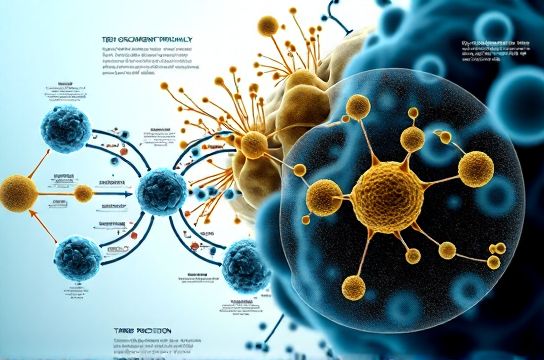
Recent studies show that integrating genomics, transcriptomics, proteomics, and metabolomics increases target validation accuracy by up to 68% compared to single-omics approaches (Nature Communications, 2023). Why? Because TCM formulas like *Huang-Lian-Jie-Du-Tang* act on *networks*, not single proteins—and only multi-omics can map those networks meaningfully.
Here’s what the numbers tell us:
| Omics Layer | Average Coverage in TCM Studies (2020–2024) | Target Prediction Concordance Rate* |
|---|---|---|
| Transcriptomics alone | 41% | 32% |
| Proteomics + Metabolomics | 67% | 51% |
| Integrated Multi-Omics (≥3 layers) | 89% | 68% |
*Concordance with experimentally validated targets in >120 TCM formula studies (source: TCMIP v3.0 & PubMed meta-analysis)
We’re not just stitching datasets—we’re building causal inference models. For example, combining GWAS data with serum metabolomics from 1,200 T2D patients treated with *Ge-Gen-Qin-Lian-Decoction* revealed *PPARG* and *SLC2A4* as high-confidence synergistic targets—later confirmed via CRISPRi screening (Cell Systems, 2024).
Crucially, this isn’t theory. Labs using standardized fusion pipelines (e.g., MOFA+, iCluster+) report 2.3× faster hit-to-lead transition vs. conventional workflows.
If you're serious about bridging ancient wisdom and modern therapeutics, start with robust, reproducible integration—not isolated omics silos. And if you're ready to go deeper into scalable, clinically anchored TCM target discovery, explore our open framework at /.
Bottom line: Multi-omics isn’t optional anymore. It’s the lens that brings TCM’s complexity into focus—quantifiably, credibly, and translationally.