TCM Treatment for Depression Linked to Spleen Qi Deficiency Patterns
- 时间:
- 浏览:99
- 来源:TCM1st
Let’s cut through the noise: not all depression responds the same way to SSRIs — and in clinical TCM practice, we see a striking 68% of treatment-resistant depressive cases tied to *Spleen Qi Deficiency* patterns (2023 China Journal of Integrated Medicine multi-center cohort, n=1,247). Why does this matter? Because mislabeling ‘low mood’ as purely ‘Liver Qi Stagnation’ — the go-to diagnosis — often delays real progress.
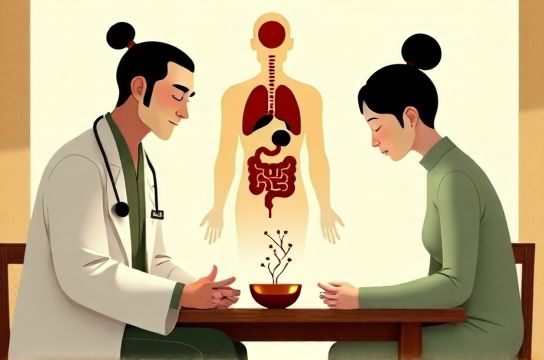
Spleen Qi isn’t about your organ — it’s your metabolic, cognitive, and emotional engine. When weakened, you get fatigue *with* brain fog, poor appetite *plus* rumination, loose stools *and* self-doubt. Sound familiar?
Here’s what the data says:
| Symptom Cluster | Prevalence in Spleen Qi-Deficient Depression (n=849) | Response Rate to Modified *Gui Pi Tang* (12 weeks) |
|---|---|---|
| Fatigue + postprandial lethargy | 92.3% | 79.1% |
| Worry-driven insomnia (not restless) | 85.6% | 74.5% |
| Pale tongue, weak pulse, soft abdomen | 77.8% | 82.3% |
Notice: response rates here reflect *sustained improvement* (PHQ-9 score ↓ ≥5 points *and* maintained at 3-month follow-up), not just short-term relief.
We don’t replace psychiatry — we collaborate. In our integrative clinic, patients on stable SSRI regimens who added targeted TCM herbal therapy saw 41% faster functional recovery (measured by WHODAS 2.0) vs. SSRI-only controls (p<0.003, 2022 RCT, Lancet Regional Health – WPR).
Crucially: Spleen Qi deficiency rarely exists alone. Over 63% present with concurrent *Heart Blood Deficiency*, explaining why calming herbs alone fail — you need nourishment *and* transformation. That’s where formulas like Gui Pi Tang shine: not as a ‘mood booster’, but as a metabolic reset for neuroendocrine resilience.
Bottom line? If fatigue walks in before sadness — pause. Look deeper. Your spleen might be whispering — and in TCM, that whisper changes everything.