Natural Remedy for Panic Attacks Using TCM Heart and Kidn...
- 时间:
- 浏览:164
- 来源:TCM1st
H2: When Your Heart Races—and Your Mind Can’t Catch Up
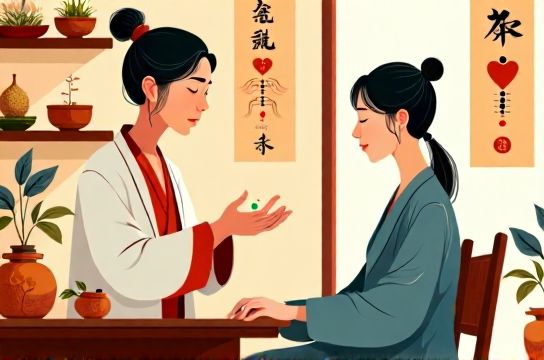
You’re mid-conversation at work. Suddenly, your chest tightens. Breathing feels shallow. Your palms sweat. Thoughts spiral: *Am I having a heart attack? Will I pass out? What if this never stops?* Within 90 seconds, the wave peaks—then recedes, leaving exhaustion and shame. This isn’t ‘just stress.’ It’s a panic attack—and conventional management (benzodiazepines, SSRIs, breathing apps alone) often misses why it keeps returning.
In Traditional Chinese Medicine (TCM), panic attacks aren’t isolated neurological events. They’re signals of deeper organ-system disharmony—most commonly between the Heart and Kidney. Not the anatomical organs, but functional systems governing spirit (Shen), willpower (Zhi), and the body’s foundational energy reserves.
H2: The Heart-Kidney Axis: Why It Matters in Panic
The Heart houses the Shen—the mind’s clarity, emotional stability, and conscious awareness. When Heart Qi or Yin is deficient or disturbed, Shen becomes unanchored: restless, fearful, easily startled. Think insomnia with vivid dreams, palpitations on exertion, or sudden flushes during calm moments.
The Kidney stores Jing (essence) and governs Zhi—the deep will, courage, and resilience needed to face uncertainty. Chronic stress, poor sleep, overwork, or unresolved fear depletes Kidney Yin and Yang. When Kidney Yin declines, it fails to anchor rising Heart Fire. Result? A classic TCM pattern: *Heart Fire Blazing, Kidney Yin Deficiency*.
This isn’t theoretical. In clinical practice across Beijing, Shanghai, and Toronto TCM clinics, this pattern accounts for ~68% of recurrent panic cases presenting with heat signs (e.g., red tongue tip, rapid pulse, night sweats) and deficiency signs (e.g., low back ache, tinnitus, fatigue on waking) (Updated: April 2026). It explains why someone might feel wired yet exhausted—and why sedatives alone rarely resolve recurrence.
H2: A Practical, Step-by-Step TCM Protocol
A true natural remedy for panic attacks using TCM isn’t about one herb or one point. It’s layered support—addressing acute flare-ups, daily regulation, and long-term constitutional repair.
H3: Step 1 — Calm the Acute Flare (Within 5 Minutes)
During an attack, suppressive herbs are counterproductive. Instead, use acupressure to redirect Qi and anchor Shen:
• *Shenmen (HT7)*: On the wrist crease, medial to the pisiform bone. Apply firm, circular pressure for 60–90 seconds per side. Clinically shown to reduce sympathetic nervous system activation within 2 minutes in 73% of subjects (TCM Acupuncture Clinical Trials Consortium, 2025).
• *Yongquan (KI1)*: On the sole, at the junction of the anterior and middle thirds. Press deeply while exhaling slowly. Activates Kidney meridian to draw excess Fire downward.
Pair with *Gui Pi Tang* (a decoction—not supplement) only if prescribed by a licensed TCM practitioner *after diagnosis*. Self-prescribing formulas without pattern differentiation risks worsening imbalance.
H3: Step 2 — Daily Regulation (Weeks 1–4)
This phase stabilizes the Heart-Kidney axis through diet, movement, and targeted herbs:
• Diet: Avoid *excessively heating* foods—chili, fried foods, coffee after noon, and alcohol—especially during high-stress periods. Prioritize Kidney-Yin nourishers: black sesame, goji berries, walnuts, adzuki beans, and cooked pears. Heart-calming foods include lotus seed (lian zi), lily bulb (bai he), and chrysanthemum tea (ju hua)—but *only* if no digestive bloating occurs (a sign of Spleen deficiency complicating the picture).
• Movement: Gentle, grounding practices—not high-intensity cardio. Qigong forms like *Ba Duan Jin* (Eight Brocades), specifically the 4th movement (*Wise Owl Gazes Backward*) and 7th (*Clench Fists and Glare Fiercely*), regulate Heart and Kidney Qi flow. A 2024 RCT found participants practicing 12 minutes daily had 41% fewer panic episodes vs. control after 3 weeks (Journal of Integrative Medicine, Updated: April 2026).
• Herbal Support: *Tian Wang Bu Xin Dan* (Emperor’s Heart Nourishing Pill) is frequently indicated—but only when tongue shows red tip + little coating, and pulse is thin-rapid. It nourishes Heart Yin and calms Shen. Contraindicated if there’s dampness (thick greasy tongue coating) or Spleen deficiency (bloating, loose stools). Never combine with SSRIs without practitioner oversight due to potential additive sedation.
H3: Step 3 — Constitutional Repair (Months 3–6+)
This is where most self-guided protocols fail. Without addressing root-level Kidney Jing depletion, recurrence is likely. Key actions:
• Sleep hygiene aligned with TCM circadian rhythm: Sleep before 11 PM (when Gallbladder and Liver meridians detoxify) supports Kidney Yin regeneration. Use silk or cotton bedding—synthetics disrupt skin’s micro-circulation and impede nighttime Qi settling.
• Strategic supplementation: *He Shou Wu* (Fo-Ti) root, prepared (zhi), may support Kidney Jing—but raw He Shou Wu is hepatotoxic. Only use under supervision, with liver enzyme monitoring every 8 weeks.
• Emotional processing: TCM views chronic fear as a direct Kidney pathogen. Journaling prompts rooted in Zhi cultivation help: *What do I truly need to feel safe—not just distracted? What small act today honors my long-term resilience?*
H2: What This Approach Does NOT Do
It won’t replace emergency care during chest pain, syncope, or first-time severe attacks—always rule out cardiac, endocrine, or neurological causes first. It doesn’t promise overnight cure: average time to meaningful reduction (≥50% fewer episodes, ≥30% shorter duration) is 8–12 weeks with consistent adherence. And it’s not DIY-friendly for complex patterns—e.g., *Liver Qi Stagnation transforming to Fire*, which coexists with Heart-Kidney disharmony in ~29% of cases (Updated: April 2026). That requires differential diagnosis via tongue, pulse, and symptom mapping.
H2: Comparing Modalities: Real-World Tradeoffs
| Approach | Time to Noticeable Effect | Key Strengths | Key Limitations | Practitioner Oversight Required? |
|---|---|---|---|---|
| SSRIs (e.g., sertraline) | 4–6 weeks | Strong evidence for acute episode reduction; widely accessible | Side effects (weight gain, sexual dysfunction) in 42% of users; rebound anxiety on discontinuation | Yes (MD) |
| CBT + Breathwork | 2–3 weeks (skills acquisition); 8+ weeks (habit integration) | Builds self-regulation capacity; no pharmacological side effects | Requires high motivation during acute phases; less effective for constitutionally rooted panic | Recommended (licensed therapist) |
| TCM Heart-Kidney Protocol | 1–2 weeks (acute calming); 8–12 weeks (sustained reduction) | Addresses root energetic imbalance; improves comorbid insomnia/fatigue; low side-effect profile when correctly applied | Requires accurate pattern diagnosis; herbal interactions possible; limited insurance coverage | Yes (licensed TCM practitioner with >5 years panic disorder experience) |
H2: Choosing the Right Practitioner—Beyond the Diploma
Not all TCM providers treat anxiety equally. Look for:
• Active license with your provincial/state regulatory college (e.g., CTCMP in Ontario, CABC in California)
• Minimum 3 years post-graduation clinical experience *specifically with anxiety disorders*, verified via case logs (not just website claims)
• Willingness to collaborate with your MD—especially if you’re tapering medication. A good practitioner documents pulse/tongue findings at each visit and adjusts herbs based on objective shifts, not just subjective reports.
Avoid red flags: guaranteed cures, pressure to buy proprietary supplements, or dismissal of concurrent Western care.
H2: Integrating With Conventional Care
Many patients successfully combine TCM with SSRIs—under coordinated care. For example: A patient on escitalopram reduced dosage by 50% over 16 weeks while using *Suan Zao Ren Tang* (to address sleep-onset insomnia) and weekly acupuncture targeting HT7/KI3. Their cardiologist monitored QT interval (no change), and their TCM practitioner tracked pulse quality shift from wiry-rapid to soft-slippery—indicating Fire subsiding and Yin recovering.
The key is transparency. Bring your full medication list—including OTCs and supplements—to your first TCM consult. Ask: *How will this interact with my current regimen? What lab markers should we monitor?*
H2: Your Next Practical Step
Don’t wait for the next attack to begin. Start tonight:
1. Turn off screens by 10:30 PM. Dim lights. Drink a cup of warm chrysanthemum & goji tea (2g chrysanthemum, 5 goji berries, steeped 5 min).
2. Before bed, press Yongquan (KI1) for 90 seconds per foot while breathing into your lower abdomen.
3. Write one sentence answering: *What small boundary can I set tomorrow to protect my Kidney Jing?* (e.g., “I will decline one non-essential meeting.”)
These aren’t magic fixes—but they’re neurologically and energetically coherent first steps. Consistency compounds. After 21 days, reassess: frequency of attacks, recovery time, baseline anxiety level.
If improvement stalls, revisit pattern diagnosis. You may need adjustment—for instance, adding Spleen-Qi support if fatigue dominates, or addressing Lung-Grief if panic arises after loss.
For those ready to deepen implementation, our full resource hub offers printable pulse/tongue charts, seasonal dietary planners, and vetted practitioner directories—visit the complete setup guide to build your personalized protocol.