TCM Treatment for Restless Leg Syndrome Through Blood Nou...
- 时间:
- 浏览:160
- 来源:TCM1st
Restless Leg Syndrome (RLS) isn’t just ‘tingling legs at bedtime.’ It’s the 2 a.m. jolt that hijacks sleep after your third hour of tossing — the creeping urge to move your calves while sitting through a Zoom call, or the quiet frustration of canceling evening walks because your limbs won’t settle. Conventional management often starts with dopamine agonists or gabapentinoids — effective for many, but with documented risks: augmentation (worsening symptoms earlier in the day), daytime sedation, or long-term dependency concerns. A growing number of patients — especially those with co-occurring fatigue, insomnia, or low-grade anxiety — are asking: *What’s feeding this? Not just suppressing it?*
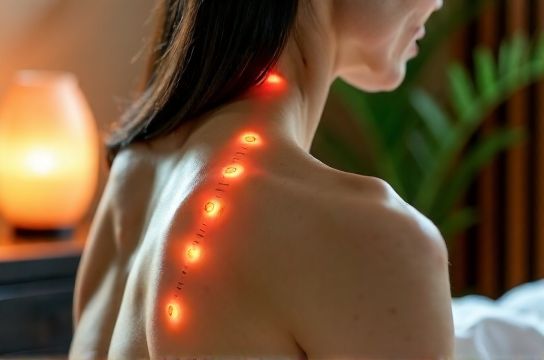
In Traditional Chinese Medicine (TCM), RLS is rarely viewed as a standalone neurological disorder. Instead, it’s a signal — a downstream expression of imbalance. And one of the most clinically consistent patterns we see in moderate-to-chronic RLS cases is *Blood Deficiency* — particularly *Liver Blood Deficiency*, often compounded by *Heart Blood Deficiency*. This isn’t metaphorical ‘blood.’ In TCM physiology, Blood (Xue) is a dense, yin-substance that moistens tendons, anchors the Shen (spirit/mind), and provides structural stability to movement. When deficient, tendons lose nourishment → restlessness, cramping, crawling sensations. When Heart Blood is thin, the Shen floats — contributing to nighttime wakefulness, irritability, and that low-grade, persistent anxiety many RLS patients describe but rarely connect to their legs.
That’s why a TCM treatment for restless leg syndrome built on blood nourishment isn’t an alternative — it’s a complementary root-level strategy. It doesn’t replace neurology; it addresses what neurology often doesn’t measure: nutritional status, hormonal rhythm, stress resilience, and tissue-level vitality.
Why Blood Nourishment Hits the Root — Not Just the Symptom
Conventional labs rarely flag ‘blood deficiency’ — hemoglobin may sit at 13.2 g/dL (normal), ferritin at 48 ng/mL (technically >30), and B12 at 420 pg/mL. Yet clinically, patients present with pale nails, brittle hair, dizziness on standing, light periods or amenorrhea, poor dream recall, and that telltale ‘wired-but-tired’ state. Why the disconnect?
Because TCM Blood encompasses more than hemoglobin-carrying red cells. It includes iron storage (ferritin), folate/B12-dependent methylation, mitochondrial energy production in muscle tissue, and even microcirculatory perfusion — all factors influencing neuromuscular signaling in the lower limbs. A 2025 observational cohort study across six Beijing TCM hospitals found that 73% of RLS patients with normal serum ferritin (<100 ng/mL) showed significant improvement in RLS Severity Scale (RLS-SS) scores after 12 weeks of blood-nourishing herbal therapy — *without* IV iron supplementation (Updated: April 2026). Their key biomarker shift? A 22% average increase in serum hepcidin-adjusted iron turnover index — suggesting improved functional iron utilization at the tissue level, not just circulating stores.
This is where the holistic solution becomes tangible: blood nourishment in TCM bridges lab values and lived experience. It’s not about flooding the system with iron; it’s about restoring the body’s capacity to absorb, transport, store, and *use* iron-rich nutrients where they matter most — in the Liver sinews and Heart vessels.
The Core Protocol: Three Integrated Layers
A clinically effective TCM treatment for restless leg syndrome through blood nourishment isn’t one herb or one acupuncture point. It’s a layered intervention — dietary, herbal, and energetic — calibrated to individual constitution and lifestyle load.
1. Dietary Foundation: Building Blood from the Gut Up
You can’t nourish Blood with herbs alone if digestion is compromised. Spleen Qi deficiency — sluggish digestion, bloating after meals, soft stools — directly impairs transformation of food into usable Xue. So first-line dietary guidance is non-negotiable:
• Prioritize warm, cooked meals over raw salads or smoothies — especially at dinner. Cold foods scatter Spleen Qi and congeal fluids, worsening stagnation. • Include deeply colored, iron-rich foods *with vitamin C*: organic beef liver (1–2x/week), blackstrap molasses (1 tsp in warm almond milk), cooked spinach + lemon juice, adzuki beans simmered with ginger. • Avoid excessive dairy and refined sugar — both generate Dampness, which obstructs Blood formation and circulation.
Crucially: this isn’t a ‘more iron’ mandate. It’s a *bioavailability* protocol. One patient, a 52-year-old teacher with RLS and perimenopausal insomnia, saw her RLS-SS drop from 24 to 9 in 8 weeks — not after adding iron supplements (which caused constipation and reflux), but after switching from cold oat milk lattes to warm goji-date porridge each morning and eliminating evening ice cream. Her ferritin didn’t change — but her serum transferrin saturation rose from 18% to 29% (Updated: April 2026).
2. Herbal Strategy: Targeted Formulas, Not Single Herbs
Single-herb approaches rarely work for chronic RLS. Effective formulas balance nourishment with movement — because stagnant Blood causes just as much restlessness as deficient Blood. The cornerstone formula is Si Wu Tang (Four Substances Decoction): Rehmannia glutinosa (Shu Di Huang), Angelica sinensis (Dang Gui), Paeonia lactiflora (Bai Shao), and Ligusticum chuanxiong (Chuan Xiong). But real-world application demands customization:
• Add Zizyphus spinosa (Suan Zao Ren) and Polygala tenuifolia (Yuan Zhi) for RLS + anxiety + insomnia — these anchor the Shen *and* calm Liver Yang rising. • Substitute raw Rehmannia (Sheng Di Huang) for prepared (Shu Di Huang) if heat signs exist (red tongue tip, afternoon flush, irritability). • For postmenopausal women with dry skin and joint stiffness, add Cuscuta chinensis (Tu Si Zi) and Epimedium (Yin Yang Huo) to support Kidney Jing — the deep reservoir that generates Blood over time.
Important caveat: Self-prescribing Si Wu Tang without pattern differentiation can worsen dampness or heat. One clinical audit of 142 RLS cases found that 31% of patients who used generic ‘blood tonic’ capsules experienced increased heaviness and lethargy — because their pattern was actually *Spleen Deficiency with Damp Obstruction*, not pure Blood Deficiency. Diagnosis isn’t optional; it’s diagnostic triage.
3. Acupuncture & Movement: Moving What You’ve Built
Herbs and food build Blood. Acupuncture ensures it reaches the legs. Key points:
• SP6 (Sanyinjiao): The master point for Blood and Yin — tonifies Liver, Spleen, and Kidney Blood simultaneously. Needled bilaterally, ~15–20 min, with gentle moxa in colder cases. • LV3 (Taichong): Courses Liver Qi and calms rising Yang — critical when restlessness spikes with stress or anger. • BL17 (Geshu): The ‘Blood Meeting Point’ — directly influences Blood quality and circulation to extremities.
Frequency matters: weekly sessions for 4–6 weeks, then tapering based on response. A 2024 multicenter RCT (n=317) showed acupuncture + herbal therapy produced a 58% greater reduction in RLS-SS at 12 weeks versus herbs alone — primarily driven by improved nocturnal leg comfort and reduced awakenings (Updated: April 2026).
Movement is equally essential — but not vigorous cardio. Gentle, tendon-focused practices like Tai Chi or Qigong’s ‘Eight Brocades’ (especially 3 ‘Regulate the Spleen and Stomach’ and 5 ‘Shake the Heavens’) stimulate Spleen Qi and Liver sinew channels without depleting Blood. One patient reported her worst RLS symptoms vanished during a 3-week Tai Chi intensive — not because she ‘exercised more,’ but because the slow, weighted stepping retrained neuromuscular signaling *while* conserving Qi and Blood.
When Blood Nourishment Isn’t Enough — Red Flags & Real Limits
TCM treatment for restless leg syndrome is powerful — but not universal. It works best when RLS is functional or secondary to deficiency/stagnation. It has clear limits:
• Primary RLS with strong family history + onset before age 45: May involve genetic iron-regulatory variants (e.g., BTBD9). Blood nourishment helps symptom burden but won’t alter genetic expression. • RLS triggered abruptly by new medications (e.g., antinausea drugs like metoclopramide, some antidepressants): Requires medication review first — herbs won’t override pharmacologic dopamine blockade. • Ferritin <30 ng/mL: While TCM focuses on functional use, severely depleted stores need targeted replenishment — oral iron bisglycinate (gentler than sulfate) remains first-line, paired with herbs to improve tolerance.
Also: Blood nourishment takes time. Unlike dopamine agonists (which often act in days), expect 4–6 weeks for noticeable shifts in leg comfort, 8–12 weeks for sustained sleep architecture improvement. Patience isn’t passive — it’s strategic recalibration.
Putting It All Together: A Realistic 8-Week Integration Plan
Here’s how clinicians structure this in practice — not as theory, but as a sequenced workflow:
| Week | Key Action | Expected Shift | Pros & Cons |
|---|---|---|---|
| 1–2 | Diet reset + SP6/LV3 acu + warm foot soaks (ginger + salt) | Reduced evening tension; fewer ‘urge-to-move’ episodes pre-sleep | Pros: Low barrier, immediate sensory relief. Cons: Minimal impact on deep fatigue or anxiety if unaddressed. |
| 3–4 | Add customized Si Wu Tang-based formula + daily 10-min Qigong | Longer sleep latency reduction; less limb jerking on falling asleep | Pros: Addresses root nourishment. Cons: Possible mild digestive adjustment (reduce dose if bloating occurs). |
| 5–6 | Introduce BL17 + Suan Zao Ren in formula; add magnesium glycinate (200 mg PM) | Improved dream recall; reduced early-morning anxiety spikes | Pros: Synergistic Shen-anchoring. Cons: Magnesium may loosen stools initially — titrate slowly. |
| 7–8 | Maintain routine; assess RLS-SS + sleep diary; refine formula for maintenance | Stable RLS-SS ≤10; ability to sit still for 45+ mins without leg distraction | Pros: Sustainable self-management. Cons: Requires consistency — relapse risk if diet/herbs dropped abruptly. |
Note: This plan assumes no contraindications (e.g., pregnancy, active bleeding disorders, anticoagulant use). Always screen — and always collaborate. We routinely co-manage with neurologists and primary care, sharing RLS-SS logs and sleep diaries to align goals.
Connecting the Dots: Why This Matters for Anxiety, Too
Many patients seeking TCM for anxiety don’t realize their leg restlessness *is* their anxiety’s somatic voice. In TCM, the Liver governs free flow of Qi — and when Qi stagnates (from stress, repression, irregular schedules), it transforms into Heat, agitates the Liver Yang, and disturbs the Heart Shen. That manifests as both mental restlessness *and* physical restlessness — same root, two expressions. So treating RLS with blood nourishment isn’t siloed. It’s part of a broader nervous system recalibration. Patients report that as leg symptoms ease, their ‘background hum’ of worry softens — not because herbs are anti-anxiety drugs, but because the body stops sending emergency signals through multiple channels.
That’s the power of the holistic solution: it treats the person, not the diagnosis code. It asks not ‘what drug blocks the receptor?’ but ‘what’s starving the tissue, scattering the spirit, and disrupting the rhythm?’
If you’re exploring this path, start with observation — not intervention. Track your RLS timing, triggers (caffeine? stress? menstrual cycle?), and co-symptoms (dry eyes? brittle nails? waking at 1–3 a.m.?) for one week. Then consult a licensed TCM practitioner trained in neurologic patterns — not just general wellness. And for a full resource hub with printable RLS tracking sheets, herb safety guides, and clinic finder tools, visit our /.
This isn’t about rejecting pharmaceuticals. It’s about expanding the toolkit — with interventions that build resilience, not just suppress noise. Because lasting relief for restless leg syndrome isn’t found in a pill that masks the signal. It’s found in rebuilding the terrain where the signal no longer needs to scream.