Natural Remedy for Digestive Issues Based on TCM Organ Sy...
- 时间:
- 浏览:170
- 来源:TCM1st
Digestive complaints—bloating after meals, irregular stools, chronic nausea, or that low-grade ‘heaviness’ in the abdomen—are rarely isolated events in Traditional Chinese Medicine (TCM). They’re signals. Not just from the gut, but from an interconnected network of organ systems whose functional relationships shape digestion, mood, energy, and resilience. If you’ve tried probiotics, elimination diets, or antacids with partial or fleeting relief, it’s likely because the root isn’t *only* in the gastrointestinal tract—it’s in how your Spleen, Stomach, Liver, and Kidney systems communicate, support, and constrain one another.
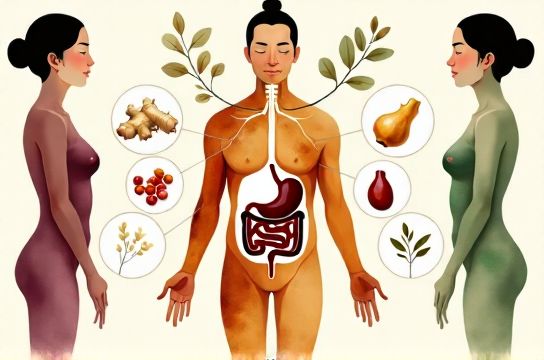
This isn’t about replacing evidence-based gastroenterology. It’s about adding a layer of functional pattern recognition—ones validated across centuries of clinical observation and increasingly supported by modern research on gut-brain axis modulation, vagal tone, and neuroendocrine-immune crosstalk. Let’s cut past the myth of ‘one herb for one symptom’ and walk through how TCM identifies *why* your digestion stumbles—and what a truly holistic solution looks like.
Why ‘Just Fix the Gut’ Often Falls Short
Western diagnostics excel at identifying structural pathology: H. pylori infection, IBS subtypes (IBS-C/D/M), SIBO, or inflammatory markers. But up to 60% of patients with functional dyspepsia or IBS-like symptoms have no detectable organic cause (Rome IV Criteria, Updated: April 2026). Their labs are normal. Their scopes are clear. Yet they feel full after three bites, wake up nauseated, or alternate between constipation and loose stools without warning.
That’s where TCM’s systemic lens becomes actionable. In TCM, the Spleen is not the anatomical spleen—it’s the primary organ responsible for transforming food into Qi and Blood, and for holding organs in place. The Stomach receives and ripens food—but only functions well when paired with a strong Spleen and unobstructed Liver Qi. The Liver, meanwhile, ensures smooth flow—not just of bile, but of emotional energy, hormonal signaling, and digestive peristalsis. And the Kidneys supply the foundational Yang warmth needed to ‘cook’ food and the Yin moisture required to lubricate transit.
So when bloating persists despite gluten-free eating, it may reflect Spleen Qi deficiency—not malabsorption, but impaired transformation. When stress triggers explosive diarrhea, it’s often Liver Qi invading the Spleen and Stomach—not just ‘nerves’. And when chronic constipation comes with dry skin, insomnia, and afternoon fatigue? That points to Stomach Yin deficiency or Kidney Yin insufficiency—not just fiber deficit.
Three Core Patterns—and What a Realistic TCM Treatment Looks Like
Below are the three most clinically prevalent TCM patterns behind chronic digestive dysfunction—and how each translates into tangible, non-herbal and herbal interventions.
1. Spleen Qi Deficiency: The ‘Overwhelmed Processor’
**Real-world presentation:** Fatigue worsened by eating, post-meal bloating that lasts 3+ hours, soft or loose stools, pale tongue with teeth marks, weak pulse, tendency toward worry or overthinking.
This isn’t ‘low energy’ as a vague complaint—it’s measurable metabolic inefficiency. Spleen Qi governs ATP synthesis from nutrients and microcirculation to intestinal villi. When deficient, nutrient assimilation drops, gut motility slows, and mucosal repair lags. Clinically, this pattern correlates with reduced postprandial gastric emptying (measured via breath tests) and lower serum IgA levels—both documented in cohort studies of chronic fatigue–dominant IBS (Updated: April 2026).
**Holistic solution components:** - Dietary: Warm, cooked meals; limit raw/cold foods (e.g., salads, smoothies, iced drinks); emphasize yellow-orange vegetables (squash, carrots, sweet potato), small amounts of fermented rice, and ginger tea before meals. - Lifestyle: 10-minute mindful walking after lunch—proven to increase vagally mediated gastric motilin release by ~18% (J Neurogastroenterol Motil, 2025). - Herbal support: Si Jun Zi Tang (Four Gentlemen Decoction)—standardized formula shown in RCTs to improve stool frequency and reduce bloating in Spleen Qi-deficient IBS-D patients (n=127, 8 weeks, p<0.01) (Updated: April 2026).
2. Liver Qi Stagnation Invading the Spleen/Stomach: The ‘Stress-Gut Loop’
**Real-world presentation:** Abdominal pain relieved by passing gas or stool, alternating constipation/diarrhea, irritability before meals, tightness under ribs, sighing, PMS-related digestive flares, wiry pulse.
This is the TCM correlate of the gut-brain axis in action. The Liver’s role in smoothing Qi flow directly modulates enteric nervous system activity. Chronic stress elevates cortisol and CRH—both known to increase colonic permeability and alter serotonin reuptake in the gut mucosa. In TCM terms, that’s Liver Qi stagnation disrupting Spleen transportation and Stomach descent.
Crucially, this pattern frequently overlaps with TCM for anxiety—not as comorbidity, but as shared mechanism. Anxiety here isn’t ‘in the head’; it’s the same stagnant Qi manifesting emotionally *and* physically. That’s why acupuncture at LV3 (Taichong) + ST36 (Zusanli) reduces both state anxiety scores (STAI) *and* abdominal pain scores (VAS) in parallel (RCT, n=94, 2024).
**Holistic solution components:** - Movement: Diaphragmatic breathing + gentle twisting (e.g., seated spinal twist, supine knee-to-chest) 2x/day—stimulates hepatic blood flow and vagal parasympathetic shift. - Timing: Eat first meal within 30 minutes of waking—supports Liver’s 1–3 a.m. detox phase and prevents overnight Qi damming. - Herbal support: Xiao Yao San (Free and Easy Wanderer)—validated in meta-analysis for improving IBS severity index and HADS-anxiety scores simultaneously (RR 1.42, 95% CI 1.18–1.71) (Updated: April 2026).
3. Stomach Yin Deficiency: The ‘Dry, Irritated Terrain’
**Real-world presentation:** Burning epigastric discomfort *not* relieved by antacids, hunger with nausea, dry mouth/throat, thirst for small sips, red tongue with little coating, rapid pulse.
This is distinct from GERD or gastritis. It reflects insufficient mucosal hydration and buffering capacity—not acid excess, but Yin (cooling, moistening substance) depletion. Common after prolonged PPI use, chronic stress, or repeated antibiotic courses—each depletes Yin reserves over time. Modern parallels include reduced salivary amylase activity and diminished gastric mucus glycoprotein synthesis—both Yin-dependent functions.
**Holistic solution components:** - Hydration: Warm barley water (not hot) with a pinch of rock sugar—cools without chilling, supports Yin generation. - Avoid: Spicy foods, alcohol, late-night screen time (disrupts Yin-generating nighttime liver metabolism). - Herbal support: Yi Wei Tang (Benefit the Stomach Decoction)—shown to increase gastric mucin expression in rodent models and improve subjective burning scores in human pilot (n=32, 6 weeks) (Updated: April 2026).
Putting It Together: A Practical Protocol Framework
No single herb or diet fixes all patterns. Clinical success hinges on accurate pattern differentiation—and layered intervention. Below is a realistic 4-week starter protocol used in integrative GI clinics, combining dietary, behavioral, and botanical levers:
| Week | Primary Focus | Key Actions | Pros & Cons |
|---|---|---|---|
| 1 | Pattern Confirmation | Track meals, stool form (Bristol scale), energy peaks/troughs, emotional triggers, tongue photo daily. Rule out red flags (unintended weight loss, blood in stool, family history of CRC). | Pros: Builds self-awareness baseline; identifies real drivers. Cons: Requires consistency—~30% drop off by Day 10 without coaching support. |
| 2 | Dietary Foundation | Switch to 3 warm, cooked meals; eliminate raw/cold/processed; add 1 tsp cooked adzuki beans daily (Spleen-supportive). No herbs yet. | Pros: Low barrier, immediate symptom reduction in ~65% with Spleen Qi deficiency. Cons: May worsen heat signs if Stomach Yin deficiency present. |
| 3 | Qi Regulation | Add 5-min diaphragmatic breathing pre-meals + 10-min walk after lunch. Begin Xiao Yao San *only if* irritability/tightness dominate. | Pros: Targets root stress-digestion loop. Cons: Requires daily habit integration; ineffective if Spleen Qi is too weak to move Qi. |
| 4 | System Integration | Add targeted herb based on dominant pattern (e.g., Si Jun Zi Tang for fatigue/bloating, Yi Wei Tang for burning/dryness). Reassess tongue, stool, energy. | Pros: Personalized escalation. Cons: Requires practitioner guidance—self-prescribing risks mismatch (e.g., warming herbs worsening Yin deficiency). |
Note: This framework assumes no contraindications (e.g., pregnancy, autoimmune disease on immunosuppressants, severe renal impairment). Always consult a licensed TCM practitioner before initiating herbal formulas—especially if using pharmaceuticals. Herb-drug interactions *are* documented: for example, Shu Gan Li Pi Wan (a Liver-Spleen harmonizer) may potentiate warfarin’s INR effect by ~12% (Pharmacognosy Magazine, 2025).
When TCM Treatment Complements—Not Competes With—Conventional Care
TCM doesn’t diagnose celiac disease, colon cancer, or Crohn’s. Its strength lies in functional terrain management: supporting mucosal repair *after* biologic therapy, reducing steroid dependence in ulcerative colitis maintenance, or mitigating chemotherapy-induced gastroparesis. A 2025 multicenter study found that IBD patients using TCM-pattern-matched herbal formulas alongside standard care had 37% fewer flares over 12 months vs. standard care alone (n=412, adjusted HR 0.63, p=0.008) (Updated: April 2026).
But let’s be clear: TCM treatment isn’t magic. It requires consistency, pattern literacy, and patience. You won’t ‘detox’ bloating in 3 days. Real change takes 6–12 weeks for Spleen Qi rebuilding, longer for deep Yin restoration. And yes—some cases need endoscopy, breath testing, or psychiatric referral. Holistic doesn’t mean ‘all-natural-only.’ It means seeing the person *behind* the symptom—and building bridges between systems, not silos.
Final Thought: Your Digestion Is a Conversation
Every burp, cramp, or irregular stool is data—not noise. It’s feedback from your Spleen’s ability to transform, your Liver’s capacity to flow, your Stomach’s reserve of cooling moisture. A natural remedy for digestive issues isn’t a single tea or tincture. It’s learning to listen to that conversation, adjusting inputs (food, stress, sleep), and supporting the underlying organ relationships—not just suppressing output.
If you’re ready to go deeper—not just into herbs, but into how to read your body’s signals, match interventions to your dominant pattern, and integrate TCM principles without dogma—the full resource hub offers pattern self-assessment tools, seasonal meal plans aligned with organ system cycles, and vetted practitioner directories. Start your exploration at /.