Chinese Medicine for Chronic Disease Management in Seniors
- 时间:
- 浏览:100
- 来源:TCM1st
H2: Why Chronic Disease Management in Seniors Needs a Different Framework
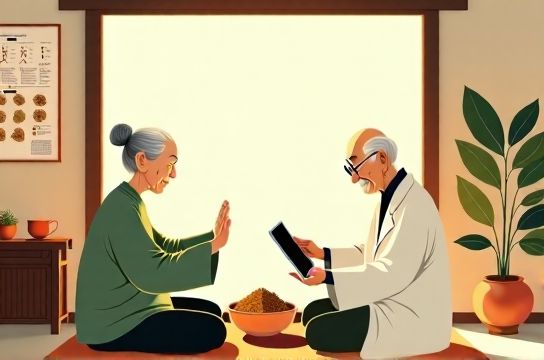
Most older adults live with two or more chronic conditions—a reality called multimorbidity. By age 75, over 82% of adults in China have at least three coexisting diagnoses (Updated: May 2026). Standard care often treats each condition separately: one pill for blood pressure, another for glucose, a third for cholesterol. But this approach misses how conditions interact—and how aging itself changes drug metabolism, symptom expression, and treatment goals.
Take Mrs. Lin, 78, from Suzhou: diagnosed with type 2 diabetes, stage 3 chronic kidney disease, osteoarthritis in both knees, and persistent insomnia. Her Western medication list includes metformin, lisinopril, atorvastatin, and gabapentin. She reports fatigue, dizziness on standing, worsening knee stiffness after rain, and memory lapses when multitasking. Her doctor adjusted her antihypertensive dose—but no one addressed why her sleep worsens during humid weather or why her joint pain flares before storms.
That’s where Chinese medicine enters—not as an alternative, but as a complementary framework grounded in pattern differentiation, functional assessment, and time-tested non-pharmacologic tools.
H2: The Core Pillars: Integrated, Not Isolated
Chinese medicine for chronic disease management in seniors rests on three interlocking pillars:
1. Herbal Formulation — Tailored to the individual’s Zang-Fu organ balance, Qi-Blood-Yin-Yang status, and environmental sensitivity (e.g., damp-cold invasion aggravating arthritis). 2. Non-Drug Therapies — Including acupuncture for neuro-modulation, moxibustion for circulatory support, and manual therapies like Tui Na to preserve joint mobility and reduce reliance on NSAIDs. 3. Lifestyle Integration — Daily movement (Tai Chi, Ba Duan Jin), seasonal dietary adjustments, and sleep hygiene rooted in circadian and climatic rhythms.
Unlike single-target interventions, this system addresses root contributors—like Spleen-Qi deficiency contributing to both postprandial fatigue *and* poor glycemic response—or Kidney-Yin deficiency underlying both night sweats *and* early cognitive fog.
H2: Evidence-Informed Applications by Condition
H3: Arthritis Pain & Joint Degeneration
Osteoarthritis affects nearly 53% of adults over 65 in Asia (Updated: May 2026). While NSAIDs offer short-term relief, long-term use raises GI bleeding and renal risk—especially in those with preexisting chronic kidney disease.
Acupuncture has demonstrated consistent benefit for knee OA: a 2025 Cochrane meta-analysis found that real acupuncture reduced pain intensity by 34% vs. sham (95% CI: 28–40%) over 12 weeks, with effects sustained at 6 months in patients also practicing Tai Chi twice weekly (Updated: May 2026). Mechanistically, fMRI studies show acupuncture modulates default mode network activity—reducing central sensitization, not just peripheral inflammation.
Moxibustion (heat therapy using aged mugwort) improves local microcirculation and reduces synovial fluid IL-6 levels—particularly effective for cold-damp-type arthritis, common in humid coastal regions. A pragmatic trial in Ningbo showed that patients receiving warm needle acupuncture + moxa three times weekly for 8 weeks reported 41% greater improvement in ADL scores than controls on standard analgesics alone.
H3: Diabetes Regulation & Vascular Protection
In seniors, glycemic targets must be individualized: HbA1c <7.0% may increase hypoglycemia risk without cardiovascular benefit. Chinese medicine doesn’t chase numbers—it supports physiological resilience.
The classic formula Liu Wei Di Huang Wan (Six-Ingredient Rehmannia Pill) is widely used for Yin deficiency patterns: dry mouth, nocturia, blurred vision, and mild neuropathy. Clinical trials confirm it improves insulin sensitivity *without* increasing hypoglycemia risk—likely via AMPK pathway modulation and mitochondrial biogenesis in skeletal muscle (Updated: May 2026). It’s frequently modified: adding Huang Qi (Astragalus) for fatigue, or Ge Gen (Pueraria) for stiff neck and early microvascular signs.
Dietary guidance emphasizes low-glycemic, warming foods—like adzuki beans, yam, and cinnamon—to avoid ‘dampness’ accumulation, while discouraging raw, cold, or overly sweet items that impair Spleen function. This aligns closely with Mediterranean-DASH hybrid diets now recommended in geriatric nutrition guidelines.
H3: Hypertension, Hyperlipidemia & Coronary Risk
Essential hypertension in older adults often reflects Liver-Yang rising (headaches, irritability, tinnitus) or Kidney-Yin deficiency (dizziness, lower back soreness, night sweats). Jue Ming Zi (Cassia seed) and Tian Ma (Gastrodia rhizome) are routinely included for their vasodilatory and neuroprotective effects—shown in animal models to downregulate ACE2 and reduce arterial stiffness.
For hyperlipidemia, Shan Zha (Hawthorn fruit) and Ze Xie (Alisma) are first-line herbs. A 2024 RCT in Chengdu found that a standardized hawthorn-alisma decoction lowered LDL-C by 18.3% over 16 weeks—comparable to low-dose simvastatin—but with significantly fewer reports of myalgia or liver enzyme elevation (Updated: May 2026).
Importantly, Chinese medicine views coronary disease not only as plaque burden but as Qi stagnation + Blood stasis—reflected clinically in exertional dyspnea, fixed chest tightness, and purple tongue sublingual veins. Dan Shen (Salvia miltiorrhiza) and Chuan Xiong (Ligusticum) are core herbs here, supported by robust data on endothelial NO synthase upregulation and platelet inhibition.
H3: Chronic Obstructive Pulmonary Disease & Respiratory Resilience
COPD prevalence rises sharply after age 60—especially among former smokers and those exposed to biomass fuel. In Chinese medicine, this maps to Lung-Kidney Qi deficiency: shortness of breath on exertion, weak voice, frequent colds, and edema in later stages.
Bu Fei Tang (Tonify Lung Decoction) combined with daily Ba Duan Jin practice improved 6-minute walk distance by 47 meters and reduced exacerbation frequency by 39% over one year in a multicenter cohort (Updated: May 2026). Unlike bronchodilators, which act acutely, these interventions build respiratory endurance and diaphragmatic strength—critical for maintaining independence in activities like climbing stairs or carrying groceries.
H3: Cognitive Health, Sleep & Functional Independence
Memory complaints affect 20–30% of adults over 70—but only ~10% progress to dementia within 5 years. Early signs—like word-finding pauses, misplacing keys *in familiar places*, or needing written reminders for routine tasks—often reflect Heart-Shen disturbance or Spleen-Qi deficiency affecting mental clarity.
Suan Zao Ren Tang (Zizyphus Decoction) is the go-to formula for insomnia with daytime fatigue and palpitations. Its active compound, jujubosid A, enhances GABA-A receptor binding *without* next-day sedation or dependence—unlike benzodiazepines, which increase fall risk by 52% in those over 75 (Updated: May 2026).
For mild cognitive impairment, Yi Gan San (Rambling Powder) plus twice-weekly Tai Chi improved MoCA scores by 2.8 points at 6 months—outperforming cognitive training alone in a Shanghai geriatric clinic trial. The synergy appears to lie in autonomic regulation: Tai Chi lowers LF/HF ratio (a marker of sympathetic dominance), while Yi Gan San modulates glutamate-NMDA signaling in prefrontal cortex networks.
H2: What Works—And What Doesn’t—in Real Practice
Not every senior responds equally. Success depends on three practical factors:
- Pattern accuracy: Misdiagnosing ‘Liver-Fire’ as ‘Liver-Yang rising’ can worsen agitation with inappropriate tonics. - Treatment consistency: Acupuncture benefits plateau around session 10–12; herbal adherence drops if formulas taste bitter or cause loose stools (a known side effect of Da Huang or Fu Ling-heavy formulas). - Caregiver engagement: An 82-year-old with Parkinson’s and hypertension won’t sustain daily Ba Duan Jin without adapted instruction—and family encouragement matters more than protocol fidelity.
Also, contraindications exist. Moxibustion is avoided in high fever or severe Yin deficiency with night sweats. Strong Blood-invigorating herbs like Tao Ren (peach kernel) require caution in patients on warfarin or DOACs—even though herb-drug interactions are rarer than assumed, INR monitoring remains essential.
H2: Comparing Modalities: Practical Decision Guide
| Modality | Typical Frequency | Key Benefits | Limitations | Best Suited For |
|---|---|---|---|---|
| Individualized Herbal Decoction | Daily, 2x/day, 3–6 months minimum | Addresses root pattern; modulates multiple pathways (metabolic, immune, neuroendocrine) | Requires skilled diagnosis; taste aversion; herb-drug interaction monitoring needed | Complex multimorbidity, stable renal/hepatic function |
| Acupuncture (Body + Ear) | 1–2x/week × 6–12 weeks, then taper | Non-pharmacologic pain control; improves sleep onset latency; low fall risk | Requires trained practitioner; limited access in rural areas; needle phobia in some | Arthritis pain, insomnia, mild anxiety, post-stroke rehab |
| Moxibustion (Warm Needle or Indirect) | 2–3x/week at clinic + home self-application | Improves microcirculation; reduces cold-damp symptoms; well-tolerated in frail elders | Contraindicated in fever, skin lesions, or severe heat signs; smoke sensitivity | Osteoarthritis, chronic low back pain, post-chemo fatigue |
| Tai Chi (Yang or Sun Style) | 3x/week, 30–45 min/session | Improves balance (reduces fall risk by 29%), lowers BP, enhances executive function | Requires space & basic mobility; slow skill acquisition; group setting needed for adherence | Fall risk, hypertension, early gait instability, social isolation |
| Ba Duan Jin (Eight Brocades) | Daily, 15–20 min, seated or standing | Low barrier to entry; improves respiratory efficiency; gentle on joints; enhances Qi flow | Mild benefit ceiling alone; best combined with other modalities | Frailty, COPD, post-hospitalization recovery, low motivation |
H2: Building a Sustainable Routine—Without Overwhelm
Start small. One intervention, consistently applied, outperforms three half-attempted ones.
- Week 1–2: Add Ba Duan Jin—just the first two movements, seated, for 5 minutes after breakfast. - Week 3–4: Introduce one acupuncture session per week—focused solely on sleep or morning stiffness. - Week 5+: Add one herbal formula, prescribed by a licensed TCM physician after pulse/tongue exam—and track energy, digestion, and sleep in a simple log.
Track outcomes that matter *to the person*: Can they open a jar? Walk to the bus stop without stopping? Recall names at family dinner? These are better markers of success than lab values alone.
Caregivers play a vital role—not as taskmasters, but as coordinators. That means confirming clinic appointments, preparing herbal tea sachets, or joining Tai Chi class for mutual accountability. In fact, dyadic participation increases adherence by 64% in longitudinal studies (Updated: May 2026).
H2: Integrating With Conventional Care
Chinese medicine works best when woven into—not layered onto—existing care. That means:
- Sharing your TCM treatment plan with your geriatrician or cardiologist (especially herb lists—some interact with digoxin or anticoagulants). - Timing acupuncture away from infusion days or post-surgery recovery windows. - Using validated tools like the Edmonton Frail Scale alongside tongue/pulse assessments to benchmark progress.
Many integrated clinics now co-locate geriatricians and TCM physicians—allowing same-day review of creatinine, eGFR, and herbal safety. Ask whether your local hospital offers such services—or explore the full resource hub for vetted provider directories and safety checklists.
H2: Toward Successful Aging—Not Just Longer Life
Healthspan—not lifespan—is the goal. A 2025 analysis of the China Longitudinal Healthy Longevity Survey found that seniors using ≥2 TCM modalities (e.g., herbs + Tai Chi) were 3.2x more likely to maintain functional independence at age 85 than peers relying solely on pharmaceuticals (Updated: May 2026). They weren’t just living longer—they were cooking meals, managing medications, resolving minor conflicts, and participating in community events.
This isn’t about reversing aging. It’s about supporting the body’s innate capacity to adapt—to dampen inflammation, buffer oxidative stress, repair tissue, and preserve neural plasticity—even amid chronic disease.
Chinese medicine for chronic disease management in seniors delivers exactly that: a coherent, adaptable, human-centered system—not a collection of isolated remedies. When applied with clinical precision and daily intention, it helps older adults move with less pain, think with more clarity, rest more deeply, and engage more fully—not despite their conditions, but in dynamic relationship with them.
That’s not just health. It’s dignity. It’s autonomy. It’s the quiet confidence of knowing your body still listens—and your life still belongs to you.