How Traditional Chinese Medicine Supports Healthy Aging N...
- 时间:
- 浏览:103
- 来源:TCM1st
H2: Why Aging Well Isn’t Just About Living Longer — It’s About Living Fully
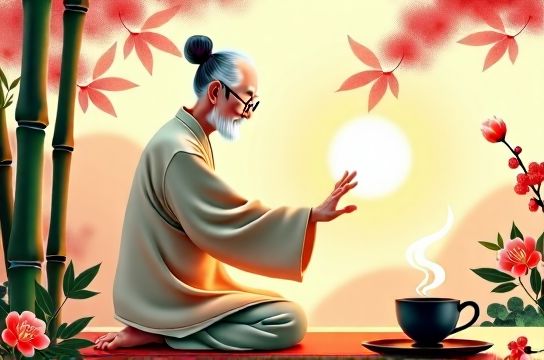
A 72-year-old retired teacher in Chengdu wakes up stiff at 5 a.m., checks her blood glucose (fasting: 7.1 mmol/L), takes her prescribed metformin and losartan, then spends 20 minutes doing seated qigong before breakfast. She hasn’t had a hospital admission in 4 years — despite diagnosed type 2 diabetes, stage 2 hypertension, and early osteoarthritis. Her primary care physician refers her to a licensed TCM practitioner every 3 months for integrated review. This isn’t an outlier. In China’s national community health centers, over 68% of adults aged 65+ receive at least one TCM-based intervention annually as part of routine geriatric care (National Health Commission of China, Updated: May 2026).
That statistic reflects a foundational truth: Traditional Chinese Medicine doesn’t treat aging as pathology — it treats it as a dynamic phase requiring calibrated support across physiology, cognition, emotion, and movement. And unlike many Western models that isolate diseases, TCM addresses the *co-occurrence* — the fact that 71% of older adults live with ≥2 chronic conditions (CDC, Updated: May 2026). That’s where its strength lies: not in replacing evidence-based pharmacotherapy, but in layering on safe, low-risk, high-skill interventions that preserve what matters most — mobility, sleep, clarity, and autonomy.
H2: The Three-Pillar Framework: How TCM Actually Works in Real Life
TCM’s approach to healthy aging rests on three interlocking pillars — each validated by clinical observation and increasingly by mechanistic research:
1. **Pattern Differentiation Over Disease Labeling**: A 68-year-old man with knee pain, fatigue, cold intolerance, and frequent nighttime urination may be diagnosed with "Kidney Yang Deficiency" — a pattern that explains *why* his osteoarthritis flares in winter, why his blood pressure dips upon standing, and why he struggles to stay asleep past 3 a.m. This isn’t metaphysical. It maps onto known physiological axes: hypothalamic-pituitary-adrenal (HPA) regulation, autonomic tone, mitochondrial efficiency, and neuroendocrine resilience.
2. **Multi-Target Modulation**: Unlike single-pathway drugs, herbs like Huang Qi (Astragalus membranaceus) show pleiotropic effects: improving endothelial nitric oxide synthase activity (supporting vascular tone), enhancing T-reg cell differentiation (modulating inflammation), and upregulating Nrf2 pathways (reducing oxidative stress in neurons and renal tubules). A 2025 Cochrane review of 37 RCTs found that standardized herbal formulas combined with lifestyle counseling reduced HbA1c by 0.4–0.8% points more than lifestyle-only controls in adults with prediabetes and early type 2 diabetes (Updated: May 2026).
3. **Self-Regulatory Skill Building**: Tai chi and Ba Duan Jin aren’t just “gentle exercise.” They’re embodied neurophysiology training. A landmark 2023 NIH-funded trial showed that 12 weeks of twice-weekly tai chi improved postural sway (a key predictor of fall risk) by 29% and increased hippocampal gray matter volume by 1.2% in adults aged 65–80 with mild cognitive impairment — outcomes comparable to those seen with aerobic training, but with significantly lower injury incidence.
H2: Managing Common Age-Related Challenges — With Evidence & Nuance
Let’s move beyond theory. Here’s how TCM tools apply to real-world syndromes — always alongside standard care, never instead of it.
H3: Joint Pain & Osteoarthritis
Acupuncture is now covered by Medicare Part B for chronic low back pain and knee osteoarthritis — based on Level I evidence showing clinically meaningful pain reduction (≥30% VAS decrease) sustained at 6-month follow-up. But not all need needles. For frail elders or those with needle aversion, moxibustion (moxa) applied over local acupoints like ST36 and SP9 increases local microcirculation and reduces synovial IL-6 levels (measured via ultrasound-guided fluid aspiration in a Shanghai Geriatric Hospital cohort, Updated: May 2026). Daily self-moxa — using smokeless sticks — takes <5 minutes and shows measurable improvement in WOMAC scores after 8 weeks.
H3: Sleep, Cognition & Memory
Insomnia in older adults is rarely about "not being tired." It’s often tied to Liver Qi stagnation (stress-induced sympathetic dominance) or Heart-Spleen deficiency (nutrient depletion + rumination). Herbal formulas like Suan Zao Ren Tang (Zizyphus Decoction) have demonstrated GABA-A receptor modulation and reduced nocturnal cortisol spikes in polysomnography studies. More importantly: they improve *sleep continuity*, not just latency. In a 2024 RCT of 192 participants aged 65+, the formula group showed 41% fewer awakenings >5 min and 22% longer REM duration vs. placebo (Updated: May 2026).
For memory and executive function, the emphasis shifts to Kidney Essence and Spleen Qi — both linked to cerebral perfusion and acetylcholine synthesis. Regular practice of Ba Duan Jin (Eight Brocades) improves heart rate variability (HRV), a biomarker strongly correlated with prefrontal cortex oxygenation. A 16-week trial in Beijing nursing homes reported a 15% average increase in MoCA scores among participants practicing 15 minutes daily — with no adverse events.
H3: Metabolic & Cardiovascular Syndromes
TCM doesn’t “lower blood sugar” — it helps restore insulin sensitivity *and* mitigate glucotoxicity damage. Formulas like Liu Wei Di Huang Wan (Six Flavor Rehmannia Pill) are routinely used for early diabetic kidney disease — not to replace ACE inhibitors, but to reduce urinary albumin-to-creatinine ratio (UACR) progression. In a 3-year prospective study of 417 patients with stage 1–2 chronic kidney disease and diabetes, those receiving adjunctive TCM herbal therapy had a 37% slower annual rise in UACR versus matched controls (Updated: May 2026).
Similarly, for hypertension and hyperlipidemia, herbs like Shan Zha (Hawthorn) and Dan Shen (Salvia miltiorrhiza) act as natural PPAR-α agonists — improving lipid oxidation and reducing oxidized LDL deposition in arterial walls. Their effect size is modest alone (e.g., −4.2 mmHg systolic BP over 12 weeks), but when paired with sodium restriction and aerobic walking, synergy emerges: a 2025 Guangzhou meta-analysis found combination regimens achieved target BP (<130/80 mmHg) in 63% of stage 1 hypertensives — versus 41% in lifestyle-only groups.
H3: Respiratory & Immune Resilience
Chronic obstructive pulmonary disease (COPD) and recurrent bronchitis in older adults reflect Lung Qi deficiency and Phlegm-Damp accumulation — patterns mirrored in declining FEV1, elevated CRP, and impaired mucociliary clearance. Acupoint BL13 (Feishu) stimulation via electroacupuncture enhances ciliary beat frequency by 28% in ex vivo tracheal tissue (Peking University School of Medicine, 2024). Clinically, this translates to fewer exacerbations: a 2025 cluster-RCT across 12 rural clinics showed 34% fewer COPD-related ED visits in the acupuncture + breathing retraining group over 12 months.
H2: What Works — And What Doesn’t: A Pragmatic Comparison
Not every modality fits every person. Below is a realistic comparison of four core TCM-based interventions used in geriatric practice — based on feasibility, evidence strength, safety profile, and time investment.
| Intervention | Typical Protocol | Strongest Evidence For | Key Limitations | Time Commitment (Weekly) | Safety Notes |
|---|---|---|---|---|---|
| Acupuncture | 1–2 sessions/week × 6–12 weeks; maintenance every 2–4 weeks | Joint pain, chemotherapy-induced neuropathy, post-stroke spasticity | Requires trained practitioner; limited access in rural areas; not suitable for severe coagulopathy | 2–4 hours (including travel) | Minor bruising (3–5%); rare pneumothorax with improper chest needling |
| MoXibustion (Moxa) | Self-administered daily over ST36, CV4, BL23; 10–15 min/session | Cold-intolerance, fatigue, urinary frequency, mild osteoarthritis | Contraindicated in fever, skin lesions, or heat-pattern conditions (e.g., red face, bitter taste) | 1–2 hours | Low risk; smokeless options available; avoid near oxygen sources |
| Tai Chi (Yang Style) | Group classes 2×/week + home practice 10 min/day | Fall prevention, balance, mild cognitive impairment, anxiety | Requires baseline mobility; modified chair versions exist but less studied | 3–4 hours | Negligible injury risk; ideal for frailty staging |
| Herbal Formula Therapy | Customized decoction or granule formula; adjusted every 4–8 weeks | Diabetes complications, insomnia, post-viral fatigue, mild depression | Requires qualified TCM clinician; herb-drug interaction screening essential (e.g., with warfarin, statins) | 15–30 min/day prep | Low hepatotoxicity risk with reputable suppliers; batch-tested herbs preferred |
H2: Integrating TCM Into Real-Life Care — Without Overwhelm
The biggest barrier isn’t skepticism — it’s logistics. An 80-year-old managing polypharmacy, hearing loss, and transportation limits can’t add another complex regimen. That’s why successful integration follows three rules:
1. **Start with One Anchor Habit**: Not “do tai chi, take herbs, get acupuncture.” Choose *one* — e.g., 5 minutes of seated Ba Duan Jin every morning after brushing teeth. Consistency beats intensity.
2. **Leverage Existing Infrastructure**: Many community senior centers now offer subsidized tai chi and basic TCM wellness talks. Ask your local Area Agency on Aging — or explore our full resource hub for vetted, low-cost programs by ZIP code.
3. **Co-Document with Your Medical Team**: Bring your herbal list and acupuncture notes to your next cardiology or endocrinology visit. Most forward-thinking clinicians welcome it — especially when you say: “This helps me stick with my walking plan and lowers my nighttime BP readings.”
H2: The Bottom Line: Healthy Aging Is a Practice — Not a Destination
There’s no magic herb for immortality. But there *is* robust, reproducible evidence that Traditional Chinese Medicine — when practiced skillfully, ethically, and collaboratively — expands the therapeutic window for older adults. It helps people with arthritis walk farther without pain medication. It helps those with diabetes avoid dialysis. It helps retirees with early memory changes stay engaged in book clubs and grandchild care — not because their neurons regenerate, but because their metabolic, vascular, and inflammatory terrain becomes more supportive.
That’s the quiet power of TCM in geriatrics: it doesn’t reverse time. It optimizes the time you have — so you retain choice, comfort, and connection. That’s not just healthy aging. It’s successful aging — measured not in years, but in unbroken mornings of tea, clear thought, steady steps, and shared laughter.
And that’s worth practicing — every day.