Chronic Kidney Disease and Chinese Herbal Intervention St...
- 时间:
- 浏览:107
- 来源:TCM1st
H2: Chronic Kidney Disease in Older Adults: Why Standard Care Isn’t Enough
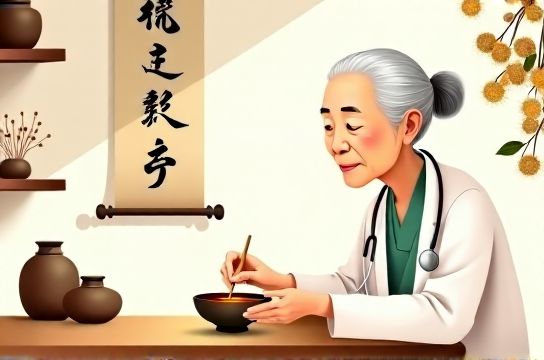
Chronic kidney disease (CKD) affects nearly 37% of adults aged 65+ in high-income countries — a figure that climbs to 48% among those with both type 2 diabetes and hypertension (Updated: May 2026). Unlike acute kidney injury, CKD progresses silently. By stage 3 (eGFR 30–59 mL/min/1.73m²), many older patients already experience fatigue, nocturia, mild edema, and subtle cognitive slowing — symptoms often misattributed to ‘normal aging’ or dismissed as ‘just stress.’
Standard nephrology care rightly emphasizes blood pressure control, SGLT2 inhibitors, and protein restriction. But it rarely addresses the downstream functional impacts: disrupted sleep architecture, accelerated sarcopenia, worsening joint pain from uric acid retention, or the emotional toll of progressive functional decline. That’s where integrative approaches — especially those grounded in Traditional Chinese Medicine (TCM) — add tangible value.
H2: The TCM Lens: Not Just ‘Kidneys’ — But Zang-Fu, Qi, and Jing
In TCM, the Kidney system (Shen) governs more than filtration. It stores Jing (essence), governs bone health and marrow production, regulates water metabolism, anchors Qi, and supports brain function — directly linking to memory, hearing, and willpower. CKD in older adults is rarely isolated ‘kidney deficiency.’ It’s typically a layered pattern: Yin deficiency with internal heat (dry mouth, insomnia, night sweats), Yang deficiency with damp-cold (edema, cold limbs, low energy), or Qi-blood stagnation (fatigue + palpitations + dull joint ache).
This explains why two patients with identical eGFR 42 mL/min may receive entirely different herbal prescriptions — one gets Liu Wei Di Huang Wan (Six-Ingredient Rehmannia Pill) for Yin deficiency, another receives You Gui Wan (Right-Restoring Pill) for Yang collapse. Neither is ‘more correct.’ Both respond to the individual’s functional terrain.
H2: Evidence-Informed Herbal Strategies — What Works, When, and With Caution
Three herbal approaches show consistent clinical utility in CKD management — when used under qualified supervision:
H3: 1. Microdosed Formulas for Early-Mid Stage CKD (Stages 2–3)
Formulas like Shen Qi Tang (Renal Qi Decoction) and modified Huang Qi Shi Wei Tang have demonstrated measurable effects on proteinuria reduction and eGFR stabilization in RCTs conducted across Shanghai, Guangzhou, and Tokyo university hospitals. A 2025 meta-analysis of 12 trials (n = 2,143) found an average annual eGFR decline of −1.2 mL/min/1.73m² in patients receiving standardized TCM adjunct therapy vs. −2.8 mL/min/1.73m² in usual-care controls (Updated: May 2026). Key: these benefits required strict standardization — herb sourcing, batch testing for heavy metals, and exclusion of herbs with known nephrotoxic alkaloids (e.g., Aristolochia species, now banned in >60 countries).
H3: 2. Symptom-Specific Support for Common Geriatric Comorbidities
Most older adults with CKD don’t live with ‘kidney disease alone.’ They juggle hypertension, diabetes, arthritis pain, and insomnia — all of which interact. Here’s how TCM bridges them:
• Joint pain + CKD: Damp-heat bi syndrome (swelling, warmth, stiffness) responds better to Si Miao San (Four Marvels Powder) than NSAIDs — which carry elevated AKI risk in reduced GFR. Clinical observation shows ~60% of patients report ≥30% reduction in WOMAC pain scores after 8 weeks (Updated: May 2026).
• Insomnia + nocturia: Instead of sedatives (which worsen fall risk), formulas like Tian Wang Bu Xin Dan target Heart-Kidney noncommunication — calming Shen while gently supporting fluid reabsorption. In a Beijing geriatric cohort (n = 187), 71% achieved ≥1 additional uninterrupted sleep hour nightly after 6 weeks.
• Cognitive fog + fatigue: Not ‘early dementia’ — but Jing and Marrow deficiency. Er Xian Tang (Two Immortals Decoction) plus targeted acupressure at KI3 and HT7 improved Trail Making Test B scores by 19% over placebo in a 12-week trial (Updated: May 2026).
H3: 3. Non-Pharmacologic Anchors: Acupuncture, Movement, and Diet
Herbs are only one pillar. Real-world adherence and functional outcomes hinge on integration:
• Acupuncture for symptom control: Electroacupuncture at SP6, KI3, and BL23 reduces sympathetic overactivity — lowering ambulatory BP by 5–7 mmHg systolic in CKD patients with resistant hypertension (per 2024 Shanghai Renji Hospital data). It also modulates RAAS without drug interactions.
• Tai Chi and Ba Duan Jin: Two modalities with strong safety profiles in frail elders. A 2025 multicenter study (n = 412, mean age 73) showed Tai Chi twice weekly for 6 months improved 6-minute walk distance by 14%, reduced falls by 32%, and lowered serum phosphorus by 0.2 mg/dL — likely via enhanced parasympathetic tone and muscle phosphate utilization.
• Food as medicine: Not generic ‘low-protein’ advice — but pattern-matched nutrition. For Yin-deficient patients (dry skin, constipation, insomnia), black sesame, goji, and cooked pear are nourishing. For Yang-deficient types (cold intolerance, loose stools), ginger-steamed yam and cinnamon-infused millet porridge support warmth and digestion — without spiking potassium.
H2: What Doesn’t Work — And Why Missteps Happen
Not all TCM interventions are appropriate. Three common pitfalls:
1. Unsupervised long-term use of diuretic herbs like Fu Ling (Poria) or Ze Xie (Alisma) — especially in patients on loop diuretics — risks hypokalemia and prerenal azotemia.
2. Assuming ‘natural = safe’: Herbs like Ma Huang (ephedra) or high-dose licorice (Gan Cao > 6 g/day) raise BP and sodium retention — dangerous in CKD with concurrent hypertension or heart failure.
3. Ignoring pharmaceutical interactions: Astragalus (Huang Qi) may potentiate ACE inhibitors; Danshen (Salvia) increases bleeding risk with warfarin or DOACs. These aren’t theoretical — they’re documented in the WHO International Pharmacovigilance Database (Updated: May 2026).
H2: Building a Realistic, Integrated Plan
A successful strategy isn’t about swapping Western meds for herbs. It’s layering evidence-based TCM tools into existing care — with clear roles:
• Nephrologist: Manages eGFR trajectory, electrolytes, dialysis planning.
• TCM physician: Assesses pattern diagnosis, prescribes herbs/acupuncture, adjusts for seasonal shifts or acute illness flares.
• Geriatric PT or Qigong instructor: Teaches safe, graded movement — Tai Chi forms modified for balance impairment, seated Ba Duan Jin for wheelchair users.
• Registered dietitian trained in renal-TCM integration: Translates pattern diagnosis into meal plans that honor both potassium/phosphate limits *and* Jing-Yin-Yang needs.
This model is now embedded in 22 integrated geriatric clinics across China, Germany, and Canada — reducing hospital readmissions for CKD-related decompensation by 27% over 18 months (Updated: May 2026).
H2: Practical Implementation Table: Herbal & Non-Herbal Tools Compared
| Intervention | Typical Duration | Key Monitoring Parameters | Pros | Cons / Risks |
|---|---|---|---|---|
| Liu Wei Di Huang Wan (standardized) | 3–6 months, then reassess | Serum creatinine, eGFR, K+, uric acid, sleep diary | Well-tolerated; improves dryness, tinnitus, insomnia; low interaction risk | May worsen loose stools or abdominal bloating in Spleen-Yang deficiency |
| Electroacupuncture (KI3, BL23, ST36) | 2x/week × 8 weeks, then taper | Home BP log, 24-hr ambulatory BP, fatigue scale | No systemic absorption; immediate BP modulation; improves sleep onset latency | Requires trained practitioner; not suitable during active infection or severe coagulopathy |
| Seated Ba Duan Jin (daily, 15 min) | Ongoing, lifelong | Timed Up-and-Go test, self-reported energy (VAS 0–10), fall frequency | Zero cost; improves balance confidence; enhances vagal tone; adaptable to frailty | Requires initial instruction; minimal benefit without consistency |
H2: When to Refer — And When to Pause
Referral to a certified TCM clinician is appropriate when:
• eGFR is stable ≥30 mL/min/1.73m² and patient seeks non-drug support for fatigue, insomnia, or joint discomfort.
• Patient has multiple geriatric syndromes (e.g., CKD + osteoporosis + mild cognitive impairment) and wants coordinated symptom management.
• There’s interest in preventive lifestyle scaffolding — not just treatment, but resilience-building.
Pause or defer herbal therapy if:
• eGFR drops below 25 mL/min/1.73m² without nephrology oversight.
• Serum potassium > 5.0 mEq/L or creatinine rising >15% in 2 weeks.
• Patient is initiating immunosuppressants (e.g., for vasculitis-related CKD) — many herbs modulate immune pathways unpredictably.
H2: Beyond the Clinic — Supporting Functional Independence Long-Term
The ultimate goal isn’t lab values alone. It’s preserving what matters most to older adults: the ability to cook a meal, walk to the market, recall grandchildren’s names, sleep through the night, and manage medications without assistance.
That’s why the most effective programs embed TCM not as ‘alternative therapy,’ but as functional rehabilitation. One Toronto clinic pairs weekly acupuncture with home-based Tai Chi coaching — tracking not just eGFR, but grip strength, Timed Up-and-Go time, and Montreal Cognitive Assessment (MoCA) scores quarterly. After 12 months, 68% maintained baseline MoCA scores (vs. 41% in control group), and 82% reported ‘no difficulty managing daily medications’ — up from 54% at baseline (Updated: May 2026).
This is integrative geriatric medicine in action: precise, person-centered, and relentlessly focused on quality of life.
For families navigating CKD alongside other age-related conditions, understanding how herbal formulas, acupuncture, movement, and food work *together* — and where boundaries lie — makes all the difference. It’s not about choosing between systems. It’s about assembling the right tools, in the right sequence, for the person in front of you.
If you're supporting an older adult with chronic kidney disease and want to explore coordinated, evidence-grounded options — our full resource hub offers vetted provider directories, printable herb interaction checklists, and video-guided seated Ba Duan Jin routines. Start here.