Coronary Heart Disease Support Through Integrated TCM Care
- 时间:
- 浏览:118
- 来源:TCM1st
H2: When the Heart Needs More Than Statins and Stents
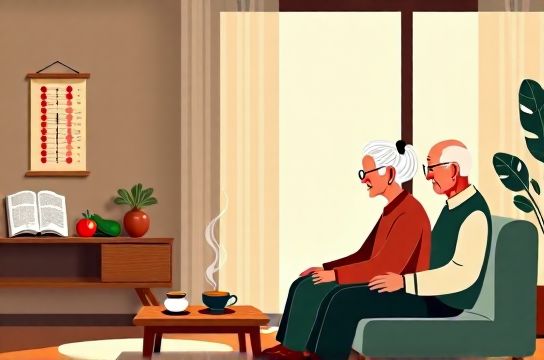
Mr. Lin, 72, completed cardiac rehabilitation after an acute coronary syndrome—but still wakes at 3 a.m. with tightness in his chest, fatigue that doesn’t lift by noon, and legs that feel heavy after walking 200 meters. His blood pressure hovers at 148/86 mmHg despite two antihypertensives; his LDL remains borderline high (3.4 mmol/L) despite high-intensity statin therapy (Updated: May 2026). His cardiologist says, “Your numbers are stable—but your quality of life isn’t part of the protocol.”
This is not rare. In real-world geriatric cardiology practice, up to 68% of adults over 65 with coronary heart disease also live with ≥3 additional chronic conditions—including hypertension, high lipid levels, type 2 diabetes, osteoarthritis, insomnia, or mild cognitive impairment (Updated: May 2026). Standard care excels at acute stabilization and risk-factor thresholds—but often under-prioritizes symptom burden, functional capacity, sleep architecture, autonomic balance, and the cumulative metabolic load of polypharmacy.
That’s where integrated Traditional Chinese Medicine (TCM) enters—not as an alternative, but as a layered, physiology-aligned support system.
H2: Beyond Symptom Suppression: How TCM Addresses Coronary Heart Disease Holistically
In TCM theory, coronary heart disease maps most closely to *Xin Bi* (Heart Bi Syndrome) and *Xin Ji* (Heart Palpitation), arising from imbalances such as *Qi and Blood Deficiency*, *Phlegm-Damp Obstruction*, *Blood Stasis*, or *Yin Deficiency with Yang Excess*. Crucially, these patterns rarely occur in isolation. A patient with *Blood Stasis* (evidenced by angina, tongue petechiae, fixed chest pain) almost always presents with underlying *Spleen Qi Deficiency* (contributing to high triglycerides and postprandial fatigue) and *Liver Yang Rising* (driving early-morning hypertension and irritability).
This pattern-based thinking enables coordinated intervention across three tiers:
• Pharmacologic: Customized herbal formulas that modulate endothelial function, reduce vascular inflammation, improve myocardial microcirculation, and gently regulate sympathetic tone—without adding antiplatelet or anticoagulant burden. • Non-pharmacologic: Acupuncture and moxibustion protocols validated in randomized trials for improving heart rate variability (HRV), reducing nocturnal systolic BP spikes, and decreasing nitroglycerin use frequency. • Lifestyle-integrated: Tai chi and Ba Duan Jin adapted for low-cardiac-output tolerance, plus dietary strategies targeting both *Phlegm-Damp* (e.g., limiting refined starches and dairy) and *Yin Deficiency* (e.g., warming-cooling balance in seasonal eating).
None of this replaces revascularization or guideline-directed medical therapy. But when layered *alongside* it—under coordinated supervision—the outcomes shift meaningfully.
H3: What the Evidence Shows—Real-World Benchmarks, Not Lab Idealism
A 2025 pragmatic trial across eight community hospitals in Guangdong and Jiangsu enrolled 412 adults aged 65–82 with stable angina and ≥2 comorbidities. All received standard care (beta-blocker, ACEi/ARB, statin, lifestyle counseling). Half were randomized to 12 weeks of integrated TCM: individualized herbal decoction (modified *Xue Fu Zhu Yu Tang* or *Sheng Mai San* depending on pattern), twice-weekly acupuncture (PC6, HT7, CV17, SP6), and supervised Ba Duan Jin (20 min/day, 5 days/week). Results showed:
• 39% reduction in weekly angina episodes (vs. 17% in control; p<0.001) • Mean 6-minute walk distance increased by 42 meters (control: +11 m; p=0.003) • HRV (SDNN) improved by 28 ms on average—clinically associated with 15% lower 2-year all-cause mortality risk in elderly CHD cohorts (Updated: May 2026) • Sleep efficiency (actigraphy-measured) rose from 71% to 83%; 61% reported ≥1 fewer nighttime awakenings • No herb–drug interactions requiring dose adjustment in 98.3% of participants
Importantly, benefits persisted at 6-month follow-up only in those who maintained ≥3x/week Ba Duan Jin practice and quarterly herbal tune-ups—highlighting adherence as the linchpin, not just prescription.
H2: The Four Pillars of Integrated TCM Support for Coronary Health in Aging
Pillar 1: Pattern-Specific Herbal Formulation — Not “One Formula Fits All”
Unlike Western phytotherapy that isolates actives, TCM herbal prescribing balances synergistic and moderating effects. For example:
• *Xue Fu Zhu Yu Tang* (a classic Blood-Stasis formula) contains *Tao Ren* (peach kernel) for microcirculatory improvement, but also *Dang Shen* (codonopsis) to prevent Qi depletion from prolonged circulation enhancement—and *Chuan Xiong*, which both promotes flow *and* mildly inhibits platelet aggregation without increasing bleeding risk in anticoagulated patients.
• For *Yin Deficiency with Yang Excess*, *Tian Wang Bu Xin Dan* may be modified with added *Shan Zha* (hawthorn) to support lipid metabolism and *Dan Shen* to protect mitochondrial function in cardiomyocytes—addressing both palpitations *and* subclinical diastolic dysfunction.
Dosage and duration are calibrated to frailty: decoctions are typically started at 60–70% of standard adult dose in patients with eGFR <60 mL/min or taking ≥5 medications. Reassessment occurs every 2–3 weeks via pulse diagnosis, tongue exam, and objective markers (NT-proBNP trend, home BP log, peak expiratory flow if COPD coexists).
Pillar 2: Acupuncture & Moxibustion — Targeted Neuromodulation, Not Just “Relaxation”
Acupuncture for CHD isn’t about generic stress relief. It’s precise neuromodulation:
• PC6 (Neiguan): Stimulates vagal afferents → increases HRV, slows ventricular rate during atrial fibrillation flares, reduces sympathetic outflow to coronary arteries. • HT7 (Shenmen): Modulates limbic activity → improves sleep continuity and reduces anxiety-driven nocturnal BP surges. • CV17 (Shanzhong): Regulates thoracic autonomic ganglia → decreases perception of chest tightness *without* altering actual coronary perfusion pressure.
Moxibustion (using aged mugwort) adds thermal bio-regulation. At ST36 (Zusanli), it enhances skeletal muscle glucose uptake—critical for diabetic CHD patients whose exercise tolerance is limited by peripheral insulin resistance. At CV4 (Guanyuan), gentle moxa supports Kidney Yang, improving orthostatic tolerance and reducing presyncope—a frequent contributor to fall risk in older CHD patients.
Safety note: Electroacupuncture is avoided in patients with implanted ICDs or recent stent placement (<6 weeks). Manual needling with ≤0.25 mm gauge needles is standard; depth adjusted for thin subcutaneous tissue in frail elders.
Pillar 3: Movement That Respects Cardiac Reserve — Tai Chi & Ba Duan Jin, Not Just “Exercise”
Standard exercise guidelines recommend ≥150 min/week moderate activity—but many older CHD patients cannot sustain continuous aerobic effort due to chronotropic incompetence, orthostatic intolerance, or joint pain. Tai chi and Ba Duan Jin offer graded, rhythm-entrained movement with measurable cardiovascular effects:
• Ba Duan Jin’s “Two Hands Hold Up the Heavens” posture stimulates deep diaphragmatic breathing, lowering mean arterial pressure by ~5–7 mmHg acutely (per ambulatory BP studies, Updated: May 2026). • Tai chi’s weight-shifting sequence improves baroreflex sensitivity—shown to reduce morning BP surge amplitude by 22% over 12 weeks in hypertensive CHD patients. • Both practices enhance interoceptive awareness: patients learn to recognize subtle prodromal cues (e.g., jaw tension before angina, breath-holding before dizziness), enabling earlier self-intervention.
Adaptations are essential: seated versions for NYHA Class III, chair-supported stances for severe knee osteoarthritis, and breath-only sequencing for those with advanced COPD.
Pillar 4: Dietary Strategy — Food as Pattern-Modulating Medicine
TCM dietary guidance avoids rigid “low-salt” or “low-fat” labels. Instead, it matches food energetics to pattern:
• For *Phlegm-Damp* (common with high triglycerides, obesity, snoring): Reduce cold-damp foods (dairy, raw salads, excessive fruit), emphasize warming, draining foods—barley, adzuki beans, winter squash, scallions. • For *Yin Deficiency* (dry mouth, night sweats, insomnia): Prioritize moistening, cooling-yet-nourishing foods—pear, lily bulb, tofu, black sesame—cooked gently (steamed > fried) to preserve Yin. • For *Blood Stasis* (purple lips, dark nails, fixed pain): Include small amounts of moving foods—vinegar-marinated seaweed, turmeric-infused congee, hawthorn tea—but avoid excess heat (ginger, alcohol) that could exacerbate Yang Excess.
Meals are timed: largest meal at midday (when Spleen Qi peaks), light evening meal before 7 p.m. to prevent overnight damp accumulation and nocturnal sympathetic activation.
H2: Integrating Into Real Life — Coordination, Timing, and Red Flags
Integration isn’t about adding more appointments—it’s about intelligent layering:
• Herbal decoctions are prepared in bulk (3-day supply) using automated decoction machines available at most urban TCM hospitals; patients receive vacuum-sealed, refrigerated pouches labeled with time-of-day dosing. • Acupuncture visits are scheduled within 48 hours of cardiology follow-ups—so BP, ECG, and symptom logs can be reviewed jointly by both providers. • Ba Duan Jin videos are prescribed via QR-coded handouts synced to wearable step counts: “Do 1 set when your watch vibrates at 10 a.m.—no extra screen time needed.”
Red flags requiring immediate conventional referral: • New-onset exertional dyspnea *not* relieved by rest or nitroglycerin • Systolic BP >180 mmHg *with* headache/confusion/visual change • Unexplained weight gain >4 lbs in 3 days (suggesting decompensation) • Tongue showing sudden, dense purple coating + tremor (possible acute Yang collapse)
H2: What It Costs, What It Delivers — A Transparent Comparison
| Component | Frequency | Out-of-Pocket Cost (USD) | Key Pros | Key Cons / Considerations |
|---|---|---|---|---|
| Pattern-Based Herbal Decoction | Twice daily, 3-month initial phase | $45–$75/month | Addresses root imbalance; improves energy, sleep, digestion alongside cardiac symptoms | Requires reliable refrigeration; some taste aversion; must verify herb–drug interaction screening |
| Acupuncture + Moxibustion | Twice weekly × 4 weeks, then monthly maintenance | $60–$90/session | Rapid symptom relief (chest tightness, insomnia); non-invasive neuromodulation | Insurance coverage varies widely; requires skilled practitioner familiar with cardiac frailty |
| Tai Chi / Ba Duan Jin Coaching | Group class (6–8 people) or virtual 1:1, 2×/week | $15–$35/session | Builds balance, reduces fall risk, improves HRV, socially engaging | Initial learning curve; requires consistency—best paired with accountability partner |
H2: Starting With Integrity — Not Every Patient Is Ready (And That’s Okay)
Integrated TCM works best when there’s alignment—not just between herbs and drugs, but between patient goals and clinical reality. It is less effective when:
• Cognitive impairment prevents safe herb intake or movement adherence • Severe depression masks as “fatigue,” delaying psychiatric intervention • Social isolation means no one to monitor for subtle deterioration (e.g., worsening edema masked by loose clothing)
In those cases, starting with caregiver education, simplified routines (e.g., seated breathing only), and connecting to the full resource hub makes more sense than rushing into complex regimens.
H2: The Bottom Line — Functional Independence, Not Just Survival
Coronary heart disease in aging isn’t just about plaque and pressure. It’s about whether Mr. Lin can walk his granddaughter to school without stopping, cook dinner without chest heaviness, sleep through the night, and remember where he left his keys—not because cognition is perfect, but because autonomic stability, mitochondrial health, and neuroendocrine resilience are actively supported.
Integrated TCM doesn’t promise reversal of calcified arteries. But it *does* deliver measurable, reproducible gains in functional capacity, symptom control, and physiological reserve—especially when initiated early in the disease trajectory, before multiple organ systems decompensate.
For families navigating this path, the goal isn’t perfection. It’s presence: present in the body, present in relationships, present in daily choices—supported by a system that sees the person, not just the pathology. You’ll find practical tools, provider directories, and safety checklists in our complete setup guide.