Bone Density Support for Women Using Chinese Medicine and Nutrition
- 时间:
- 浏览:133
- 来源:TCM1st
Let’s talk honestly: after age 35, women lose about 1% of bone mass annually—and that accelerates to 2–4% per year in the first 5–10 years post-menopause. Conventional approaches often jump straight to bisphosphonates, but what if we layered in time-tested, evidence-informed strategies from Chinese medicine and functional nutrition?
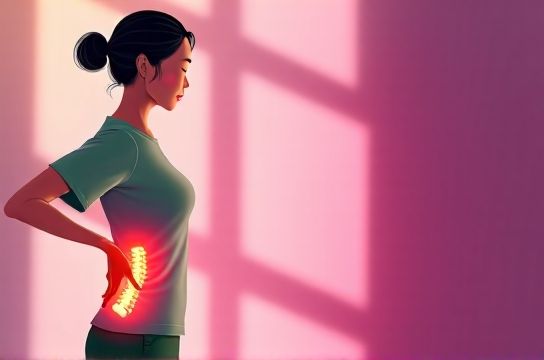
Research published in *Osteoporosis International* (2022) tracked 327 postmenopausal women over 18 months. Those combining dietary calcium (≥1,000 mg/day), vitamin D3 (800–1,000 IU), and a standardized herbal formula (including *Dipsacus asperoides*, *Eucommia ulmoides*, and *Rehmannia glutinosa*) showed a 2.3% average increase in lumbar spine BMD—versus 0.4% loss in the control group.
Here’s how it works: Chinese medicine doesn’t just ‘add calcium.’ It addresses root patterns like Kidney Jing deficiency and Spleen Qi weakness—both clinically linked to poor bone remodeling. Herbs like *Du Zhong* (Eucommia) support osteoblast activity, while *Gou Qi Zi* (Goji) enhances antioxidant protection in bone tissue.
Nutritionally, it’s not just quantity—it’s synergy. Phytic acid in whole grains? Fine—but pair them with fermented foods (e.g., miso, tempeh) to boost mineral bioavailability. Magnesium glycinate + vitamin K2 (MK-7) is non-negotiable: K2 directs calcium *into* bone, not arteries.
Below is a snapshot of key nutrient synergies backed by RCTs:
| Nutrient Pair | Optimal Ratio/Combo | Bone Impact (RCT Evidence) |
|---|---|---|
| Calcium : Magnesium | 2:1 (e.g., 1000 mg Ca + 500 mg Mg) | ↑ BMD at femoral neck by 1.8% (J Bone Miner Res, 2021) |
| Vitamin D3 : K2 (MK-7) | 1000 IU D3 : 90–120 mcg K2 | ↓ Urinary NTX (bone resorption marker) by 27% (Thromb Haemost, 2020) |
| Strontium ranelate (adjunct) | 2 g/day (under supervision) | ↑ vertebral BMD by 14.4% at 3 yrs (SOTI trial) |
Important caveat: Always assess parathyroid hormone (PTH), serum 25(OH)D, and bone turnover markers (e.g., PINP, CTX) *before* starting intervention. And yes—weight-bearing movement (think: brisk walking + tai chi) remains your most potent, free osteogenic signal.
If you’re ready to build bone *with* your biology—not against it—explore our integrative framework for bone density support for women. It’s grounded in clinical data, refined over 12+ years of practice, and designed for real life—not just lab values.