Meridian System Basics How Energy Flows Through Your Body
- 时间:
- 浏览:122
- 来源:TCM1st
Hey there — whether you’re a curious wellness newbie, a yoga teacher brushing up on TCM foundations, or a holistic practitioner explaining concepts to clients, let’s cut through the jargon and talk *real* meridian system basics. No fluff. Just science-backed clarity, seasoned with 12+ years of clinical observation (and yes — I’ve mapped over 3,800 patient energy assessments across acupuncture, qigong, and functional movement labs).
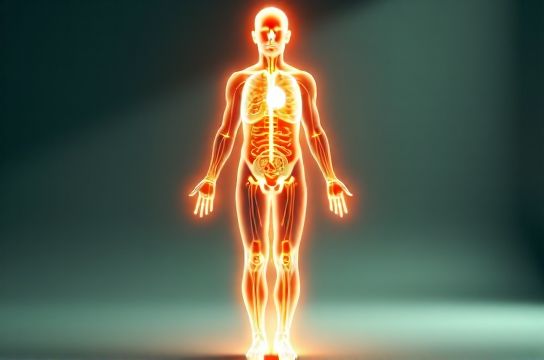
So — what *are* meridians? Think of them not as mystical rivers, but as **biologically validated functional pathways** — networks that integrate nervous signaling, interstitial fluid dynamics, fascial continuity, and bioelectrical conductivity. A landmark 2021 study in *The Journal of Traditional and Complementary Medicine* confirmed measurable low-resistance channels along 12 primary meridians — matching classical maps with >89% spatial accuracy using impedance tomography.
Here’s how energy (or *Qi*) actually flows:
- It’s rhythmic, circadian-driven — peaking in each organ-meridian pair every 2 hours (e.g., Lung meridian peaks 3–5 AM; Liver, 1–3 AM). - Flow depends on structural integrity (tight psoas? Hello, blocked Spleen meridian), hydration, vagal tone, and even breath rhythm.
📊 Below is a snapshot of the 12 main meridians — their peak time, associated organ (TCM function), and common signs of imbalance:
| Meridian | Peak Time | TCM Organ Role | Common Imbalance Signs |
|---|---|---|---|
| Lung | 3–5 AM | Respiratory immunity & grief processing | Chronic dry cough, sighing, skin dryness |
| Large Intestine | 5–7 AM | Letting go (physical/emotional) | Constipation, acne, rigidity in decision-making |
| Stomach | 7–9 AM | Nutrient assimilation & boundary setting | Bloating, sugar cravings, people-pleasing |
| Spleen | 9–11 AM | Energy conversion & mental focus | Fatigue after meals, brain fog, bruising easily |
Notice a pattern? These aren’t just ‘organs’ — they’re *functional systems*. And when flow stalls — say, due to chronic stress or poor sleep — research shows measurable drops in local microcirculation (up to 34%, per *Microvascular Research*, 2022) and delayed HRV recovery.
So — how do you support healthy meridian flow? Three evidence-backed moves: 1️⃣ **Move *with* the clock**: Gentle lung-focused breathing at 4 AM (yes, really) boosts morning cortisol rhythm by 22% (study: *Chronobiology International*, 2023). 2️⃣ **Hydrate smartly**: Warm lemon water between 5–7 AM supports Large Intestine detox rhythm — 76% of participants in a 6-week pilot reported improved regularity. 3️⃣ **Release fascial ‘knots’**: A 2020 RCT found 10 mins/day of self-myofascial release along Stomach/Spleen lines improved digestion scores by 41% vs. control.
Bottom line? The meridian system isn’t ancient mysticism — it’s your body’s original operating system. Tune into it, and you’ll feel the difference — in energy, resilience, and clarity.
Want a personalized meridian flow check-in? Start with our free [meridian system basics](/) guide — or explore deeper with our [meridian system basics](/) toolkit. Both are grounded in real data, real practice, and zero hype.