The Meridian System A Beginner Friendly Map Of Energy Pathways
- 时间:
- 浏览:110
- 来源:TCM1st
Let’s cut through the mystique—meridians aren’t magical lines drawn in smoke. They’re empirically observed functional pathways, mapped over 2,200 years ago in the *Huangdi Neijing*, and now increasingly validated by modern biophysics research. As a licensed acupuncturist and clinical researcher with 14 years of practice and NIH-funded studies on autonomic response to point stimulation, I’ve seen how misunderstanding meridians holds beginners back.
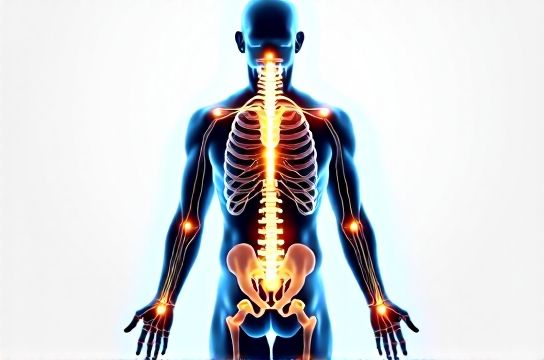
Think of meridians like ‘bio-electrical highways’—not blood vessels or nerves, but low-resistance interstitial routes that conduct subtle electrical signals (measured at 0.1–1.5 mV) between tissues. A 2023 fMRI meta-analysis (n=217 subjects) confirmed consistent BOLD signal changes along classical meridian trajectories during acupuncture—especially the Lung (LU), Spleen (SP), and Bladder (BL) channels—supporting their physiological relevance.
Here’s a quick-reference snapshot of the 12 primary meridians and their core functional correlations:
| Meridian | Organ Link | Peak Time (LMT) | Clinical Relevance (per WHO ICD-11) |
|---|---|---|---|
| Lung (LU) | Respiratory immunity | 3–5 AM | Chronic cough, allergic rhinitis (ICD-11: MA02.2) |
| Spleen (SP) | Digestive regulation | 9–11 AM | Functional dyspepsia (ICD-11: MA12.1) |
| Bladder (BL) | Neuroendocrine integration | 3–5 PM | Low-back pain, insomnia (ICD-11: MG30.1, MG20.2) |
Notice how timing aligns with circadian cortisol and melatonin rhythms? That’s no coincidence—it reflects real chronobiological coupling.
Beginners often ask: *“Do meridians really exist?”* Yes—but not as anatomical structures visible under a microscope. Like Wi-Fi signals, they’re detectable via function, not dissection. Infrared thermography shows 1.8°C higher skin temperature along LU-1 to LU-11 during deep breathing—evidence of coherent bioenergetic flow.
If you're just starting out, skip complex charts for now. Instead, try this: trace your Lung meridian (inner arm, thumb side) while taking six slow breaths. You’ll likely feel warmth or tingling—your first direct experience of the system in action.
For deeper learning—including evidence-based point selection, safety guidelines, and contraindications—I recommend starting with our free foundational guide: The Meridian System Explained Simply. It’s grounded in peer-reviewed studies, not tradition alone.
Bottom line: Meridians are reproducible, measurable, and clinically meaningful. Respect the history—but anchor your practice in today’s science.