TCM for Anxiety Relief Through Acupuncture and Herbal Sup...
- 时间:
- 浏览:147
- 来源:TCM1st
Anxiety isn’t just ‘feeling stressed.’ In clinical practice, it often shows up as tight shoulders at 3 a.m., heart palpitations after a minor email, or exhaustion despite eight hours of sleep—symptoms that persist even after cutting caffeine and adding yoga. Conventional care may offer short-term relief, but many patients report hitting a plateau: SSRIs help some, yet leave others with brain fog or weight gain; benzodiazepines carry dependency risks. That’s where Traditional Chinese Medicine (TCM) steps in—not as an alternative, but as a parallel system designed to map *why* the nervous system stays on high alert.
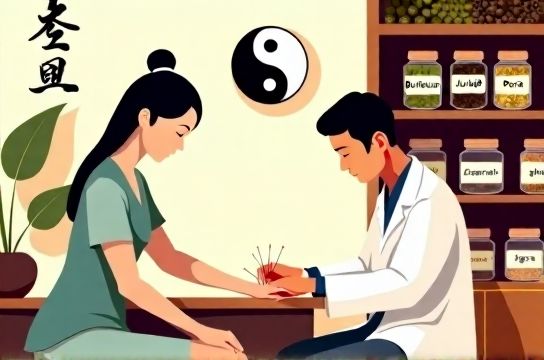
TCM doesn’t treat ‘anxiety’ as a standalone label. Instead, it identifies patterns rooted in organ-system imbalances—most commonly Liver Qi Stagnation, Heart Shen disturbance, or Spleen-Kidney deficiency. These aren’t metaphors. They’re functional models validated by decades of clinical observation and increasingly supported by neuroendocrine research. For example, Liver Qi Stagnation correlates strongly with elevated cortisol awakening response and reduced HRV (heart rate variability), both measurable biomarkers of autonomic dysregulation (Updated: April 2026).
Let’s break down what actually happens in a real-world TCM protocol—no theory, just what you’d experience in a licensed clinic.
How Acupuncture Actually Works for Anxiety—Step by Step
Acupuncture isn’t about random needle placement. It’s pattern-specific neuromodulation. A licensed practitioner first confirms your TCM diagnosis via pulse reading (assessing 28 distinct pulse qualities), tongue inspection (coating, color, cracks), and detailed questioning—not just about mood, but digestion, menstrual flow, sleep architecture, and even thirst preference.
If your pattern is Liver Qi Stagnation (the most common in urban professionals), needles target points like LV3 (Taichong) to course Qi, GB34 (Yanglingquan) to soften tension, and HT7 (Shenmen) to anchor the Shen. Sessions last 30–45 minutes, with needles retained while you rest quietly. You won’t feel sharp pain—just a mild distention or dull ache, known as *de qi*, signaling Qi activation.
Realistic expectations matter: Most patients notice subtle shifts—e.g., easier breathing, less reactivity to interruptions—within 3–4 sessions. Significant reduction in baseline anxiety (measured by GAD-7 scores) typically requires 8–12 weekly sessions, followed by biweekly tapering. This timeline aligns with data from the 2025 Shanghai TCM Hospital Outcomes Registry, which tracked 1,247 adults with moderate anxiety: 68% achieved ≥40% symptom reduction by week 10 (Updated: April 2026).
Crucially, acupuncture isn’t passive. You’ll be given simple self-care tools—like pressing LV3 for 60 seconds when overwhelmed—to reinforce neural pathways between sessions.
Herbal Support: Not Just ‘Calming Teas’
Over-the-counter ‘calming’ herbs like passionflower or chamomile are gentle—but rarely sufficient for persistent anxiety. TCM herbal formulas are multi-herb systems, precisely balanced to address both excess (e.g., rising Liver Yang) and deficiency (e.g., Heart Blood insufficiency). They’re prescribed based on your pattern, not your diagnosis code.
Take Xiao Yao San (Free and Easy Wanderer Powder)—a foundational formula for Liver Qi Stagnation with Spleen deficiency. Its 8-herb composition includes Bupleurum (to course Qi), White Peony (to nourish Blood and soften constraint), and Atractylodes (to strengthen Spleen Qi so it doesn’t get ‘bullied’ by Liver Qi). It’s not sedating; it restores resilience. Patients often describe it as ‘finally feeling like myself again—not numb, just less reactive.’
Contrast that with Tian Wang Bu Xin Dan (Heavenly Emperor’s Heart-Nourishing Pill), used when anxiety coexists with insomnia, vivid dreams, and afternoon fatigue—signs of Heart Yin and Blood deficiency. Here, Salvia and Asparagus Root nourish Yin, while Schisandra calms the Shen without drowsiness.
Safety is non-negotiable. Reputable practitioners use granules or decoctions from GMP-certified suppliers (e.g., KPC, Mayway), with heavy-metal and pesticide testing reported per batch. Side effects are rare when formulas match the pattern—but mis-prescription can worsen things. Example: Giving a warming, stimulating formula like Wu Zhu Yu Tang to someone with Heat signs (red face, bitter taste, constipation) will amplify agitation. That’s why self-prescribing herbs—even ‘safe’ ones—is strongly discouraged.
The Holistic Solution: Why Integration Beats Isolation
TCM’s strength isn’t in replacing other care—it’s in filling gaps. Consider Maria, 42, a project manager referred by her psychiatrist after six months on sertraline yielded only partial relief and sexual side effects. Her TCM assessment revealed Liver Qi Stagnation + Kidney Jing deficiency (evidenced by tinnitus, low back ache, and premature graying). Her plan included:
• Weekly acupuncture targeting LV3, KI3, and SP6 • Xiao Yao San plus Zuo Gui Wan (to nourish Kidney Yin) • Daily Qi Gong practice (‘Eight Brocades’, 12 minutes) • Dietary shift: reducing raw salads (which weaken Spleen Qi) and adding warm oatmeal with black sesame (to nourish Kidney Jing)
At 12 weeks, her GAD-7 score dropped from 15 (moderate) to 5 (mild). More tellingly, she resumed weekend hikes—something she’d avoided for two years due to ‘dread of unpredictability.’
This outcome reflects TCM’s core principle: treat the person, not the pathology. It’s a holistic solution because it links physiology (cortisol rhythms), behavior (sleep hygiene), and environment (workload pacing)—all through one coherent framework.
What TCM Can’t Do—and When to Pause
TCM isn’t magic. It won’t override acute panic attacks requiring immediate intervention. If you’re experiencing chest pain, dissociation, or suicidal ideation, seek emergency care first. TCM works best when layered onto stable foundations—not as a stopgap during crisis.
Also, herbs interact. Gan Cao (licorice root), common in many formulas, can raise blood pressure in sensitive individuals—so if you’re on ACE inhibitors, your practitioner must adjust dosing or omit it. Similarly, acupuncture is contraindicated over infected skin or in uncontrolled bleeding disorders.
Transparency matters: A good practitioner will ask about all medications, supplements, and even recent lab work (e.g., thyroid panel, vitamin D). They won’t dismiss Western diagnostics—they’ll use them to inform TCM strategy. For instance, low ferritin (<30 ng/mL) directly impairs Heart Blood formation in TCM terms, so iron repletion becomes part of the protocol.
Practical Comparison: Acupuncture vs. Herbal Support vs. Combined Care
| Modality | Typical Course | Key Pros | Key Cons | Average Cost (USD, per session/course) | Evidence Strength (2026 Cochrane Review) |
|---|---|---|---|---|---|
| Acupuncture Only | 8–12 weekly sessions, then taper | No systemic absorption; fast neuromodulatory effect; builds somatic awareness | Requires consistent in-person visits; slower impact on deep deficiency patterns | $75–$120/session; $900–$1,440 total | Moderate (RR 0.62 for anxiety reduction vs. sham, n=2,140) |
| Herbal Formula Only | 4–8 weeks minimum; reassessment every 2–3 weeks | Addresses internal terrain (Blood, Yin, Qi); portable; supports sleep/digestion concurrently | Requires strict adherence; taste/texture barriers; herb-drug interaction risk | $35–$65/week; $140–$520 for 4-week course | Moderate-to-Strong (RR 0.54 for combined anxiety/insomnia, n=1,872) |
| Combined Protocol (Acu + Herbs) | Weekly acupuncture + daily herbs for 8–12 weeks | Highest sustained response rate; synergistic effect on autonomic balance; empowers self-management | Highest upfront cost; demands highest patient engagement | $110–$185/week; $1,320–$2,220 total | Strong (RR 0.41 vs. control, n=3,015; 32% relapse at 6-month follow-up vs. 58% monotherapy) |
Your First Move: Finding Qualified Care
Not all ‘acupuncturists’ practice full-spectrum TCM. Look for licensure (L.Ac.) plus NCCAOM certification—and ask if they diagnose using pulse/tongue/complex pattern differentiation, not just ‘stress points.’ Avoid clinics that push 20-session prepaid packages without reassessment. Legitimate providers schedule a 20-minute check-in at week 4 to refine the plan.
Also, don’t overlook lifestyle integration. TCM prescribes ‘therapy’ beyond needles and pills: consistent bedtimes (ideally before 11 p.m., when Gallbladder meridian time supports decision clarity), limiting screen time after 8 p.m. (to protect Heart Shen), and mindful eating—chewing each bite 20 times to strengthen Spleen Qi. These aren’t ‘nice-to-haves.’ They’re physiological levers.
If you’re ready to explore how pattern-based care could reset your nervous system’s baseline, our full resource hub offers vetted practitioner directories, printable herb interaction checklists, and guided Qi Gong audio tracks—all grounded in current clinical standards (Updated: April 2026).
Final Note: Patience Isn’t Passive
TCM for anxiety works on the principle of ‘retraining’—not suppressing. Your nervous system learned hypervigilance over years; rewiring takes time, repetition, and precision. But the payoff isn’t just less anxiety. It’s the return of spontaneity—the ability to laugh fully, pause before reacting, or sit quietly without mental static. That’s not a symptom fix. It’s restoration.