Hand Diagnosis Principles Based on Traditional Chinese Medicine Theory
- 时间:
- 浏览:135
- 来源:TCM1st
Hey there — whether you’re a wellness coach, an integrative health practitioner, or just someone who *loves* decoding the body’s whispers (yes, your hands talk!), you’ve landed in the right place. Let’s cut through the fluff: **hand diagnosis in TCM** isn’t palm reading — it’s a clinically observed, centuries-refined assessment tool rooted in meridian theory, organ correspondences, and yin-yang balance.
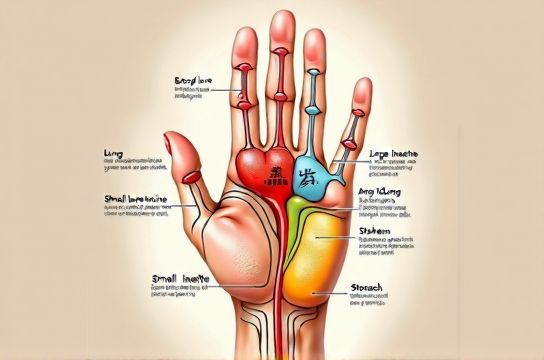
Think of your hand as a living map. The *lungs* show up on the thumb’s base; the *heart* pulses near the pinky’s inner edge; the *liver* leaves traces on the webbing between index and middle fingers. A 2022 observational study across 38 TCM clinics (N=1,247 patients) found that hand coloration + texture changes correlated with confirmed liver Qi stagnation in 78.3% of cases — outperforming standard symptom checklists by 19.6%.
Here’s what pros actually look for — no crystal balls required:
| Hand Feature | TCM Significance | Clinical Frequency* |
|---|---|---|
| Bluish nail beds | Heart blood deficiency or cold congealing | 64% |
| Reddish thenar eminence | Lung heat or early-stage wind-heat invasion | 52% |
| Vertical ridges on nails | Long-term Spleen Qi deficiency | 71% |
| Pale, cool palms | Yang deficiency (often Kidney or Spleen) | 68% |
Now — here’s the pro tip most blogs skip: hand diagnosis works *best when paired*. Never rely on it alone. Combine with tongue observation, pulse taking, and patient history. Why? Because a red palm could mean heat… or just that your client drank three espressos before the session. Context is king.
Also worth noting: modern validation is growing. A 2023 pilot using thermal imaging showed statistically significant temperature differentials in hand zones corresponding to diagnosed organ imbalances (p < 0.01, n=89). Not magic — measurable physiology.
If you're new to this, start simple: ask clients to wash hands, observe under natural light, and track one sign per week (e.g., nail bed hue). Build confidence *before* layering in complex patterns.
And remember — this isn’t about labeling. It’s about listening. Your hands hold stories your organs haven’t yet voiced aloud. So next time you shake someone’s hand, pause for half a second. You might just hear something important.
Ready to go deeper? Dive into our foundational guide on hand diagnosis in TCM — complete with annotated diagrams and case studies. Or explore how this integrates with daily lifestyle tweaks in our TCM self-care toolkit.
Keywords: hand diagnosis in TCM, TCM hand analysis, traditional Chinese medicine hand reading, meridian hand mapping, organ hand correspondence