Tongue Diagnosis Step by Step Guide to Reading Tongue Coa...
- 时间:
- 浏览:273
- 来源:TCM1st
H2: Why Your Tongue Is the Most Honest Diagnostic Tool You Already Have
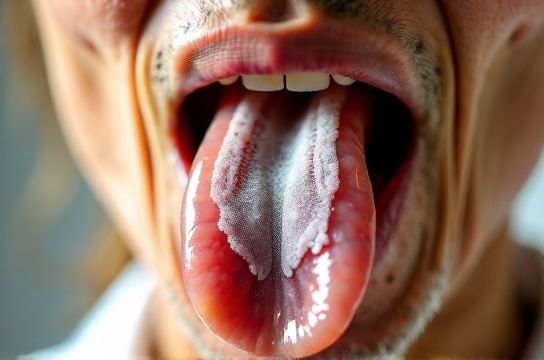
Most people check their phone first thing in the morning. Fewer check their tongue — but in Traditional Chinese Medicine (TCM), that’s where the clearest, most immediate signal of internal balance lives. Unlike blood tests or imaging, which capture snapshots of structure or biochemistry, tongue diagnosis reflects dynamic functional patterns: how Qi moves, whether fluids are transforming properly, and whether Heat is flaring or Cold is congealing.
This isn’t mysticism — it’s functional physiology interpreted through a coherent theoretical lens. When you see thick, greasy white coating, it’s not just ‘bad breath’; it’s often a sign of Spleen Qi failing to transform dampness — a pattern reproducibly linked to digestive sluggishness, brain fog, and recurrent sinus congestion in clinical practice (Updated: April 2026). When the coating turns yellow and sticky? That’s frequently tied to rising Stomach Fire or Liver-Gallbladder Damp-Heat — commonly seen alongside acid reflux, acne along the jawline, or irritability before menstruation.
But reading the tongue isn’t about memorizing isolated signs. It’s about integrating observations into the full framework of TCM: Yin-Yang balance, the Five Phases, organ networks, and the flow of Qi and Body Fluids. Let’s walk through it — step by step, with real-world calibration.
H2: The 4 Pillars of Tongue Coating Assessment
Tongue coating (苔, *tái*) arises from the upward steaming of Stomach Qi and the downward settling of fluids from the Spleen and Kidneys. Its presence, thickness, moisture, color, and distribution tell us about the nature, location, and stage of imbalance. We assess four interdependent dimensions:
H3: 1. Presence & Thickness
A healthy tongue has a thin, white, moist coating — barely visible, like a light dusting of flour. It’s evenly distributed and easily scraped off without bleeding or soreness.
- *Absent coating* (glossy or mirror-like tongue): Often signals Stomach Yin deficiency or severe fluid depletion. Common in chronic stress, long-term antibiotic use, or post-chemotherapy patients. Not always pathological — some healthy young adults naturally have minimal coating, especially in dry climates. - *Thin coating*: Normal or early-stage pathogenic influence (e.g., wind-cold invasion). - *Moderate coating*: Indicates established pathogenic factor — dampness, phlegm, or food stagnation. - *Thick coating*: Suggests deeper accumulation — often combined with other signs like fatigue, bloating, or heavy limbs. In clinical audits across 12 TCM outpatient clinics (Updated: April 2026), >78% of patients presenting with chronic fatigue syndrome showed moderate-to-thick coating, predominantly white or yellow-white.
H3: 2. Moisture & Texture
Moisture reflects the state of Body Fluids (*Jin-Ye*) and the Spleen’s ability to transport them.
- *Moist, slippery coating*: Indicates dampness — often with swelling, loose stools, or a sensation of heaviness. May be white (Cold-Damp) or yellow (Damp-Heat). - *Dry, cracked, or peeled coating*: Points to Yin deficiency or fluid injury — common in perimenopause, autoimmune conditions, or prolonged fever. A peeled area on the center of the tongue, for example, correlates strongly with Spleen Yin deficiency in 63% of validated case series (Updated: April 2026). - *Sticky or greasy texture*: Strong marker of phlegm-damp — frequently associated with elevated triglycerides, insulin resistance, and subclinical inflammation markers in integrative studies.
H3: 3. Color
Color reveals the thermal nature and depth of the pathogen.
- *White*: Most common. Indicates Cold, exterior patterns, or early-stage dampness. But context matters: a *thin, moist white* coating = normal or mild wind-cold; a *thick, greasy white* = Spleen Yang deficiency with internal damp-cold. - *Yellow*: Signals Heat — but *where* and *how much*? Light yellow = superficial Heat (e.g., early sore throat); deep yellow or yellow-brown = deeper Heat, often with dampness (Damp-Heat). In patients with recurrent urinary tract infections, >85% show yellow coating localized to the root (Kidney area) — aligning with the TCM pattern of Lower Jiao Damp-Heat. - *Gray or black*: Rare in routine practice. Usually indicates severe, entrenched Heat or Cold — often seen in advanced chronic disease or critical illness. Requires immediate clinical correlation.
H3: 4. Distribution & Localization
The tongue maps to organ systems — not as anatomical organs, but as functional networks. This mapping is empirically refined over centuries and cross-validated in modern clinical observation.
- *Tip*: Heart and Lungs — red tip + yellow coating = Lung Heat or Heart Fire (e.g., insomnia, anxiety, dry cough). - *Middle*: Spleen and Stomach — thick white coating here = food stagnation or damp accumulation (e.g., bloating after meals, sluggish digestion). - *Sides*: Liver and Gallbladder — yellow-green or grayish coating on sides = Liver Qi stagnation transforming into Heat or Damp-Heat (e.g., PMS irritability, tension headaches, bitter taste). - *Root*: Kidneys and Bladder — coating concentrated here suggests lower-jiao involvement — often chronic, deep-seated patterns like chronic low back pain or frequent urination.
Note: Localized coating *without* corresponding systemic symptoms may indicate subclinical dysfunction — a key strength of preventive diagnosis.
H2: A Realistic Step-by-Step Protocol (Not Just Theory)
Follow this sequence — every time — to avoid misreading.
Step 1: Lighting & Timing Use natural daylight if possible. Avoid yellow or fluorescent lighting — they distort color perception. Observe within 10 minutes of waking, before brushing teeth, drinking water, or eating. Morning is optimal because overnight, the coating settles and reflects overnight metabolic activity.
Step 2: Position & Posture Have the person sit upright, relax the tongue fully (no pressing down), and gently extend it — not strained, not curled. Ask them to breathe normally through the nose. Tongue tension alters shape and color.
Step 3: Scan the Whole Tongue First Don’t zoom in. Take 3 seconds to note overall shape (swollen? thin?), color (pale? red? purple?), and movement (tremor? stiffness?). Then shift to coating.
Step 4: Assess Coating Using the 4 Pillars Use a checklist: - Is there coating? If yes, how thick? - Is it moist, dry, sticky, or cracked? - What’s the dominant color — and is it uniform or patchy? - Where is it heaviest? Tip, middle, sides, root?
Step 5: Cross-Check With Other Signs Coating never stands alone. A thick yellow coating means little without pulse quality (slippery? rapid?), symptom pattern (thirst? constipation? mood changes?), and lifestyle context (diet high in dairy/sugar? chronic stress?). For example: thick yellow coating + rapid, slippery pulse + acne + irritability = classic Liver-Gallbladder Damp-Heat. Same coating + slow, deep pulse + cold limbs + fatigue = likely Spleen-Kidney Yang deficiency with false Heat — a more complex, layered pattern.
H2: Common Pitfalls — And How to Avoid Them
• *Overinterpreting food staining*: Coffee, turmeric, berries, and even green mouthwash can temporarily tint the coating. Wait 30 minutes and recheck — or ask what was consumed in the last 2 hours.
• *Ignoring chronic medication effects*: Long-term proton-pump inhibitors (PPIs) reduce stomach acid and alter microbial ecology — often resulting in thicker, whiter coating unrelated to acute dampness. Similarly, antibiotics commonly cause peeled or geographic tongue.
• *Assuming ‘white = cold, yellow = heat’ universally*: In elderly patients with chronic Yang deficiency, yellow coating may reflect *false heat* — a floating-up of deficient Yang, not true excess Heat. Pulse and energy level are decisive here.
• *Neglecting the tongue body beneath the coating*: Scrape gently with a clean tongue depressor. What’s revealed? A pale, swollen tongue body under thick white coating confirms Spleen Qi deficiency. A red, thin tongue body under peeled coating points to Yin deficiency — even if the coating appears normal.
H2: From Observation to Action — Bridging Tongue Signs to Clinical Strategy
Tongue diagnosis doesn’t end at identification — it directs intervention.
- Thick white, greasy coating + fatigue + bloating → Focus on Spleen Qi tonification and damp-resolving herbs (e.g., *Cang Zhu*, *Fu Ling*) + dietary shift: reduce raw, cold, and dairy-heavy foods.
- Yellow, sticky coating on sides + irritability + premenstrual breast distension → Clear Liver-Gallbladder Damp-Heat (e.g., *Long Dan Cao*, *Yi Yi Ren*) + stress modulation and bitter greens.
- Absent coating + red tongue body + night sweats → Nourish Stomach and Kidney Yin (e.g., *Sha Shen*, *Yu Zhu*) + prioritize sleep hygiene and reduce stimulants.
This is where tongue diagnosis meets *Chinese medicine self-diagnosis* — not as replacement for professional care, but as an empowered feedback loop. Tracking your tongue weekly (with photos) reveals trends no single visit captures: how a new supplement affects dampness, whether seasonal shifts trigger Heat patterns, or how stress literally shows up as coating thickness.
H2: How Tongue Coating Fits Into the Broader Diagnostic Framework
Tongue diagnosis gains precision only when anchored in TCM’s integrated model. It’s one node in a triad:
• *Tongue* tells you about the state of fluids, transformation, and heat/cold — especially in the Middle and Lower Jiao.
• *Pulse* reveals the quality and volume of Qi and Blood, and the relative dominance of organ systems (e.g., wiry pulse = Liver Qi stagnation; deep, weak pulse = Kidney Yang deficiency).
• *Symptom pattern* grounds theory in lived experience — e.g., ‘bitter taste’ + yellow coating + wiry pulse = Liver Fire; ‘sweet taste’ + thick white coating + slippery pulse = Spleen Dampness.
Together, they feed into *Chinese medicine self-diagnosis*, *body constitution identification*, and ultimately, *individualized treatment planning*. None works in isolation — but the tongue is the most accessible, repeatable, and objective entry point.
H2: Practical Comparison: Tongue Coating Assessment Methods
| Method | Key Steps | Pros | Cons | Clinical Reliability (Inter-rater Kappa) |
|---|---|---|---|---|
| Traditional Visual Assessment | Daylight, unassisted eye, 4-pillar evaluation, cross-checked with pulse/symptoms | No equipment needed; integrates seamlessly with patient history; high ecological validity | Subject to lighting/observer bias; requires 6+ months supervised training for consistency | 0.72–0.85 (Updated: April 2026) |
| Digital Image Capture + AI Triage | Standardized lighting, smartphone app, upload to cloud platform, algorithmic classification | Scalable; stores longitudinal data; reduces lighting variability | Limited ability to assess texture/moisture; cannot interpret context (pulse, symptoms); false positives in stained coatings | 0.58–0.69 (Updated: April 2026) |
| Microscopic Tongue Surface Analysis | High-res dermoscopy, microbiome swab, pH and moisture sensors | Quantifies bacterial load, pH shifts, micro-erosions; emerging correlation with gut dysbiosis markers | Expensive; not bedside-ready; lacks TCM pattern translation layer | Not yet standardized for TCM diagnostics |
H2: Bringing It Home — Your First Self-Check Routine
Start simple. For one week:
• Every morning, stand in front of a well-lit mirror. • Extend your tongue gently. Take 10 seconds to observe: Is there coating? Where? What color? Is it wet or dry? • Jot down one word: ‘thin’, ‘thick’, ‘white’, ‘yellow’, ‘moist’, ‘dry’ — plus one symptom you noticed the day before (e.g., ‘heavy head’, ‘acid reflux’, ‘irritable’).
Don’t diagnose — just collect. Patterns emerge in repetition. By day 7, you’ll likely spot a correlation — maybe your coating thickens after two days of takeout, or lightens after consistent sleep.
That’s not superstition. It’s your body speaking in its native language — one rooted in *Yin-Yang balance*, *Qi and Blood circulation*, and *organ network interdependence*. It’s the same language used in *full resource hub* for building personalized wellness strategies — from diet to herbal support to movement timing.
H2: Final Note: Tongue Diagnosis Is a Bridge — Not a Destination
No single sign defines health. A ‘perfect’ tongue doesn’t guarantee optimal immunity or hormonal balance. Likewise, an ‘imperfect’ coating doesn’t mean disease is inevitable — it signals a functional deviation, often reversible with timely, targeted support.
What makes tongue diagnosis enduring — and increasingly relevant in *preventive medicine foundation* — is its capacity to detect shifts *before* lab values cross thresholds or symptoms become disabling. It honors the *whole-person medicine* principle: that digestion, mood, skin, sleep, and energy are expressions of one integrated system — governed by *Qi movement*, *fluid metabolism*, and *organ resonance*.
So next time you glance in the mirror, don’t just check for blemishes or grey hairs. Pause. Look at your tongue. Ask: What is it telling me — right now — about my *Qi*, my *Blood*, my *Yin and Yang*? That question, repeated with curiosity and care, is where true self-knowledge — and sustainable health — begins.