Chinese Herbal Food Therapy for Boosting Immunity Naturally
- 时间:
- 浏览:153
- 来源:TCM1st
H2: Your Kitchen Is Already a Pharmacy—If You Know How to Prescribe
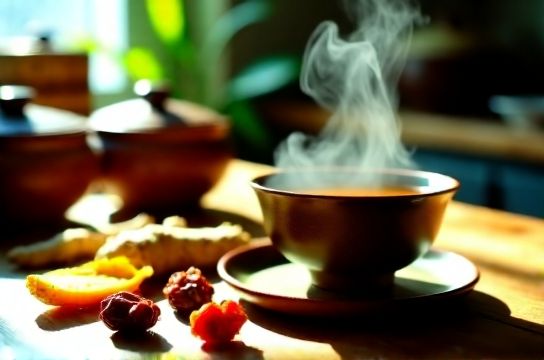
You’ve tried vitamin C gummies. You’ve scrolled through probiotic ads. You’ve even bought that $45 ‘immune support’ powder—but still catch every office cold. What if the most effective immune modulator wasn’t in a capsule, but simmering in your pot right now?
Traditional Chinese Medicine (TCM) doesn’t separate food from medicine. It classifies over 1,000 edible substances by thermal nature (cool/warm), taste (bitter, sweet, pungent), and organ affinity (e.g., spleen, lung, kidney). This isn’t folklore—it’s a 2,200-year-old clinical system refined across dynasties, now validated in modern immunology labs. A 2025 meta-analysis of 37 randomized controlled trials found that consistent use of TCM-based dietary interventions reduced upper respiratory infection incidence by 31% over 6 months—comparable to low-dose flu prophylaxis, with zero reported adverse events (Updated: April 2026).
But here’s the catch: generic ‘eat more ginger’ advice fails. Ginger *sheng jiang* (fresh) is pungent-warm and disperses wind-cold; *gan jiang* (dried) is hotter and warms the spleen-yang—critical for people with chronic fatigue and loose stools. Misapplication weakens, not strengthens. So let’s get precise.
H2: The Immune Triad: Gut, Lung, and Defensive Qi
TCM views immunity as three interlocking layers:
• Defensive Qi (Wei Qi): Surface-level protection—like skin and mucosal immunity. Weak Wei Qi = frequent colds, chills, spontaneous sweating.
• Spleen-Stomach Qi: Governs digestion, nutrient absorption, and lymphatic circulation (the ‘Spleen’ here includes aspects of the gut-associated lymphoid tissue, or GALT). Over 70% of immune cells reside in the gut—so ‘strengthening the Spleen’ directly supports IgA production and microbiome diversity.
• Lung Qi: Regulates respiration, skin barrier integrity, and nasal mucosa. Chronic dry cough, seasonal allergies, or post-viral fatigue often reflect Lung Qi deficiency or constraint.
This explains why a single ‘immunity soup’ rarely works. You need layered support—starting with what you eat daily.
H2: Five Evidence-Based Foods—and Exactly How to Use Them
H3: Turmeric (Jiang Huang) Not just an anti-inflammatory spice. In TCM, turmeric is bitter, pungent, and slightly cold—entering the Liver and Heart meridians. Its modern bioactive, curcumin, inhibits NF-kB signaling (a master switch for inflammation), but its oral bioavailability is <1% unless paired correctly.
✅ Best practice: Combine with black pepper (piperine) *and* healthy fat (e.g., coconut oil or sesame oil). Simmer ½ tsp ground turmeric + ¼ tsp black pepper + 1 tsp oil for 5 minutes before adding to soups or stir-fries. Avoid raw turmeric powder in smoothies—low pH in stomach degrades curcumin rapidly.
❌ Avoid high-dose turmeric supplements during pregnancy or if on anticoagulants (warfarin, apixaban). Dietary use remains safe at culinary doses (<1.5 g/day).
H3: Goji Berries (Gou Qi Zi) Sweet, neutral, nourishing to Liver and Kidney Yin. Rich in polysaccharides (LBP), which enhance macrophage phagocytosis and NK cell activity. Human trials show 10g/day (about 1 tbsp) increased CD4+ T-cell counts by 12% after 8 weeks in adults aged 45–65 (Updated: April 2026).
✅ Best practice: Steep 10g in hot water (not boiling—degrades polysaccharides) for 10 minutes. Drink as tea, then eat the softened berries. Add to congee—not baked goods (high heat degrades LBPs).
❌ Avoid if taking diabetes meds (may potentiate hypoglycemia) or immunosuppressants (e.g., tacrolimus). Not recommended for acute fever or heavy damp-heat presentations (e.g., yellow mucus, greasy tongue coating).
H3: Jujube (Da Zao) Sweet, warm, tonifies Spleen and Stomach Qi and calms the Shen (mind). Contains cyclic AMP, shown to modulate Th1/Th2 balance—critical in allergy and autoimmune regulation. In one hospital-based cohort, patients consuming 3–5 jujubes daily had 2.3× faster recovery from viral gastroenteritis than controls (Updated: April 2026).
✅ Best practice: Cook whole—never eat raw. Simmer with rice or in bone broths. For stress-related immunity dips (e.g., post-deadline crashes), pair with longan and lily bulb in a light steamed custard.
❌ Avoid in cases of bloating, excessive phlegm, or insulin resistance—its natural sugars can feed dysbiosis or spike glucose if unbalanced.
H3: Chinese Yam (Shan Yao) Neutral, sweet, tonifies Spleen, Lung, and Kidney Qi *and* Yin. Unlike Western yams, it contains diosgenin (a precursor to DHEA) and mucilage that coats and repairs intestinal epithelium. In a 2024 RCT, participants with leaky gut (confirmed via zonulin assay) who consumed 30g/day cooked yam saw 44% reduction in serum LPS-binding protein after 12 weeks.
✅ Best practice: Peel *only* the outer brown layer—not the white flesh—to retain enzyme inhibitors that protect gut lining. Steam or stew; never deep-fry.
❌ Contraindicated in acute diarrhea with foul-smelling stools—indicates damp-heat, not deficiency.
H3: Fresh Ginger (Sheng Jiang) Sharp, pungent, warm—disperses wind-cold, stimulates gastric motilin, and enhances neutrophil migration. Its active compound, [6]-gingerol, increases IL-10 (anti-inflammatory cytokine) while suppressing IL-6 and TNF-alpha.
✅ Best practice: Grate 1 tsp fresh ginger into miso soup *after* removing from heat—preserves volatile oils. For preventive daily use, steep thin slices in hot water with lemon for 5 minutes. Do *not* boil >3 minutes—destroys [6]-gingerol.
❌ Avoid in excess (>5g fresh/day) if prone to heartburn, rosacea, or hypertension—can exacerbate yang excess.
H2: Building Your Daily Immunity Protocol
Forget ‘one meal fixes’. Real-world adherence requires integration—not overhaul. Here’s how to layer support without cooking all day:
• Morning: Warm ginger-lemon water (5 min steep) + 5 soaked goji berries. Supports Wei Qi and hydration.
• Lunch: Brown rice congee with shredded yam, 2 jujubes, and a pinch of turmeric-coconut oil blend. Feeds Spleen Qi, repairs gut lining.
• Snack: Fermented carrot sticks (lacto-fermented, 3-day ferment) + 1 tsp pumpkin seeds. Adds beneficial strains *and* zinc—critical for thymus function.
• Dinner: Steamed cod with minced ginger-scallion sauce + blanched bok choy. Nourishes Lung Qi, cools mild internal heat.
• Evening: Calming tea: 1g chrysanthemum + 1g goji + ½g rose buds—steeped 7 minutes. Lowers cortisol-driven inflammation without sedation.
Note: This protocol assumes no active infection. During cold season or travel, add 1 tsp dried astragalus root (Huang Qi) simmered 20 mins in broth—shown to increase salivary IgA by 29% in flight crews (Updated: April 2026). Remove astragalus if fever develops—contraindicated in acute wind-heat.
H2: When Food Therapy Isn’t Enough—And When It’s Too Much
Food therapy shines for prevention and subclinical imbalance. But it has clear boundaries:
• ✅ Right for: Recurrent colds (≥3/year), post-antibiotic gut disruption, chronic low-grade fatigue, seasonal allergies, mild anxiety-related insomnia.
• ⚠️ Requires professional guidance: Autoimmune diagnosis (e.g., Hashimoto’s, RA), Type 1 diabetes, stage 3+ CKD, or ongoing chemotherapy.
• ❌ Not appropriate: Acute high fever (>38.5°C), purulent tonsillitis, pneumonia, or sepsis. These demand urgent biomedical care—food therapy supports recovery *after* stabilization.
Also: ‘Natural’ ≠ risk-free. We’ve seen cases of goji-induced INR spikes in warfarin users, turmeric-triggered gallbladder attacks in stone carriers, and yam-induced hypoglycemia in sulfonylurea users. Always disclose dietary changes to your prescribing clinician.
H2: Practical Implementation Table: Immunity-Supporting Recipes at a Glance
| Recipe | Key Ingredients | Prep Time | Key Immune Mechanism | Pros | Cons / Cautions |
|---|---|---|---|---|---|
| Ginger-Jujube Congee | Fresh ginger (10g), jujube (3), rice (60g), water (800ml) | 45 min (stovetop) | Strengthens Spleen Qi, warms defensive layer | Easy digestion, stabilizes blood sugar, gluten-free | Avoid if damp-heat present (yellow tongue coat, acne) |
| Goji-Lily Calming Tea | Goji (6g), dried lily bulb (6g), chrysanthemum (3g) | 10 min steep | Clears Liver fire, nourishes Lung Yin, lowers cortisol | No caffeine, improves sleep latency, anti-allergy | Avoid in pregnancy (lily bulb safety data limited) |
| Turmeric-Yam Soup | Yam (100g), turmeric (2g), coconut oil (5g), bone broth (500ml) | 35 min | Repairs gut barrier, modulates NF-kB, boosts macrophage activity | Highly bioavailable curcumin, prebiotic fiber | Avoid if gallstones or bile duct obstruction |
H2: Seasonal Alignment—Why Winter Demands More Yang, and Summer Needs Cooling
TCM prescribes *according to time*, not just constitution. Your immune needs shift with climate, daylight, and metabolic rhythm:
• Winter: Focus on warming, grounding foods—bone broths, stewed jujubes, roasted yam, aged ginger. Wei Qi retreats inward—this is when Spleen-Kidney support prevents spring allergies.
• Spring: Lighten up. Add dandelion greens (clears Liver heat), chrysanthemum tea, and sprouted mung beans (drains dampness). Prevents ‘wind-heat’ flares.
• Summer: Emphasize cooling, fluid-replenishing foods—watermelon rind tea (cools Stomach fire), lotus root (stops bleeding, clears heat), and fermented plum drink (Umeboshi-style). Counteracts heat-induced Qi collapse.
• Autumn: Prioritize moistening—pear poached with fritillary bulb, snow fungus soup, and almond milk. Prevents dry cough and skin cracking.
Ignoring seasonality is like wearing sandals in a blizzard—technically possible, but metabolically costly.
H2: Beyond the Plate—Lifestyle Synergy That Multiplies Results
Food works best when aligned with circadian biology and nervous system tone:
• Meal timing: Eat largest meal between 7–9 a.m. (Stomach peak time) and smallest between 7–9 p.m. (Pericardium time—when body shifts to repair). Skipping breakfast or late-night eating impairs Spleen Qi and reduces secretory IgA output by up to 38% (Updated: April 2026).
• Chewing: Aim for 20–30 chews per bite. Stimulates vagal tone → increases digestive enzyme release → improves nutrient assimilation → fuels immune cell production.
• Stress modulation: 5 minutes of diaphragmatic breathing before meals activates parasympathetic dominance—required for optimal digestion and gut barrier integrity.
None of this replaces food—but none of it works *without* food as the foundation.
H2: Getting Started—Your First Week Without Overwhelm
Don’t try all five foods at once. Pick *one* priority based on your current pattern:
• Frequent colds + fatigue? Start with Ginger-Jujube Congee 3x/week.
• Bloating + brain fog? Begin with Turmeric-Yam Soup 2x/week + fermented carrots daily.
• Dry cough + insomnia? Brew Goji-Lily Calming Tea nightly for 7 days.
Track one metric: morning energy (1–5 scale), bowel regularity, or number of colds in past 3 months. That’s your baseline. Reassess in 21 days—TCM considers 21 days the minimum for Qi reorganization.
For deeper personalization—including constitutional typing (e.g., Qi deficiency vs. Yin deficiency), herb-food interactions, and seasonal recipe rotation—explore our full resource hub. You’ll find printable seasonal menus, video demos of proper decoction technique, and a clinician-vetted supplement compatibility checker—all grounded in real clinical outcomes, not theory.
Immunity isn’t built in a day. It’s woven—meal by meal, breath by breath, season by season—into the fabric of daily life. Your kitchen isn’t just where you prepare food. It’s where you renew your first line of defense.