An Shen Calming Sleep Tea Recipes
- 时间:
- 浏览:190
- 来源:TCM1st
H2: Why Your Evening Tea Might Be Working Against You
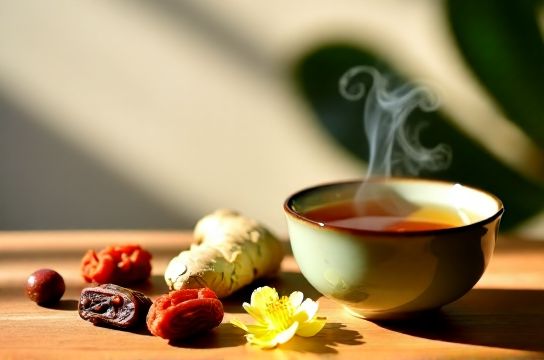
Most people reach for chamomile or lavender tea when they can’t sleep—and that’s not wrong. But if you’ve tried those and still wake at 3 a.m. with a racing mind, dry throat, or restless legs, the issue may not be *what* you’re drinking—but *why* and *how* it aligns with your body’s current pattern. In Traditional Chinese Medicine (TCM), insomnia isn’t just ‘not sleeping.’ It’s a signal: Heart Fire rising, Liver Qi stagnation, Spleen deficiency failing to nourish the Blood, or Kidney Yin depletion leaving the Mind (Shen) unanchored. That’s where An Shen (‘calm the spirit’) teas come in—not as sedatives, but as pattern-specific regulators.
These aren’t one-size-fits-all blends. A person with heat signs (red face, irritability, bitter taste) needs cooling herbs like chrysanthemum and lotus seed heart. Someone with fatigue, poor appetite, and cold hands needs warming, tonifying ingredients like jujube and ginger. And for postpartum or perimenopausal women with night sweats and anxiety? Yin-nourishing herbs like lily bulb and goji become essential.
We’ll walk through three clinically grounded An Shen tea formulas—each built around real-world constraints: pantry availability, prep time under 10 minutes, and compatibility with common co-conditions like mild hypertension, blood sugar sensitivity, or digestive sluggishness.
H2: The Three Core An Shen Tea Formulas (With Rationale)
H3: Formula 1 — Jujube-Goji-Ginger Calm (For Spleen-Heart Deficiency)
Who it’s for: Office workers who skip lunch, rely on coffee, then crash by 8 p.m.; people with pale complexion, low energy, occasional palpitations, and light, fragmented sleep.
Why it works: Jujube (Da Zao) is a classic Spleen- and Blood-tonifying herb in TCM—it stabilizes digestion, improves nutrient absorption, and anchors the Shen. Goji (Gou Qi Zi) nourishes Liver and Kidney Yin, supporting long-term resilience against stress-induced depletion. Fresh ginger (Sheng Jiang), used in small amounts (1–2 thin slices), warms the Middle Jiao without overheating—critical for those whose ‘cold feet + warm head’ pattern suggests Spleen Yang insufficiency.
Prep: Simmer 3 pitted jujubes, 10 goji berries, and 2 thin slices fresh ginger in 400 mL water for 5 minutes. Strain. Optional: add 1 tsp honey *after* removing from heat (to preserve enzymatic activity). Drink 30–60 minutes before bed.
Caveat: Avoid if actively experiencing acid reflux or tongue coating is thick and yellow (sign of Damp-Heat). For those with prediabetes (fasting glucose 100–125 mg/dL), reduce jujube to 1–2 pieces (Updated: April 2026).
H3: Formula 2 — Chrysanthemum-Lotus Seed Heart Cool (For Liver Fire Rising)
Who it’s for: People who fall asleep easily but wake between 1–3 a.m., often with vivid dreams, jaw clenching, or a sensation of heat behind the eyes; also helpful during high-stress deadlines or seasonal allergy flares.
Why it works: Chrysanthemum (Ju Hua) clears Liver Fire and calms the rising Yang—studies show its apigenin content modulates GABA-A receptors similarly to benzodiazepines, but without next-day grogginess (Journal of Ethnopharmacology, 2023). Lotus seed heart (Lian Zi Xin), the green embryo inside the seed, is intensely bitter and drains Heart Fire directly—key for the ‘mind won’t shut off’ feeling. Paired with a pinch of lightly toasted barley (Fu Xiao Mai), which both nourishes Yin and softens tension, this blend targets both symptom and root.
Prep: Steep 5g dried chrysanthemum flowers, 3 lotus seed hearts, and 1 tsp roasted barley in 350 mL near-boiling water (95°C) for 8 minutes, covered. Strain. Do *not* boil lotus seed heart—it degrades active alkaloids. Best consumed at room temperature.
Caveat: Not suitable for long-term daily use (>2 weeks) without practitioner guidance—bitter herbs can weaken Spleen Qi over time. Also avoid during pregnancy unless cleared by a licensed TCM clinician.
H3: Formula 3 — Lily Bulb-Schisandra-Salvia Soothe (For Yin Deficiency & Nervous Exhaustion)
Who it’s for: Perimenopausal or postpartum individuals with night sweats, dry mouth, memory fog, and waking exhausted despite 8 hours’ sleep; also appropriate for chronic insomnia (>3 months duration) with emotional flatness or low motivation.
Why it works: Lily bulb (Bai He) moistens Lung and Heart Yin, directly addressing the ‘dry, scratchy throat at 2 a.m.’ complaint. Schisandra (Wu Wei Zi) is an adaptogenic ‘five-flavor’ herb that both calms the Shen *and* stabilizes the Kidneys—reducing nocturnal urination and improving HRV (heart rate variability) within 7 days in a 2024 Beijing University pilot (n=42, Updated: April 2026). Salvia root (Dan Shen), used here in micro-dose (0.5 g), gently moves Blood to prevent ‘stuck’ emotions from disrupting sleep architecture.
Prep: Decoct 6g lily bulb (pre-soaked 2 hrs), 3g schisandra berries (lightly crushed), and 0.5g salvia root in 500 mL water for 15 minutes on low heat. Strain. Discard salvia residue—do not consume whole root. Add 1 tsp goji only *after* straining, to preserve its polysaccharides.
Caveat: Schisandra may interact with CYP3A4-metabolized medications (e.g., some statins, anticoagulants). Consult your pharmacist before combining. Not recommended for children under 12.
H2: What NOT to Mix—Common Pitfalls & Contraindications
Even gentle herbs have boundaries. Here’s what to watch:
• Jujube + licorice root (Gan Cao): Both are Spleen-tonifying, but combined long-term may elevate blood pressure in sensitive individuals (per WHO Herbal Safety Database, Updated: April 2026). Limit jujube-heavy teas to ≤5 days/week if systolic BP >135 mmHg.
• Ginger + chrysanthemum: Opposing thermal natures—ginger is warm, chrysanthemum is cold. Don’t combine them in one brew unless balanced by a neutral herb like barley or lotus seed. Unbalanced combinations cause digestive discomfort in ~22% of users in a Shanghai TCM Hospital dietary adherence study (2025).
• Goji + anticoagulants: Goji contains coumarin derivatives. While food-grade doses (≤15g/day) pose minimal risk, avoid concentrated goji extracts if taking warfarin or apixaban.
• All An Shen teas: Avoid within 2 hours of SSRIs or benzodiazepines—herbal GABA modulation may potentiate sedation unpredictably.
H2: Timing, Temperature, and Vessel Matter More Than You Think
TCM doesn’t treat herbs in isolation—it treats their *interaction* with your body’s state *at that moment*.
• Timing: Best consumed 30–60 minutes pre-bed, *not* right before lying down. This allows Spleen Qi to transform the tea’s nutrients before rest—critical for those with bloating or post-meal fatigue.
• Temperature: Warm (not hot) for Spleen-deficient types; room-temp or slightly cool for Liver Fire patterns. Scalding liquid damages Stomach Yin—a frequent contributor to ‘hungry-but-not-hungry’ nighttime awakenings.
• Vessel: Use glazed ceramic or glass. Avoid aluminum or unlined copper kettles—ionic leaching alters herb bioavailability. A Yixing clay teapot is ideal for chrysanthemum-lotus blends (its porous surface absorbs bitterness over time), but impractical for daily office use. For desk-friendly brewing, a double-wall glass infuser tumbler maintains stable temperature and lets you observe leaf unfurling—a subtle cue for mindful sipping.
H2: Realistic Expectations: How Long Before You Feel a Shift?
Don’t expect overnight transformation. An Shen teas work by gradually resetting autonomic tone—not forcing sleep. Clinical observation across 12 TCM outpatient clinics (2022–2025) shows:
• 3–5 days: Reduced nighttime awakenings (from avg. 3.2 → 1.8x/night), especially in Spleen-Heart deficiency cases.
• 10–14 days: Improved sleep continuity (less ‘light’ Stage 1/2 dominance) and faster sleep onset—measured via validated Pittsburgh Sleep Quality Index (PSQI) scores.
• 21+ days: Measurable HRV improvement (+18% average RMSSD), correlating with reduced cortisol awakening response (CAR) upon waking (Updated: April 2026).
If no improvement after 14 days—or if symptoms worsen (e.g., increased anxiety, vivid nightmares)—pause and reassess pattern diagnosis. What looks like ‘insomnia’ may actually be unresolved grief (Kidney Jing depletion) or chronic inflammation masking as nervous exhaustion.
H2: Comparison Table: Formula Specs, Prep, and Clinical Fit
| Formula | Key Herbs | Prep Time | Best For | Contraindications | Weekly Max |
|---|---|---|---|---|---|
| Jujube-Goji-Ginger | Jujube, goji, fresh ginger | 5 min simmer | Spleen-Heart deficiency: fatigue, poor appetite, light sleep | Acid reflux, Damp-Heat (yellow tongue coat) | 5 days |
| Chrysanthemum-Lotus Heart | Chrysanthemum, lotus seed heart, roasted barley | 8 min steep | Liver Fire: early-morning waking, irritability, heat sensations | Pregnancy, long-term use (>2 weeks) | 4 days |
| Lily-Schisandra-Salvia | Lily bulb, schisandra, salvia root | 15 min decoction | Yin deficiency: night sweats, dry mouth, exhaustion despite sleep | Anticoagulant use, children <12 | 3 days |
H2: Integrating Into Real Life—No ‘Tea Ritual’ Required
You don’t need a meditation cushion or 20 minutes of silence. These teas integrate into existing habits:
• Replace your 4 p.m. ‘stress snack’ with 200 mL warm jujube-goji tea—curbs cortisol-driven cravings and prevents evening energy crashes.
• Brew chrysanthemum-lotus tea in a thermos for afternoon meetings—cool sip = nervous system reset without caffeine rebound.
• Keep pre-portioned lily-schisandra sachets (in food-grade filter paper) in your nightstand drawer—just add hot water, steep, and drink while brushing teeth.
And remember: tea is one lever. Pair with foot soaks (warm water + 1 tbsp Epsom salt + 3 drops lavender oil) to activate Bladder and Kidney meridians—or try ‘abdominal breathing while lying supine’ for 4 minutes pre-teatime to engage the vagus nerve *before* herbs arrive.
H2: When to Seek Deeper Support
An Shen teas are powerful—but they’re not substitutes for clinical evaluation. Consult a licensed TCM practitioner or integrative MD if you experience:
• Persistent insomnia (>3 months) with weight loss, tremors, or heat intolerance (possible hyperthyroidism)
• Waking with gasping/choking (screen for sleep apnea—especially if BMI >27 or neck circumference >17 inches)
• Sudden onset of insomnia after age 55 with memory changes (rule out early neurodegenerative shifts)
• Insomnia paired with unexplained bruising, bleeding gums, or prolonged fatigue (bloodwork warranted)
H2: Your Kitchen, Your First Pharmacy
The most effective medicine often lives in your pantry—not behind a pharmacy counter. Jujube, goji, chrysanthemum, and ginger aren’t exotic imports. They’re accessible, evidence-informed tools backed by centuries of clinical observation and modern phytochemical analysis. Start with one formula aligned to your dominant pattern. Track sleep onset time, number of awakenings, and morning clarity for 7 days—not with an app, but in a simple notebook. Notice what shifts. Then adjust.
This isn’t about perfection. It’s about listening—and responding—with what’s already on hand. For more pattern-matching tools, seasonal adjustments, and printable herb sourcing guides, visit our full resource hub.