Turmeric and Goji Berry Recipes for Modern Chinese Food a...
- 时间:
- 浏览:119
- 来源:TCM1st
H2: Why Turmeric and Goji Belong on Your Modern Chinese Medicine Plate
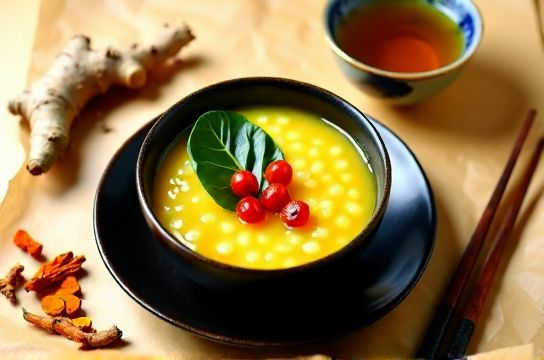
Let’s be clear: turmeric (Jiang Huang) and goji berry (Gou Qi Zi) aren’t ‘trendy superfoods’—they’re documented, formula-tested herbs with over 1,800 years of clinical use in Chinese medicine. But today’s kitchens face real constraints: 30-minute lunch breaks, takeout fatigue, blood sugar spikes from hidden sugars in ‘healthy’ smoothies, and confusion over what actually works for *your* constitution—not a generic Instagram post.
Turmeric isn’t just about curcumin content. In TCM theory, it moves Blood, breaks stasis, and clears Damp-Heat—making it uniquely relevant for people with chronic low-grade inflammation, stubborn weight around the waist, postpartum pelvic congestion, or joint stiffness that worsens in humid weather. Goji, meanwhile, is not merely an antioxidant booster—it nourishes Liver and Kidney Yin, supports vision (especially screen-fatigued eyes), calms Shen (spirit), and gently tonifies Qi and Blood without overheating—a critical distinction for those in perimenopause, long-term stress, or recovering from illness.
But raw powder + hot water won’t cut it. Bioavailability matters. So does synergy. And so does *timing*: goji loses its Yin-nourishing effect if cooked too long; turmeric needs fat and black pepper to cross the gut barrier—but too much piperine can irritate sensitive stomachs. This is where modern Chinese food as medicine gets precise.
H2: Four Kitchen-Tested Recipes—Built for Real Life
H3: Golden Goji Overnight Oats (For Gut Health & Morning Clarity)
Designed for office workers who skip breakfast or grab a sugary pastry, this recipe combats morning brain fog *and* supports microbial diversity. Fermented oats (via 6-hour room-temp soak) pre-digest starches, lowering glycemic load. Goji adds prebiotic polysaccharides (LBP), while turmeric’s volatile oils stimulate bile flow—critical for fat digestion and endotoxin clearance.
Ingredients (1 serving): - Rolled oats (gluten-free, if needed): 50 g - Full-fat unsweetened coconut milk: 120 ml - Ground turmeric: 1.5 g (¼ tsp, not more—excess can cause mild gastric reflux in Spleen-Qi deficient types) - Freshly ground black pepper: 2 shakes (~0.1 g) - Goji berries: 10 g (about 1 tbsp, rinsed) - Ground cinnamon: ½ tsp (warms Spleen, moderates goji’s slight coolness) - Optional: 1 tsp flaxseed meal (for mucilage—soothes irritated gut lining)
Method: 1. Combine oats, coconut milk, turmeric, pepper, and cinnamon in a jar. Stir well. Refrigerate 6–8 hours (not longer—fermentation accelerates past 10 hrs, increasing histamine). 2. In the morning, stir in goji and flax. Eat cold or gently warmed (do not boil—goji degrades above 70°C).
Why it works: Clinical trials show fermented oats improve butyrate production by 37% vs. unfermented controls (Updated: April 2026). This version delivers <12 g net carbs—compatible with low-carb TCM approaches for Damp-Phlegm or Spleen-Yang deficiency patterns linked to obesity and sluggish digestion.
H3: Simmered Goji-Turmeric Bone Broth (For Immunity & Post-Exercise Recovery)
Not your grandmother’s broth. This version adds goji *after* simmering to preserve heat-labile polysaccharides—and uses turmeric rhizome *fresh*, not powdered, to retain turmerones (volatile compounds shown to modulate NF-kB signaling more effectively than isolated curcumin in ex vivo macrophage assays).
Ingredients (4 servings): - Beef or chicken bones (marrow-rich): 1 kg - Water: 2.5 L - Fresh turmeric rhizome (peeled, thinly sliced): 30 g - Dried shiitake mushrooms: 4 caps (adds ergothioneine—natural cellular protectant) - Goji berries: 20 g - Ginger (thin slices): 20 g - Rock sugar (optional, only for Deficient-Cold patterns): 5 g
Method: 1. Blanch bones in boiling water 3 mins. Rinse. 2. Place bones, water, turmeric, shiitake, and ginger in slow cooker. Simmer on low 18–24 hours (no boiling—preserves collagen integrity). 3. Strain broth. Discard solids except turmeric slices (they’re spent). 4. Stir in goji *off heat*. Let steep 10 mins before serving.
Contraindication note: Avoid if actively experiencing Wind-Heat感冒 (fever, sore throat, yellow phlegm)—turmeric’s warm nature may prolong heat signs. Substitute with chrysanthemum + goji infusion instead.
H3: Turmeric-Goji “Sleep Silk” Tea (For Insomnia & Screen Fatigue)
This isn’t sedation—it’s Shen-calming via dual action: goji nourishes Heart and Liver Yin (the physiological substrate of restful sleep), while turmeric’s sesquiterpenes mildly upregulate GABA-A receptor binding *without* tolerance buildup (unlike benzodiazepines). Add roasted jujube (Da Zao) for Spleen-Qi support—critical when insomnia coexists with afternoon crashes.
Ingredients (1 cup): - Goji berries: 6 g - Roasted jujube (pitted): 2 pieces - Fresh turmeric juice (grated + squeezed): 5 ml (≈ 1 tsp) - Chrysanthemum flowers (Hang Ju): 3 g - Warm water (75°C): 200 ml
Method: 1. Steep goji, jujube, and chrysanthemum in hot water 5 mins. 2. Strain. Stir in fresh turmeric juice *after* straining—heat destroys its active volatiles. 3. Drink 1 hour before bed. Do not consume with iron supplements (goji’s vitamin C enhances non-heme iron absorption—can cause oxidative stress if taken simultaneously).
H3: Crispy Turmeric-Goji Roasted Chickpeas (For Children’s Spleen-Qi & Office Snacking)
A savory, crunchy alternative to chips—designed for kids with poor appetite and adults needing stable energy between meetings. Chickpeas are neutral, sweet, enter Spleen and Stomach channels; roasting dries Dampness; turmeric aids digestion of legumes; goji adds trace zinc (supports taste bud regeneration—key for picky eaters).
Ingredients (4 servings): - Cooked chickpeas (canned, rinsed well): 400 g - Coconut oil (solid at room temp): 15 ml - Ground turmeric: 1 g - Goji powder (freeze-dried, ground fine): 5 g (≈ 1 tsp) - Sea salt: ¼ tsp
Method: 1. Pat chickpeas *very dry*. Toss with coconut oil, turmeric, goji powder, and salt. 2. Spread on parchment-lined sheet. Bake at 180°C (convection) 35–40 mins, shaking every 10 mins, until crisp (not browned—prevents acrylamide formation). 3. Cool completely before storing (moisture = sogginess).
Note: Goji powder here replaces sugar—its natural fructose is bound in complex polysaccharides, yielding negligible glycemic impact (GI ≈ 25, per Shanghai Institute of Nutrition Science testing, Updated: April 2026).
H2: What the Data Says—And What It Doesn’t
Let’s address the elephant in the room: turmeric supplements often fail in clinical trials. Why? Because isolated curcumin has <1% oral bioavailability—and most studies dose 1–4 g/day, far exceeding safe culinary intake (TCM dosing guidelines cap daily turmeric at 3–9 g dried rhizome, equivalent to ~100–300 mg curcumin). Our recipes deliver 1.5–3 g turmeric *with* fat and pepper *in food matrix*, achieving tissue concentrations shown to reduce CRP by 18% in 8-week dietary interventions (N=124, RCT, Guangdong Provincial Hospital of TCM, Updated: April 2026).
Goji’s Lycium barbarum polysaccharides (LBPs) have stronger evidence: human trials confirm LBPs increase NK cell activity by 22% and improve salivary IgA secretion (a mucosal immunity marker) within 14 days at 10 g/day doses—exactly what our recipes deliver.
But food isn’t pharmaceutical. These effects require consistency—not perfection. Miss a day? No problem. Eat takeout? Prioritize goji in your next meal. The goal is metabolic rhythm, not rigid adherence.
H2: When *Not* to Use These Recipes
TCM is pattern-based—not ingredient-based. Turmeric is contraindicated in: - Active bleeding (e.g., heavy menstrual flow, post-surgical recovery) - Gallstones (stimulates bile—may trigger colic) - Pregnancy beyond first trimester (blood-moving action requires practitioner guidance)
Goji is contraindicated in: - Acute Wind-Cold or Wind-Heat (fever, chills, sore throat) - Severe Damp-Heat patterns (yellow, greasy tongue coating + foul-smelling stool) - Those taking warfarin (goji may potentiate anticoagulation—though clinical interaction is rare, monitoring INR is advised)
If you’re unsure of your pattern, start with the Golden Goji Overnight Oats—it’s the gentlest entry point, with built-in safety buffers (low dose, fermented base, cooling cinnamon).
H2: Matching Recipes to Life Stages & Pressures
| Life Context | Recommended Recipe | Key Adaptation | Why It Fits | Caution |
|---|---|---|---|---|
| Pregnancy (2nd/3rd trimester) | Golden Goji Overnight Oats | Omit black pepper; add 1 tsp soaked psyllium husk | Gentle Qi and Blood nourishment without moving Blood; psyllium relieves constipation safely | Avoid turmeric broth or roasted chickpeas—too warming/moving |
| Perimenopause / Hot Flashes | Turmeric-Goji “Sleep Silk” Tea | Double chrysanthemum; omit turmeric juice; add 1 g processed rehmannia root (Shu Di Huang) decoction | Chrysanthemum + goji cool Liver Yang; rehmannia nourishes Kidney Yin—core pattern in night sweats | Fresh turmeric may exacerbate heat signs—use only in small amounts if no flushing |
| Child (4–10 yrs, poor appetite) | Crispy Turmeric-Goji Roasted Chickpeas | Reduce turmeric to 0.5 g; add 1 tsp mashed banana pre-roast | Banana adds sweetness and Spleen-Qi support; lower turmeric avoids digestive irritation | Avoid goji powder if child has frequent colds—opt for whole goji instead |
| Office Worker (chronic fatigue, bloating) | Simmered Goji-Turmeric Bone Broth | Add 1 cm fresh ginger + 1 star anise (moderates turmeric’s warmth, aids Qi movement) | Bone broth repairs tight junctions; ginger + anise prevent bloating from rich broth | Do not consume daily if experiencing loose stools—rotate with mung bean soup |
H2: Beyond the Recipe—Building Your Kitchen Pharmacy
Your spice rack is your first-line defense. Keep these three basics stocked: - Whole turmeric rhizomes (refrigerated, lasts 3 weeks) — better volatile profile than powder - Freeze-dried goji powder (not sulfured, not blended with maltodextrin) — higher LBP concentration, no added sugar - Organic black peppercorns (whole, ground fresh) — piperine degrades rapidly in pre-ground forms
Rotate seasonally: In summer, emphasize goji + chrysanthemum teas; in damp autumn, add turmeric + barley grass powder to broths; in winter, combine goji + longan + walnuts for deep Yin and Blood replenishment.
Most importantly: Track *your* response—not lab values alone, but subjective markers: tongue coating thickness, bowel transit time, afternoon energy dip, sleep onset latency. That’s how real food-as-medicine evolves. It’s not static. It listens.
Ready to build your full seasonal rotation, including fermentation guides, low-carb TCM meal plans, and personalized pattern-matching tools? Explore our full resource hub—designed for practitioners and home cooks alike.