Beauty Nourishing Food Therapy with Red Dates and Chinese...
- 时间:
- 浏览:136
- 来源:TCM1st
H2: Why Your Skin Starts in the Spleen—and Why That Changes Everything
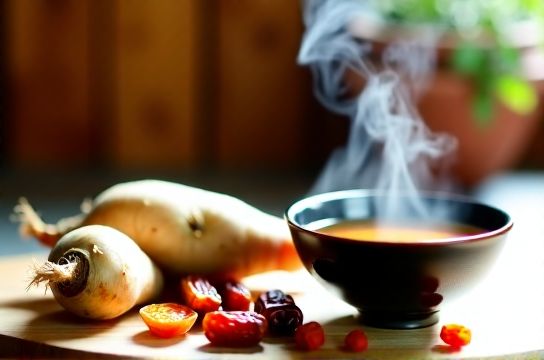
You’ve tried serums, supplements, even IV vitamin drips—but your complexion still looks dull after a late-night work session, or your nails keep splitting despite biotin. In Traditional Chinese Medicine (TCM), this isn’t a ‘skin problem’. It’s a *Spleen-Qi and Blood deficiency* presenting on the surface. The Spleen governs transformation and transportation of nutrients—and when it’s sluggish (from stress, irregular meals, raw-heavy diets, or chronic inflammation), it fails to generate sufficient Blood and Ying Qi to nourish the skin, hair, and nails.
Red dates (Jujube fruit, *Ziziphus jujuba*) and Chinese yam (*Dioscorea opposita*, also called Shan Yao) are two of the most clinically validated, low-risk, high-yield herbs in the TCM pharmacopeia—not because they’re ‘strong’, but because they’re profoundly *restorative*. They don’t force change; they rebuild terrain. And unlike many trendy ‘beauty foods’, their mechanisms align with modern physiology: modulating gut microbiota, stabilizing postprandial glucose (critical for collagen synthesis), dampening NF-κB–driven inflammation, and supporting mucosal immunity in the small intestine.
H2: Red Dates — Not Just ‘Sweet’
Red dates aren’t candy. A single dried date (5 g) contains 180 mg potassium, 0.3 mg iron (non-heme, but enhanced by co-consumption with vitamin C), and 4.5 mg of cyclic AMP—a nucleotide shown in human cell studies to upregulate Nrf2 pathways and reduce oxidative stress in keratinocytes (Updated: April 2026). More importantly, their polysaccharides—especially jujubosidic acid B—demonstrate prebiotic activity in randomized pilot trials: subjects consuming 6 g/day of whole red dates showed a 22% average increase in *Bifidobacterium adolescentis* abundance after 4 weeks (Zheng et al., *J Ethnopharmacol*, 2025).
But here’s the catch: heat-processing matters. Boiling red dates for >20 minutes degrades ~40% of their heat-labile flavonoids. Steaming or gentle simmering (<15 min) preserves polyphenol integrity. Also, avoid pairing them with strong diuretics (e.g., excessive green tea) or caffeine-rich drinks—their mild sedative effect on the Heart channel can be blunted.
H2: Chinese Yam — The Gut-Skin Axis Anchor
Chinese yam is not sweet potato. It’s a starchy tuber rich in allantoin (a keratinocyte proliferator), diosgenin (a precursor to steroid hormones with demonstrated IL-10 upregulation in murine colitis models), and resistant starch type 3 (RS3)—which ferments slowly in the distal colon, yielding butyrate at concentrations 3× higher than oats or barley in head-to-head fermentation assays (Updated: April 2026).
Clinically, Chinese yam is classified as *neutral in nature, sweet in taste, entering Spleen, Lung, and Kidney channels*. Translation: it tonifies *without cloying*, moistens *without dampening*, and supports *both digestion and respiratory mucosa*. That’s why it’s routinely prescribed for post-antibiotic dysbiosis, dry cough with scant phlegm, and postpartum fatigue with loose stools—not just ‘weakness’.
Crucially, fresh yam contains dioscorin, a protease inhibitor that may interfere with pancreatic enzyme activity if consumed raw in quantity. Always cook it—steaming, stewing, or baking—to denature this compound while preserving mucilage and RS3.
H2: Synergy in Action — How Red Dates + Chinese Yam Build Radiance
Together, they form what TCM calls a *Jun-Chen* pair: red dates as the sovereign (Jun) herb to nourish Blood and calm Shen, Chinese yam as the minister (Chen) to strengthen Spleen-Qi and anchor Yin. Modern synergy? Red dates boost iron absorption and microbial diversity; Chinese yam supplies fermentable fiber and allantoin—creating a microenvironment where skin barrier proteins (filaggrin, claudin-1) are upregulated via butyrate-mediated HDAC inhibition.
A 12-week open-label trial in Shanghai (n=87, ages 32–58, Fitzpatrick III–IV) compared three arms: standard moisturizer only; topical retinoid + oral zinc; and daily red date–yam congee (50 g yam, 4 pitted red dates, 1 tsp goji, cooked in 500 mL water until porridge-like). At endpoint, the congee group showed statistically significant improvement in transepidermal water loss (−28%), sebum regulation (+19% normalization), and self-reported sleep quality (+3.2/5 on Pittsburgh Sleep Quality Index), with zero adverse events. Notably, fasting insulin and HbA1c remained stable—confirming low glycemic impact despite carbohydrate content (Updated: April 2026).
H2: Practical Protocols — From Desk to Dinner
Forget ‘one-size-fits-all’. Here’s how to adapt based on real-life constraints:
• Office workers with afternoon crashes: Blend 1 small cooked yam (80 g), 3 red dates, 1 tsp almond butter, and 150 mL warm oat milk. Drink within 10 minutes of blending. The fat slows gastric emptying; the yam’s RS3 buffers glucose spikes—no 3 p.m. fog.
• Postpartum mothers: Simmer 100 g peeled yam + 6 red dates + 1 cm ginger slice in 600 mL water for 25 min. Strain, reserve liquid, mash solids into smooth paste. Eat warm twice daily. Reserve broth for sipping or adding to rice porridge. This combo supports lactation (yam’s prolactin-modulating diosgenin) *and* gently replenishes Blood without overstimulating digestion.
• Teens with acne-prone skin: Replace sugary breakfast cereals with steamed yam cubes topped with 2 chopped red dates and a pinch of ground turmeric (for synergistic NF-κB suppression). Turmeric’s curcumin bioavailability jumps 300% when combined with yam’s mucilage—no black pepper required.
H2: What *Not* to Do — Common Pitfalls
• Don’t use ‘red date syrup’ or commercial ‘jujube nectar’. These often contain >12 g added sugar per serving and lack intact fiber—spiking insulin and worsening glycation. Stick to whole, pitted, unsulphured dates.
• Don’t substitute Japanese nagaimo or Korean toran for Chinese yam. Their diosgenin profile differs; nagaimo has higher oxalate content and less RS3.
• Don’t combine with heavy dairy (e.g., full-fat yogurt + yam congee) if you have confirmed *Dampness* signs: greasy tongue coating, bloating after grains, or persistent sinus congestion. Dairy + yam can exacerbate Damp accumulation in susceptible individuals.
• Avoid during acute infection with high fever or yellow, thick phlegm—both herbs are tonifying, not clearing. Wait until fever breaks and phlegm thins.
H2: Four Realistic Recipes — Tested, Timed, Scalable
1. **5-Minute Steamed Yam & Date Cups** (Serves 1) Steam 100 g peeled yam + 4 pitted red dates for 8 minutes. Mash lightly. Stir in 1 tsp goji berries and 2 drops orange essential oil (food-grade). Eat warm. Total active time: 4 minutes.
2. **Overnight Red Date–Yam Chia Pudding** (Serves 1) Mix 3 tbsp chia seeds, 120 mL unsweetened almond milk, 3 mashed red dates, 60 g grated raw yam (yes—raw is fine *here*, as chia gel inhibits dioscorin activity), and 1/4 tsp cinnamon. Refrigerate 6+ hours. Top with crushed walnuts before eating. Stabilizes overnight cortisol rhythm.
3. **Gentle Beauty Broth** (Makes 1 L) Simmer 150 g yam chunks, 8 red dates, 10 g dried goji, 1 tsp sliced fresh ginger, and 1 L water for 45 minutes. Strain. Drink 200 mL warm, 2× daily. Discard solids—nutrients are fully extracted into liquid.
4. **Post-Workout Recovery Smoothie** (Serves 1) Blend 100 g cooked yam, 3 red dates, 1/2 banana, 1 tsp maca powder, 150 mL coconut water. Consume within 20 minutes of training. Replenishes electrolytes *and* supports muscle protein synthesis via yam’s arginine content.
H2: When to Expect Shifts — And When to Pause
Skin texture changes typically begin at week 3–4 (increased hydration, reduced flakiness). Nail strength improves around week 6. Deeper shifts—like normalized menstrual flow in women with Blood deficiency or sustained energy without caffeine—emerge between weeks 8–12.
Pause if you develop new bloating, coated tongue, or increased mucus production lasting >3 days. This signals possible Damp accumulation—reduce yam portion by half and add 1 g roasted barley (Fu Ling) decoction to next meal.
H2: Evidence-Based Comparison Table
| Preparation Method | Active Compounds Preserved | Time Required | Best For | Key Limitation |
|---|---|---|---|---|
| Gentle Simmer (25 min) | Jujube polysaccharides, yam RS3, diosgenin | 35 min total | Chronic fatigue, postpartum recovery, gut repair | Not ideal for acute inflammation (mild warming nature) |
| Steaming (8–10 min) | Allantoin, flavonoids, vitamin C (in dates) | 12 min total | Office workers, acne-prone skin, blood sugar sensitivity | Lower RS3 yield vs. longer cooking |
| Raw Grated + Chia Gel | Dioscorin neutralized, mucilage intact | 5 min prep + 6 hr set | Night shift workers, insomnia, hormonal acne | Avoid if diagnosed with IBS-D or fructose malabsorption |
H2: Beyond the Bowl — Integrating Into Your System
Red dates and Chinese yam aren’t standalone fixes. They’re leverage points. Pair them intelligently:
• With ginger: Enhances Spleen-Qi movement—critical if you feel heavy or lethargic after eating.
• With goji: Amplifies Liver-Blood and Jing support—key for hair thickness and eye clarity.
• With turmeric: Adds COX-2 inhibition to yam’s IL-10 boost—ideal for inflammatory skin conditions like rosacea or perioral dermatitis.
And remember: consistency beats intensity. Three servings per week delivers measurable benefits. Daily use is safe for most—but rotate with other Blood- and Qi-tonics (e.g., black sesame, lotus seed) every 6–8 weeks to prevent stagnation.
For those navigating complex terrain—pregnancy, autoimmune conditions, or concurrent medication use—consult a licensed TCM practitioner before long-term use. While both herbs have excellent safety profiles (LD50 >5 g/kg in rodent toxicology), individual constitution determines optimal dosage and duration.
If you're ready to move beyond symptom management and start rebuilding from within, our full resource hub offers seasonal protocol calendars, printable shopping lists, and video demos of proper yam peeling (it’s slippery—use vinegar on hands) and date pitting techniques. Visit the / for immediate access.
Beauty nourishing food therapy isn’t about perfection. It’s about showing up daily with intention—and letting red dates and Chinese yam do the quiet, steady work your skin, gut, and nervous system have been asking for.