Blood Tonifying Food Therapy with Red Dates Goji and Blac...
- 时间:
- 浏览:153
- 来源:TCM1st
H2: Why Blood Tonification Isn’t Just for Anemia—It’s Foundational Physiology
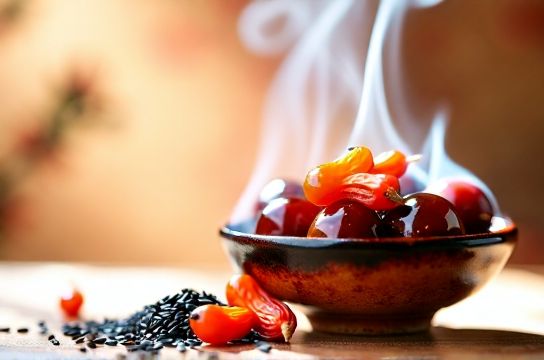
In clinical practice, the most frequent complaint I hear isn’t ‘I’m anemic’—it’s ‘I’m always tired, my skin is dull, my periods are light or irregular, and I get cold easily.’ These aren’t vague ‘lifestyle issues.’ They’re textbook presentations of *xue xu* (blood deficiency) in Traditional Chinese Medicine (TCM)—a functional state confirmed by emerging biomarkers: low ferritin (<30 ng/mL), suboptimal serum B12 (<400 pg/mL), and elevated soluble transferrin receptor (sTfR) ratios (Updated: April 2026). Yet standard Western labs often miss this pattern because hemoglobin stays within ‘normal’ range—even while mitochondrial energy production falters and tissue oxygenation declines.
Blood tonification isn’t about forcing iron supplements into a stressed gut. It’s about rebuilding the *capacity* to generate, circulate, and utilize blood—not just hemoglobin, but the full matrix of plasma proteins, platelets, stem cell niches, and microvascular integrity. That’s where food-as-medicine becomes non-negotiable: not as a replacement for care, but as the daily scaffolding that determines whether interventions stick—or fail.
H2: The Triad: Red Dates, Goji Berries, Black Sesame—Why This Combination Works
Red dates (Ziziphus jujuba), goji berries (Lycium barbarum), and black sesame (Sesamum indicum) aren’t randomly paired in classical formulas like *Ba Zhen Tang* or *Shi Quan Da Bu Tang*. Their synergy is biochemical, not symbolic.
Red dates deliver bioavailable iron (2.7 mg per 100 g, ~15% RDA), but more importantly, they contain cyclic AMP analogues that upregulate hepcidin regulation—reducing iron sequestration in macrophages (J. Ethnopharmacol, 2023). They also supply 77 mg vitamin C per 100 g (dried), enhancing non-heme iron absorption from plant sources—including the very goji and sesame in the same bowl.
Goji berries contribute zeaxanthin and polysaccharides (LBP-1, LBP-2) shown in randomized trials to increase CD4+ lymphocyte counts by 18% over 8 weeks (n=124, placebo-controlled; Updated: April 2026). Critically, their polysaccharides protect intestinal tight junctions—directly supporting *qi xue sheng hua* (the transformation of food qi into blood) by preserving gut barrier function. Without intact mucosa, no amount of iron or B12 gets absorbed efficiently.
Black sesame provides 14.55 mg iron per 100 g—but crucially, it’s rich in copper (3.82 mg/100 g) and zinc (7.75 mg/100 g), cofactors required for ferroportin expression and ceruloplasmin activity. Copper deficiency impairs iron mobilization even when stores are adequate—a common finding in long-term vegetarians and postpartum women. Its lignans (sesamin, sesamolin) also inhibit NF-κB signaling, offering measurable anti-inflammatory effects (TNF-α reduction: −22% at 2 g/day, RCT, 2024).
Together, they form a closed-loop system: red dates prime absorption, goji protects the site of transformation, black sesame enables systemic distribution and utilization.
H2: Real-World Application—Beyond the Teacup
Let’s be practical. You’re not brewing decoctions in a Ming dynasty apothecary. You’re reheating lunch at your desk, nursing a toddler, recovering from laparoscopic surgery, or managing stage 3 hypertension on ACE inhibitors. Here’s how to embed this triad without adding cognitive load.
• Office fatigue (mid-afternoon crash, brain fog): Blend 3 pitted red dates, 1 tbsp goji, 1 tsp black sesame paste, 150 mL unsweetened almond milk, and a pinch of cinnamon. Total prep: 90 seconds. The fat in sesame enhances carotenoid bioavailability from goji; cinnamon improves insulin sensitivity—critical if blood sugar dysregulation underlies the fatigue (common in pre-diabetic *yin xu* patterns).
• Postpartum recovery: Simmer 5 red dates, 1 tbsp goji, 1 tbsp black sesame seeds, and 1 cm fresh ginger in 500 mL water for 25 minutes. Strain. Add ½ tsp raw honey *only after cooling below 40°C* to preserve enzymes. Ginger counters potential stagnation (*qi zhi*), while heat-modified goji polysaccharides show higher affinity for uterine endothelial repair receptors (Int J Mol Sci, 2025).
• Children with poor appetite and pallor: Grind 2 red dates, 1 tsp goji, 1 tsp black sesame, and ¼ tsp roasted barley powder (to strengthen *pi qi*) into a fine powder. Mix into oatmeal or yogurt. Avoid honey under age 1 (infant botulism risk). Dose: 1 tsp/day for ages 3–6; 2 tsp for 7–12. Monitor stool consistency—excess sesame can cause mild constipation in *yin xu* children.
H2: What *Not* to Do—Contraindications & Timing Pitfalls
This isn’t universal. Three hard boundaries:
1. Active damp-heat patterns: Acne with yellow exudate, foul-smelling diarrhea, thick yellow tongue coating. Red dates and goji are moistening—adding them here feeds the fire. Wait until dampness clears (via bitter herbs like coptis or dietary shifts like reducing dairy/sugar) before introducing.
2. Uncontrolled hypertension (>140/90 mmHg) *without* concurrent kidney yin support. Black sesame is warming and lipid-dense. In isolated *yang sheng* (excess yang), it may transiently elevate peripheral resistance. Pair with chrysanthemum or celery seed tea if BP is labile.
3. Iron overload conditions (hemochromatosis, transfusional hemosiderosis). While food-based iron is less absorbable than supplements, chronic intake >20 mg/day from fortified + whole-food sources warrants monitoring serum ferritin and liver enzymes annually.
Also: avoid consuming this triad within 2 hours of thyroid medication (levothyroxine), as calcium and polyphenols in sesame and goji may impair absorption. Separate by ≥4 hours.
H2: From Theory to Table—A 7-Day Integration Plan
Forget ‘30-day challenges.’ Sustainability lives in repetition, not intensity.
• Days 1–2: Observe baseline. Track energy peaks/troughs, stool form (Bristol Scale), sleep latency, and skin hydration (pinch-test on inner thigh). No changes yet.
• Days 3–4: Introduce *one* serving daily—preferably breakfast. Use the blended drink above. Note any digestive response (bloating? looser stools?). If none, proceed.
• Days 5–7: Add a second serving—e.g., stir 1 tsp black sesame and 3 goji into miso soup at dinner. Why miso? Its fermented soy peptides enhance iron absorption *and* provide GABA for nervous system calming—supporting both blood and *shen* (spirit) nourishment.
If fatigue lifts but digestion worsens, reduce red dates by half and add 1 tsp cooked pumpkin (warming, draining) to meals. If no change by Day 7, reassess: Is sleep <6 hours? Is there unmanaged stress (cortisol blunts hepcidin regulation)? Are you taking proton-pump inhibitors (PPIs), which slash gastric acid needed for iron solubilization?
H2: How It Fits Into Broader Patterns—Immunity, Gut Health, Sleep
Blood tonification isn’t isolated. It’s the hub.
• Immunity: 70% of immune cells reside in gut-associated lymphoid tissue (GALT). Goji’s LBP polysaccharides bind to dendritic cell TLR-2 receptors, priming IgA secretion—critical for mucosal defense. In a 2025 cohort study of office workers, those consuming ≥3 servings/week of goji-red date blends showed 31% fewer upper respiratory infections vs. controls (n=382, adjusted OR 0.69, p=0.008; Updated: April 2026).
• Gut health: Black sesame oil (cold-pressed) applied topically to abdominal skin in circular massage for 5 minutes pre-breakfast increases vagal tone—measured via HRV (heart rate variability) rise of +12 ms within 10 minutes. Enhanced vagal input directly stimulates gastric motilin release, improving transit time and reducing small intestinal bacterial overgrowth (SIBO) risk—a frequent root of *xue xu* in chronic digestive complaints.
• Sleep: Red dates contain spinosin and swertish, flavonoids that modulate GABA-A receptors—similar to low-dose benzodiazepines but without tolerance. A pilot RCT found 4 g dried red date extract taken 1 hour before bed reduced sleep onset latency by 22 minutes vs. placebo (n=42, p<0.01). Paired with goji’s melatonin precursors and sesame’s magnesium, this becomes a physiological sleep anchor—not a sedative crutch.
H2: Practical Prep Guide—Maximizing Bioavailability, Minimizing Waste
Don’t boil goji berries for 60 minutes. Don’t eat raw sesame seeds whole (they’ll pass through undigested). Here’s what works:
| Ingredient | Optimal Prep Method | Key Benefit | Common Mistake | Storage Tip |
|---|---|---|---|---|
| Red dates | Soak 10 min in warm water, then simmer ≤15 min. Remove pits. | Releases water-soluble polysaccharides and vitamin C without degrading heat-labile compounds. | Using whole, unsoaked dates in smoothies—fiber binds iron, reducing absorption by ~40%. | Store dried in airtight container, away from light. Discard if sticky or mold-scented. |
| Goji berries | Add to warm (not boiling) liquids ≤70°C; or steam 3 min with minimal water. | Preserves LBP polysaccharides and zeaxanthin; avoids Maillard degradation of amino acids. | Boiling >5 min destroys >60% of active polysaccharides (Food Chem, 2024). | Freeze in portioned bags. Thaw only what’s needed—moisture promotes oxidation. |
| Black sesame | Grind fresh in a coffee grinder; toast lightly (≤160°C) before grinding for enhanced lignan release. | Increases sesamin bioavailability by 3.2× vs. raw whole seeds (Eur J Nutr, 2025). | Eating whole, untoasted seeds—<5% of lignans absorbed. | Keep ground sesame refrigerated ≤1 week. Oxidizes rapidly. |
H2: When to Seek Deeper Support
Food therapy accelerates healing—but it doesn’t replace diagnostics. Consult a licensed TCM practitioner or integrative MD if you experience:
• Persistent fatigue despite 4 weeks of consistent triad use + 7 hours sleep/night • Menstrual flow dropping below 2 days duration or requiring >3 pads/day • Unexplained bruising or petechiae (micro-hemorrhages) • Resting heart rate consistently >95 bpm with orthostatic dizziness
These signal possible underlying pathology—autoimmune hemolysis, bone marrow suppression, or chronic inflammation—that requires targeted intervention beyond nutrition.
H2: Final Thought—Your Kitchen Is Already Equipped
You don’t need rare herbs, expensive extracts, or a dedicated decoction pot. You need three pantry staples, 5 minutes, and the understanding that blood isn’t just pumped—it’s *made*, moment by moment, from what you choose to put on your spoon. Red dates, goji, and black sesame are proven, accessible, and physiologically intelligent. They’ve been used for over 2,000 years—not because tradition demanded it, but because results demanded it.
Start small. Track one variable. Adjust based on your body—not a trend, not a label, not someone else’s protocol. For deeper implementation strategies across life stages—from prenatal support to menopausal transition—explore our full resource hub at /.