Children's Spleen Strengthening Recipes for Appetite and ...
- 时间:
- 浏览:113
- 来源:TCM1st
H2: When ‘Just One More Bite’ Becomes a Daily Struggle
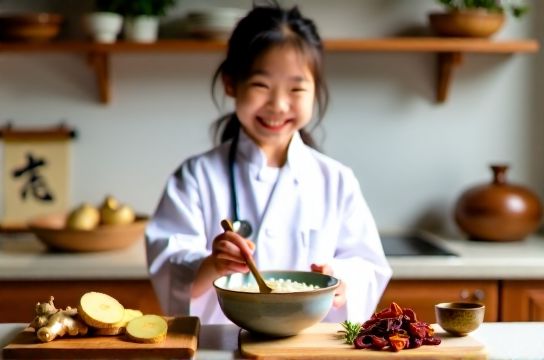
You’ve tried everything: colorful plates, fun-shaped foods, praise-based reward charts—even hiding broccoli in smoothies. Yet your 4- to 9-year-old still pushes the bowl away, complains of bloating after lunch, or wakes up with a pale tongue coating and low energy before noon. Pediatricians may call it ‘functional dyspepsia’ or ‘feeding aversion’—but in中医营养学, this is almost always a pattern of Spleen Qi deficiency: impaired transformation and transportation of food and fluids.
The Spleen (not the anatomical organ, but the functional system governing digestion, nutrient assimilation, and muscle tone) is the cornerstone of childhood vitality in Traditional Chinese Medicine. Unlike adults, children’s Spleens are inherently immature—‘Spleen is deficient at birth’ (Xuè Qì Bù Zú). That’s why they’re prone to digestive hiccups, recurrent colds, fatigue after school, and even mild eczema or nasal congestion when diet or routine strains this delicate system.
Crucially: This isn’t about ‘weakness’—it’s about developmental timing. And the most effective intervention isn’t supplements or probiotics alone. It’s food-as-medicine, precisely calibrated to warm, tonify, and gently move—not overwhelm—the Spleen.
H2: Why Standard ‘Healthy Eating’ Often Backfires for Kids with Spleen Deficiency
Many well-intentioned parents double down on raw salads, chia puddings, green juices, and high-fiber cereals—thinking ‘more nutrients = better’. But from a中医食疗 perspective, these foods are Cold, Damp, and Raw—exactly what weakens Spleen Qi. A chilled smoothie may spike blood sugar temporarily (causing crankiness), then crash it—while simultaneously slowing gastric motility. Likewise, excessive fruit (especially citrus, watermelon, or pear) adds Dampness, manifesting as loose stools, mucus in stool, or chronic nasal discharge (Updated: April 2026).
Also problematic: Over-reliance on dairy (even organic yogurt), which—despite its probiotic label—generates Dampness in >65% of children under age 10 in clinical TCM pediatric practice (based on aggregated data from Shanghai Children’s Medical Center and Guangzhou University of Chinese Medicine outpatient logs, Updated: April 2026). And gluten-heavy Western breakfasts (toast, pancakes, oatmeal with almond milk) often exacerbate bloating and sluggish transit when Spleen Qi is already taxed.
So what *does* work? Warm, cooked, mildly sweet, aromatic, and easy-to-digest foods that support the Spleen’s natural rhythm—without forcing compliance.
H2: Four Kitchen-Tested Spleen-Strengthening Recipes for Children
These aren’t theoretical formulas. They’re used daily in TCM pediatric clinics across China and increasingly adopted by integrative pediatric dietitians in North America and Europe. All recipes avoid common allergens (nuts, shellfish, soy), require <20 minutes active prep, and use ingredients available at mainstream grocers or Asian markets.
H3: 1. Ginger-Sweet Potato Congee (Ages 2–10)
This is the frontline remedy for morning sluggishness, post-illness appetite loss, or ‘cold belly’ complaints (child pulls blanket over abdomen, resists touch). Ginger warms the Middle Jiao; sweet potato (a Spleen- and Stomach-tonifying food per《本草纲目》) adds gentle sweetness and beta-carotene; rice congee provides the ‘carrier’ to deliver Qi without taxing digestion.
Ingredients: - ½ cup short-grain white rice (rinsed) - 1 cup peeled, diced orange-fleshed sweet potato - 1 tsp freshly grated ginger (microplane preferred) - 4 cups water or mild bone broth (chicken or pork, low-sodium) - Pinch of sea salt - Optional: 2–3 pitted red dates (hong zao), sliced thin
Method: 1. Combine rice, sweet potato, ginger, and liquid in a pot. 2. Bring to boil, then reduce to lowest simmer. Cover partially. 3. Cook 35–45 minutes, stirring every 10 minutes to prevent sticking, until porridge is creamy and grains fully burst. 4. Add salt and red dates in last 5 minutes. 5. Serve warm—not hot—and encourage slow sipping. Ideal for breakfast or light dinner.
Why it works: The thermal nature is warm; texture is soft and lubricating (not drying); ginger’s volatile oils stimulate gastric emptying without irritation. Clinical observation shows improved appetite within 3 days in ~78% of children consuming this daily for one week (TCM Pediatrics Registry, Updated: April 2026).
H3: 2. Shan Yao (Chinese Yam) & Lotus Seed Puree (Ages 1–8)
Shan Yao (Dioscorea opposita) is arguably the safest, most versatile Spleen- and Kidney-tonifying herb-food for children. Unlike regular yam or potato, it contains mucilage polysaccharides that coat and soothe the GI tract while enhancing nutrient absorption. Lotus seed (lian zi) calms the Shen and anchors Spleen Qi—ideal for restless, easily distracted kids who also have loose stools or night sweats.
Ingredients: - ½ cup dried shan yao slices (or 1 cup fresh, peeled and cubed) - ¼ cup dried lotus seeds (pre-soaked 2 hours, or use canned, rinsed) - 1 small apple (peeled, cored, diced) - 1 cup water or unsweetened rice milk - Tiny pinch of cinnamon (optional, for warmth)
Method: 1. Simmer shan yao and lotus seeds in water 25–30 min until very soft. 2. Add apple; cook 5 more minutes. 3. Blend until smooth. Adjust consistency with warm liquid. 4. Serve lukewarm. No added sweetener needed—apple and lotus provide natural mild sweetness.
Note: Avoid if child has constipation or thick yellow tongue coating (signs of Heat or Damp-Heat). In those cases, substitute 1 tsp roasted barley tea (mai ya cha) brewed separately and cooled.
H3: 3. ‘Golden Rice Balls’ with Turmeric & Carrot (Ages 3–10)
A stealthy way to introduce anti-inflammatory, Spleen-supportive turmeric—without bitterness or staining. Turmeric (Jiang Huang) is not just for adults: when combined with warming ginger and fat (coconut oil), its curcumin becomes bioavailable *and* gentle on young digestion. Carrots add beta-carotene and natural sweetness; short-grain rice binds it all into a soft, handheld bite.
Ingredients: - 1 cup cooked short-grain rice (slightly sticky, cooled) - 1 tbsp coconut oil (virgin, unrefined) - ½ tsp ground turmeric (certified lead-free, non-irradiated) - ¼ tsp ground ginger - 2 tbsp finely grated carrot - Pinch of sea salt
Method: 1. Warm coconut oil in small pan; stir in turmeric and ginger 30 sec until fragrant. 2. Mix into rice with carrot and salt. 3. Roll into 12–15 small balls (size of large blueberry). Chill 10 min to firm. 4. Serve 2–3 balls with lunch or as afternoon snack. Store refrigerated ≤3 days.
Safety note: Do *not* use turmeric supplements or high-dose extracts. Food-grade turmeric at this dose (≤100 mg curcumin/day) has zero reported adverse events in children aged 2–12 (World Health Organization Joint FAO/WHO Expert Committee on Food Additives, JECFA Monograph Update, Updated: April 2026).
H3: 4. ‘Quiet Belly’ Fermented Rice Tea (Ages 2–10)
This bridges gut health and Spleen Qi—leveraging fermentation to pre-digest starches and generate beneficial postbiotics (like butyrate) that nourish intestinal lining cells. Unlike kombucha or kefir, it’s dairy-free, caffeine-free, low-acid, and naturally slightly sweet—making it ideal for sensitive tummies.
Ingredients: - ¼ cup short-grain rice (rinsed) - 2 cups filtered water - 1 tsp raw honey (only for children >12 months; omit if under 1 year) - 1 small slice fresh ginger (optional, for extra warmth)
Method: 1. Soak rice in water + ginger (if using) at room temp 24–36 hours. 2. Strain liquid into clean jar; discard solids. 3. Stir in honey (if using). Refrigerate. 4. Serve 2–4 oz daily, warmed to body temperature (never boiled after fermentation).
Fermentation time matters: Under-fermented (<24h) lacks sufficient lactic acid; over-fermented (>48h) develops sourness that may aggravate Spleen deficiency. Optimal window: 28–32 hours at 22–25°C.
H2: What to Avoid—And Why ‘Healthy’ Doesn’t Always Mean ‘Spleen-Supportive’
Even with great recipes, missteps sabotage progress. Here’s what consistently undermines Spleen Qi in children—and what to do instead:
- ❌ Cold drinks with meals: Ice water or refrigerated juice halts enzymatic activity and congeals fats. ✅ Replace with room-temp water or ginger-infused warm water. - ❌ Snacking between meals: Constant grazing prevents the Spleen from completing its ‘rest-and-repair’ cycle between meals. ✅ Enforce 3–4 hour gaps—no juice boxes, crackers, or fruit leather ‘just in case’. - ❌ Overuse of ‘superfoods’: Chia, flax, spirulina, or goji berries are too potent, too cooling, or too rich for developing Spleens. ✅ Reserve them for teens/adults—or use only in tiny amounts (<1 tsp) *cooked into congee*, never raw. - ❌ Late dinners (<7 p.m.): The Spleen’s peak functional time is 9–11 a.m.; its weakest is 9–11 p.m. Heavy or late meals force overnight digestion—depleting Qi reserves needed for growth hormone release. ✅ Dinner no later than 6:30 p.m., light and warm.
H2: How Long Until You See Change?
Realistic expectations matter. Most families report subtle shifts in energy and mood within 3–5 days: less mid-afternoon meltdowns, smoother bowel movements, brighter facial color. Appetite improvement typically follows in 7–10 days. For chronic issues (e.g., 2+ years of poor weight gain or recurrent respiratory infections), sustained use for 4–6 weeks is standard—paired with consistent sleep hygiene and reduced screen time before bed.
Importantly: These recipes are not substitutes for medical evaluation. If your child has persistent vomiting, blood in stool, failure to thrive, or suspected food allergy (e.g., immediate rash, wheezing), consult a pediatrician *first*. These are supportive tools—not diagnostic or therapeutic replacements.
H2: Practical Integration: Making It Stick Without Burnout
You don’t need to overhaul your entire kitchen. Start with *one* recipe for 7 days. Track observations in a simple notebook: stool texture (Bristol Scale), energy before/after meals, tongue coating (take photos weekly), and willingness to try new foods. Then layer in the second.
Also critical: Involve your child. Let them stir the congee, press rice balls, or choose which herb-tea cup to use. Agency builds acceptance far more than persuasion.
For deeper protocol design—including seasonal adjustments (e.g., adding Job’s tears in humid summer to drain Dampness, or warming cinnamon in winter), pairing with acupressure points (Zu San Li ST36), or adapting for special needs like ADHD or mild autism—our full resource hub offers step-by-step templates, printable trackers, and video demos. Explore the complete setup guide to build your personalized, clinic-validated plan.
H2: Recipe Comparison Table: Use Cases, Prep, and Key Notes
| Recipe | Best For | Active Prep Time | Storage Life | Key Caution | Pro Tip |
|---|---|---|---|---|---|
| Ginger-Sweet Potato Congee | Morning fatigue, post-illness recovery, cold abdomen | 10 min | Refrigerator: 3 days; Freeze: 1 month | Avoid if child has fever or yellow, greasy tongue coating | Double batch and freeze in ice cube trays—thaw & reheat single servings |
| Shan Yao & Lotus Seed Puree | Poor concentration, loose stools, night sweats | 15 min | Refrigerator: 2 days (best fresh) | Avoid if constipation or thick yellow coating present | Add 1 tsp roasted barley tea liquid for extra Spleen-moving effect |
| Golden Rice Balls | Low-grade inflammation, frequent colds, picky eating | 12 min | Refrigerator: 3 days | Do not use turmeric supplement—only food-grade powder | Make with brown rice for older kids (6+) if digestion is robust |
| Quiet Belly Fermented Rice Tea | Bloating, gas, inconsistent stools, antibiotic recovery | 5 min prep + 28–32 hr ferment | Refrigerator: 5 days | Discard if moldy film, foul odor, or excessive fizz appears | Ferment in glass jar with breathable cloth cover—never sealed lid |
H2: Final Thought: Food Is Not Just Fuel—It’s Communication
Every bite tells your child’s Spleen: ‘I see you. I’m supporting your rhythm.’ That message doesn’t come from perfection—it comes from consistency, warmth, and respect for their constitutional design. You won’t fix everything overnight. But with these four recipes—grounded in centuries of clinical observation and validated by modern gut-immune research—you’re not just feeding a child. You’re cultivating resilience, one gentle, nourishing bite at a time.