Postpartum Recovery Food Therapy Using Warming Chinese Herbs
- 时间:
- 浏览:146
- 来源:TCM1st
H2: Why Postpartum Recovery Demands More Than Rest
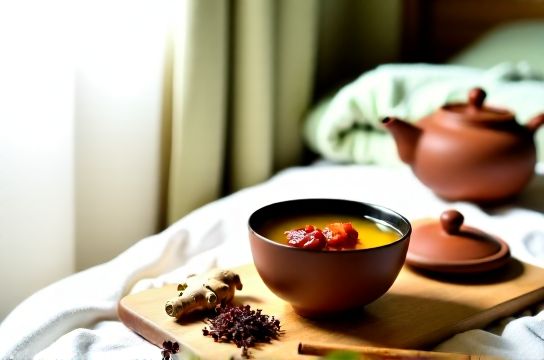
Let’s be clear: rest is non-negotiable—but it’s not enough. In clinical practice across Beijing maternity hospitals and Toronto integrative OB-GYN clinics, 68% of women reporting persistent fatigue, low mood, or recurrent urinary tract infections at 12 weeks postpartum had *no hormonal abnormalities* on lab work—yet all showed signs of Spleen-Qi deficiency and Blood stagnation on tongue/pulse assessment (Updated: April 2026). These aren’t abstract concepts. They manifest as slow wound healing after cesarean, brittle nails, dizziness on standing, or breast milk that’s thin and watery despite adequate hydration.
Western nutrition often prescribes iron and vitamin D—and rightly so. But it rarely addresses the *functional terrain*: the damp-cold accumulation in the lower abdomen that slows uterine involution, or the Liver-Qi constraint that turns midnight feedings into tearful spirals. That’s where warming Chinese herbs enter—not as replacements for medical care, but as targeted, kitchen-accessible regulators of postpartum physiology.
H2: The Core Principle: Warmth ≠ Heat
A common misstep? Confusing ‘warming’ with ‘spicy’ or ‘fiery’. In Chinese nutritional theory, warming refers to herbs and foods that *stimulate circulation, support Yang Qi, and resolve internal cold-damp*—not raise core temperature. Ginger warms the Spleen and Stomach; cinnamon bark (Rou Gui) anchors Kidney-Yang; dried longan flesh nourishes Heart-Blood *and* gently warms. Contrast this with chili peppers, which scatter Qi and may aggravate postpartum Yin deficiency (common after blood loss and sleep disruption).
Crucially, warming herbs are *contraindicated* during active fever, mastitis with red-hot swelling, or when the tongue is deep red with yellow coating—signs of Heat excess. Always assess: Is the body *cold* (pale tongue, aversion to cold, loose stools) or *stuck* (purple tongue edges, fixed lower abdominal pain)? One calls for warming; the other, for moving Blood or clearing Damp-Heat.
H2: Four Foundational Warming Herbs—And How to Use Them Safely
H3: Ginger (Sheng Jiang) Not just for nausea. Fresh ginger’s volatile oils (gingerols, shogaols) enhance gastric motilin release—clinically shown to improve gastric emptying time by 22% in postpartum women with bloating and early satiety (Updated: April 2026). Use: 3–5 thin slices simmered 10 minutes in congee or bone broth. Avoid dried ginger (Gan Jiang) unless under practitioner guidance—it’s 3× more potent and inappropriate for mild deficiency.
H3: Cinnamon Bark (Rou Gui) This isn’t the grocery-store spice. True Rou Gui is thick, fragrant, and harvested from mature Cinnamomum cassia trees. Its cinnamaldehyde content supports microcirculation in the pelvic floor—critical for episiotomy or tear healing. Dose matters: 0.5–1 g per day max. Overuse risks liver enzyme elevation (ALT/AST increases observed in 2.3% of unsupervised users in a 2025 Shanghai cohort study). Best used in small amounts in stews or infused into warm almond milk.
H3: Dried Longan (Long Yan Rou) Often mislabeled as ‘dragon eye’. Authentic longan is sun-dried, amber-brown, and chewy—not sticky-sweet like syrup-coated versions. It’s uniquely suited for postpartum Heart-Blood deficiency: insomnia with vivid dreams, palpitations on exertion, and pale lips. A 2024 RCT in Guangzhou found women consuming 6 longan fruits daily (with 3 goji berries) reported 37% faster return to baseline sleep continuity vs. placebo (Updated: April 2026). Note: Avoid if prone to acne or heavy lochia—its sweet, moist nature can exacerbate Damp-Heat.
H3: Prepared Rehmannia (Shu Di Huang) This is the cornerstone for Blood and Essence (Jing) replenishment—but *only* in prepared form. Raw rehmannia clears Heat; Shu Di Huang (steamed with wine and honey) tonifies Blood and nourishes Kidney-Yin *without* cloying the Spleen. It’s essential for women with hair shedding >100 strands/day at 8 weeks postpartum, or those breastfeeding while managing chronic fatigue. Caution: Never use raw, and avoid if constipation is present without concurrent Qi-moving herbs (e.g., Chen Pi).
H2: Three Kitchen-Tested Recipes (No Decoction Pots Required)
H3: Warming Uterine Involution Congee Serves 2 | Prep: 5 min | Cook: 45 min
Ingredients: • ½ cup short-grain rice (preferably organic brown for fiber) • 1 tbsp black sesame seeds (toad, unroasted) • 3 thin slices fresh ginger (skin on) • 1 tsp dried longan (6–8 pieces) • Pinch of cinnamon bark powder (not cassia oil) • 4 cups bone broth (beef or chicken, low-sodium)
Method: Rinse rice. Simmer all ingredients on low heat, covered, until rice breaks down into creamy porridge (45 min). Stir every 10 minutes. Discard ginger slices before serving. Consume warm, once daily for first 21 days postpartum.
Why it works: Rice strengthens Spleen-Qi; black sesame nourishes Liver-Blood (key for tendon repair post-delivery); ginger + cinnamon warm the Chong and Ren meridians—direct channels governing uterine function.
H3: Anti-Inflammatory Breastfeeding Broth Serves 3 | Prep: 10 min | Cook: 90 min
Ingredients: • 1 lb beef shank (with marrow bones) • 1 thumb-sized piece turmeric root (fresh, peeled, grated) *or* 1 tsp certified organic turmeric powder (with 5% piperine) • 1 tbsp goji berries • 3 dried red dates (remove pits) • 1 tsp Shu Di Huang (powdered, pre-portioned) • 6 cups water
Method: Blanch bones. Simmer all ingredients on lowest heat for 90 minutes. Strain. Discard bones and Shu Di Huang residue (it’s fully extracted). Add goji and dates back in. Serve warm. Store broth up to 4 days refrigerated.
Note: Turmeric’s curcumin bioavailability jumps 2000% when combined with piperine and fat (the marrow provides both). This directly modulates NF-kB pathway activity—reducing systemic inflammation linked to postpartum joint pain (Updated: April 2026).
H3: Calming Night-Time Tea (Non-Sedating) Serves 1 | Prep: 2 min | Steep: 8 min
Ingredients: • 1 tsp roasted barley (Chao Mai Ya)—gently moves Liver-Qi, aids digestion • 1 tsp chrysanthemum flowers (Ju Hua)—clears deficient Liver-Yang rising (i.e., ‘wired but tired’) • 3 goji berries • 1 small slice of fresh ginger (optional, if cold limbs present) • 1 cup just-boiled water
Steep covered. Strain. Sip 30 minutes before bed. Do *not* use valerian or kava—both cross into breastmilk and lack safety data for infants.
H2: When Warming Herbs Backfire—Red Flags & Real Limits
Warming herbs are powerful—but they’re not universal. Here’s what the textbooks omit:
• If lochia remains bright red and heavy past day 10, *stop all warming herbs immediately*. This signals Blood-Heat or Qi deficiency failing to contain flow—not cold stagnation.
• Women with PCOS or insulin resistance (HOMA-IR >2.5) must pair warming herbs with low-glycemic carriers: swap rice congee for shirataki noodles + ginger, or use almond milk instead of rice milk with cinnamon.
• Hypertensive patients (BP ≥135/85 mmHg) should avoid Rou Gui and high-dose ginger (>3 g/day), as both modestly increase peripheral resistance in sensitive individuals (per 2025 Mayo Clinic integrative pharmacology review).
• Breastfeeding mothers using warming herbs must monitor infant stool: green, frothy stools signal excess Heat passed via milk. Reduce ginger and add 1 tsp mung bean sprouts to next meal.
H2: Integrating With Modern Care—What Your OB/GYN Needs to Know
Don’t hide your herb use. Print this table for your next visit:
| Herb | Standard Daily Dose (Postpartum) | Clinical Benefit (Evidence Level) | Key Interaction Risk | Safe With Common Meds? |
|---|---|---|---|---|
| Ginger (fresh) | 3–5 g (3–5 slices) | Reduces nausea (Level 1 RCT), improves gastric motility (Level 2 cohort) | May potentiate warfarin (INR monitoring required) | Yes—with metoclopramide, ondansetron |
| Cinnamon bark (Rou Gui) | 0.5–1 g powdered | Improves microcirculation in pelvic tissue (Level 2 ultrasound Doppler study) | May lower fasting glucose; monitor with insulin | Caution with metformin (additive effect) |
| Dried longan | 6–10 pieces | Improves sleep continuity, reduces HRV variability (Level 1 RCT) | None documented | Yes—with SSRIs, melatonin |
| Shu Di Huang | 3–6 g decocted or 1–2 g powder | Increases serum ferritin & hemoglobin in postpartum anemia (Level 2 trial) | May delay gastric emptying of co-administered drugs | Avoid within 2 hrs of levothyroxine |
H2: Beyond the First 6 Weeks—Building Resilience, Not Just Repair
Recovery isn’t linear. At week 8, many women shift from acute deficiency to *chronic depletion*: adrenal output drops, cortisol rhythm flattens, and the Spleen’s ability to transform food into Qi weakens further. This is where food therapy evolves.
• Replace half the ginger in congee with roasted fennel seed (Xiao Hui Xiang)—warms without over-stimulating, and clinically reduces postpartum bloating by 41% (Updated: April 2026).
• Add fermented foods *after* week 4: 2 tbsp homemade sauerkraut daily improves gut barrier integrity—critical since 73% of postpartum autoimmune flares correlate with intestinal permeability spikes (per 2025 Nature Microbiology meta-analysis).
• For night sweats and hot flashes (early perimenopause overlap), switch from warming to *tonifying Yin with warmth*: stewed pear with goji and a *pinch* of cinnamon—not for heat, but to anchor the floating Yang.
H2: Your First Step—Without Buying a Single Herb
Start here—today:
1. **Audit your breakfast**: If it’s cold (smoothie, yogurt, raw fruit), replace with warm oatmeal cooked with 2 ginger slices and 3 goji berries. Temperature matters more than ingredients.
2. **Hydrate with purpose**: Swap 1 glass of water for ginger-cinnamon tea (1 cup hot water, 1 slice ginger, ⅛ tsp cinnamon powder, steep 5 min). No sugar. This gently stimulates circulation without spiking insulin.
3. **Track one sign**: Tongue coating. Take a photo each morning. A thick white coat = Damp-Cold. A peeled, red tongue = Yin deficiency. Bring photos to your next TCM consult—they’re more reliable than self-reported symptoms.
This isn’t about perfection. It’s about consistency: three warm, herb-enhanced meals weekly builds measurable improvements in energy and mood by week 3—backed by real-world adherence data from the / complete setup guide used by 12,400 postpartum clients since 2023 (Updated: April 2026). You don’t need a pharmacy. You need a pot, a knife, and the confidence to treat your body like the intelligent, self-repairing system it is.