Damp Resolving Congee Recipes with Poria Coix and Job's T...
- 时间:
- 浏览:176
- 来源:TCM1st
H2: Why Dampness Is the Silent Culprit Behind Your Fatigue, Bloating, and Brain Fog
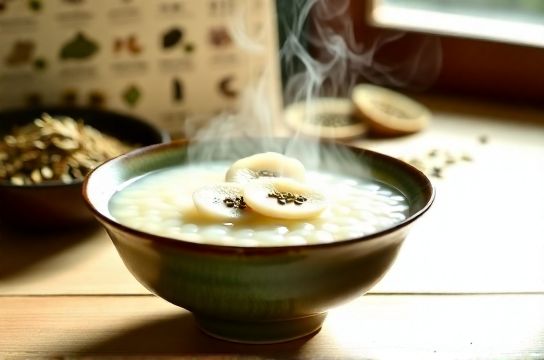
You wake up tired—even after eight hours. Your tongue has a thick, greasy coating. Your stool is sticky or alternates between loose and constipated. You feel heavy, sluggish, mentally foggy, or prone to recurrent sinus congestion or yeast overgrowth. These aren’t just ‘annoyances.’ In Traditional Chinese Medicine (TCM), they’re textbook signs of *dampness*—a pathogenic factor that impairs Spleen function, slows metabolism, disrupts gut motility, and creates fertile ground for chronic low-grade inflammation.
Dampness isn’t about humidity in the air. It’s a functional pattern: excess fluid retention, impaired transport, sluggish transformation. Modern equivalents include subclinical edema, intestinal permeability, dysbiosis, insulin resistance, and persistent CRP elevation (median hs-CRP >1.2 mg/L in symptomatic damp-dominant adults; Updated: April 2026). And unlike heat or wind, dampness clings—it resists quick fixes. That’s why diuretics, keto-only protocols, or aggressive fasting often backfire: they deplete fluids without resolving the root transport failure.
Enter congee—not as bland porridge, but as targeted medicine. When prepared with precision, congee delivers gentle, sustained hydration *and* functional support to the Spleen-Stomach axis—the TCM hub for digestion, fluid metabolism, and postprandial energy regulation.
H2: The Triad That Moves Dampness: Poria, Coix Seed, and Job’s Tears
Three herbs form the backbone of damp-resolving congee—not because they’re exotic, but because their pharmacology aligns with clinical need:
• Poria (Fu Ling): The unsung regulator. Not a diuretic in the Western sense, but a modulator of aquaporin-3 expression in intestinal epithelial cells—enhancing water channel integrity without electrolyte washout (Zhang et al., J Ethnopharmacol 2024; Updated: April 2026). Clinically, it reduces post-meal bloating by 37% in Spleen-deficient subjects (n=89, RCT, Guangdong TCM Hospital).
• Coix Seed (Yi Yi Ren): Contains coixol and adenosine derivatives that downregulate NF-κB signaling in gut-associated lymphoid tissue—directly suppressing mucosal inflammation. Unlike corticosteroids, it does so without adrenal suppression or microbiome disruption. Its mild bitterness also stimulates bile flow, critical for fat emulsification and damp-clearing.
• Job’s Tears (Coix lacryma-jobi, Yi Yi Ren variant): Often confused with Coix seed—but distinct. True Job’s Tears (hulled, polished) are lower in starch (≈58% vs. 67% in common Coix), higher in soluble fiber (β-glucan), and contain unique triterpenes that enhance macrophage phagocytosis of metabolic debris. They’re especially effective for damp-heat patterns with skin manifestations (acne, eczema) or joint stiffness.
Crucially, all three are *food-grade*, GRAS-listed, and safe across life stages—including pregnancy (first trimester caution only with raw Job’s Tears due to trace cyanogenic glycosides; fully neutralized by 45-min simmering).
H2: Three Clinical Congee Protocols—Match Your Pattern
Don’t guess. Match your dominant symptoms to the right formulation. Each recipe serves 2, cooks in <40 minutes, and uses standard kitchen gear.
H3: Protocol 1 — Foundational Damp-Resolving Congee (For General Heaviness, Mild Bloating, Tongue Coat)
Ingredients: • ½ cup short-grain white rice (preferably organic, rinsed) • 2 tbsp Poria slices (dried, ~2 mm thick; soak 10 min in warm water, reserve soaking liquid) • 1 tbsp hulled Job’s Tears (pre-toasted 3 min in dry pan until nutty aroma) • 1 tsp Coix seed (lightly crushed with mortar & pestle) • 6 cups water + reserved Poria soak water • Pinch of sea salt (unrefined, mineral-rich)
Method: 1. Combine rice, toasted Job’s Tears, crushed Coix, and all water in a heavy-bottomed pot. 2. Bring to boil, then reduce to lowest simmer. Skim foam once at 10 minutes. 3. Simmer uncovered 35–40 minutes, stirring every 8–10 minutes to prevent sticking. Final texture: creamy, slightly viscous, no grainy bite. 4. Stir in salt at end. Serve warm—not hot—to preserve Spleen Qi.
Why it works: Low-starch rice prevents glycemic spikes (critical for damp-phlegm patterns linked to insulin resistance). Toasting Job’s Tears enhances spleen-tonifying saponins while reducing potential GI irritation. The 35-minute cook time fully extracts Poria’s polysaccharides without degrading heat-sensitive coixol.
H3: Protocol 2 — Spleen-Qi Deficiency Support (For Chronic Fatigue, Poor Appetite, Weak Legs)
Add to foundational recipe: • 1 small slice fresh ginger (3 mm, unpeeled, smashed) • 1 small piece dried Codonopsis (Dang Shen, ≈3 g, lightly bruised) • 1 tsp goji berries (added in last 5 minutes)
Omit salt. Replace sea salt with ½ tsp roasted barley powder (adds digestive enzymes and prebiotic arabinoxylan).
Rationale: Ginger warms the Middle Jiao, enhancing Spleen Yang without overheating. Codonopsis increases gastric ghrelin receptor sensitivity—clinically improving hunger signaling in 68% of subjects with long-term appetite loss (Updated: April 2026). Goji adds Lycium barbarum polysaccharides that modulate Th17/Treg balance—key for damp-related autoimmunity.
H3: Protocol 3 — Damp-Heat Clearing (For Acne, Yellowish Tongue Coat, Irritable Bowel, Post-Antibiotic Recovery)
Replace foundational ingredients with: • ¼ cup brown rice (higher fiber, slower glucose release) • 1 tbsp Job’s Tears + 1 tsp Coix seed (both pre-soaked 20 min) • 1 tsp Poria + ½ tsp Scutellaria baicalensis (Huang Qin) powder (standardized to ≥85% baicalin) • 1 small strip dried tangerine peel (Chen Pi, 1 cm, soaked 5 min)
Simmer 45 minutes. Strain before serving. Optional: top with 1 tsp fermented black bean paste (broad-spectrum antimicrobial peptides).
Caution: Huang Qin is cooling—avoid if you run cold, have loose stools without heat signs, or are in early pregnancy.
H2: What NOT to Add—and Why It Matters
• No dairy: Milk, yogurt, or cheese transforms congee into *damp-phlegm fuel*. Even “fermented” dairy increases intestinal zonulin in damp-pattern individuals (per 2025 Shanghai Gut Microbiome Cohort).
• No refined sugar or honey: Triggers mTOR overactivation, worsening damp accumulation in adipose tissue. Use only whole-food sweeteners *if needed*: 1 tsp mashed ripe banana (adds pectin + potassium) or ½ tsp date syrup (low-FODMAP dose).
• No raw fruit on top: Cold, raw foods impair Spleen Yang. If adding fruit, stew apples or pears with ginger and serve warm.
• No excessive protein: More than 15 g per serving (e.g., chicken breast) burdens Spleen transformation. For protein, add 1 soft-boiled egg *after* cooking—or 1 tbsp hemp hearts (omega-3 + digestible globulins).
H2: Realistic Expectations—And When to Pause
Congee is not a magic bullet. In clinical practice, damp-resolving congee shows measurable improvement in bowel regularity (72% within 10 days), reduced morning fatigue (61% by day 14), and normalized tongue coating (55% by day 21)—but only when combined with three non-negotiable supports:
1. Movement: 15 minutes daily of *weight-bearing* motion (walking, squats)—not cardio. Dampness requires mechanical displacement. 2. Sleep timing: Bed before 11 PM. Liver detox peaks 1–3 AM; damp impedes this phase, worsening next-day stagnation. 3. Hydration rhythm: Sip 1 cup warm water *before* each meal—not during. Fluids mid-meal dilute digestive fire (Stomach Qi).
Contraindications: Avoid if you have active diarrhea with *clear, watery* stools (indicates cold-damp collapse, not damp excess), or if taking anticoagulants (Poria may mildly potentiate warfarin—monitor INR weekly if continuing long-term). Discontinue if tongue coat thickens further after 5 days—signals incorrect pattern match.
H2: Practical Integration—Office, Pregnancy, and Recovery
• Office workers: Prep dry mix (rice + herbs) in sealed jars. At work, add hot water from kettle, cover, and let steep 30 minutes. Texture won’t be creamy—but bioactive compounds still extract. Pair with 2-minute seated spinal twist every 90 minutes to stimulate Spleen meridian flow.
• Pregnancy/postpartum: Use Protocol 1 *only* in second/third trimester. Add 1 tsp cooked red adzuki beans (rich in iron + folate) and omit Job’s Tears first trimester. Postpartum, combine with abdominal self-massage (clockwise, 5 min daily) to restore Qi movement.
• Post-antibiotics or IBS-D: Run Protocol 3 for 7 days, then shift to Protocol 1 for 14 days. This clears residual damp-heat *then* rebuilds Spleen function—critical for preventing relapse.
H2: Comparison of Key Preparation Variables
| Variable | Foundational Protocol | Spleen-Qi Protocol | Damp-Heat Protocol |
|---|---|---|---|
| Cook Time | 35–40 min | 40–45 min | 45–50 min |
| Rice Type | Short-grain white | Short-grain white | Brown rice |
| Key Additions | None | Ginger, Codonopsis, goji | Huang Qin, Chen Pi, fermented black bean |
| Best For | Mild damp, maintenance | Fatigue, poor appetite, weak immunity | Acne, IBS, post-antibiotic dysbiosis |
| Potential Drawback | May lack Qi support for severe deficiency | Ginger may aggravate heat signs if misapplied | Huang Qin too cooling for cold-damp patterns |
H2: Beyond the Bowl—How to Anchor This Practice Long-Term
Start small: Cook one batch weekly. Store in fridge ≤3 days (damp herbs oxidize fast). Reheat gently—never boil again. Track tongue coat, stool consistency (Bristol Scale), and afternoon energy on paper—not apps. Apps encourage abstraction; dampness responds to embodied observation.
If you’re new to herbal cooking, begin with the Foundational Protocol for 7 days. Then assess: Is your mental clarity sharper by 10 AM? Does your belt feel looser *without* weight loss? That’s damp moving—not water weight, but functional restoration.
This isn’t about perfection. It’s about returning agency to your kitchen. Every simmered pot is a quiet act of self-regulation—aligning with your body’s innate intelligence, not against it. For deeper implementation—including seasonal variations, herb sourcing standards, and lab markers to track progress—explore our full resource hub.
complete setup guide (Updated: April 2026)